


The History of the Mercedes-Benz Silver Arrows Racing Team
Did you know a legendary motorsport legacy started with scraping paint off a car? In 1934, engineers removed white lead paint to meet strict weight limits. This revealed the bare aluminum body underneath. This accidental discovery birthed The history of the Mercedes-Benz silver arrows racing team, a name that would soon strike fear into competitors across the globe.
I find it fascinating how this iconic brand transformed from early Grand Prix dominance into a modern powerhouse. My analysis explores how technical breakthroughs and legendary drivers defined the silver arrows racing team over the last century. Every victory serves as a testament to their relentless pursuit of engineering perfection.
Throughout this journey, I will examine the key moments that shaped their path. From the pre-war circuits to current Formula One circuits, their commitment to excellence remains unmatched. Join me as we uncover the secrets behind their enduring success on the track.
Key Takeaways
- The iconic metallic look originated from a desperate need to reduce vehicle weight.
- Engineering innovation has remained the core pillar of their competitive strategy for decades.
- Legendary drivers have played a critical role in cementing the brand’s status in motorsport.
- The transition from early Grand Prix events to modern Formula One shows remarkable adaptability.
- Technical precision continues to drive their dominance in the current era of high-speed competition.
Origins of the Silver Arrows: A Racing Legacy
The 1930s were a key time for the Mercedes-Benz racing legacy. The brand went beyond just competing. It set a new standard for racing excellence. This standard is seen in the best Mercedes-Benz luxury sedans today.
The Birth of Mercedes-Benz in Motorsports
Mercedes-Benz entered racing to prove German engineering’s superiority. Mercedes-Benz motorsport was a place for innovation. Every race helped improve engine cooling and aerodynamics.
The team focused on testing to make their cars faster and more reliable. This focus led to dominance in European Grand Prix circuits. It was a time of intense development, turning experimental designs into reliable racing machines.
Early Racing Successes
The rivalry between Mercedes-Benz and Auto Union is legendary. Both pushed the limits, setting the industry standard. This rivalry made engineers rethink weight distribution and power output.
The following table highlights the key milestones that defined these early years of success:
| Year | Event | Achievement |
|---|---|---|
| 1934 | Eifelrennen | First victory for the W25 model |
| 1935 | European Championship | Rudolf Caracciola wins the title |
| 1937 | Grand Prix Season | Dominance with the W125 engine |
| 1939 | Tripoli Grand Prix | Technical superiority confirmed |
These early victories were about more than speed. They were about strategic dominance. The team mastered the balance between power and handling. This foundation is a key part of the Mercedes-Benz racing legacy.
The Iconic Silver Arrow Moniker: How it Began
The story of the silver arrows history is a blend of fact and legend. It’s as captivating as the team’s early victories. Many fans know the name, but the real story of how they became legends is debated by car historians.
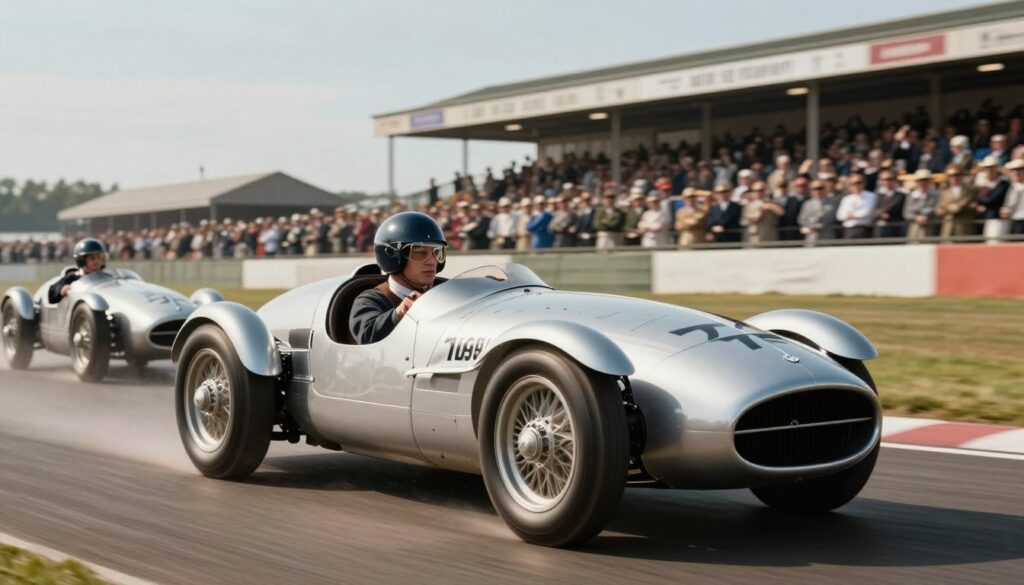
The Significance of the Color Silver
In the early days, cars were painted by their country of origin. German cars were white, a rule for years. But, the move to metallic was more than just looks.
This change marked a new German racing identity. The team’s choice of raw aluminum made them stand out. Their striking appearance became a symbol of speed and skill.
The Transformation into the Silver Arrows
The famous story is from the 1934 Eifelrennen at the Nürburgring. The team allegedly removed white paint to lose weight. This exposed the metal, creating the Mercedes silver arrows.
But, not everyone agrees on this story. Some say it was a gradual change in branding and materials. Yet, the result was clear: a new image for German engineering.
For those interested in modern tech, best aftermarket performance upgrades for Mercedes-AMG show a similar drive for excellence. The Mercedes silver arrows legacy is a key part of car culture, showing innovation under pressure.
Pre-War Era: Setting the Stage for Greatness
The pre-war years were key in shaping the silver arrows history. The Mercedes-Benz Grand Prix program became a force to be reckoned with. It set the bar high for what a racing car could do.
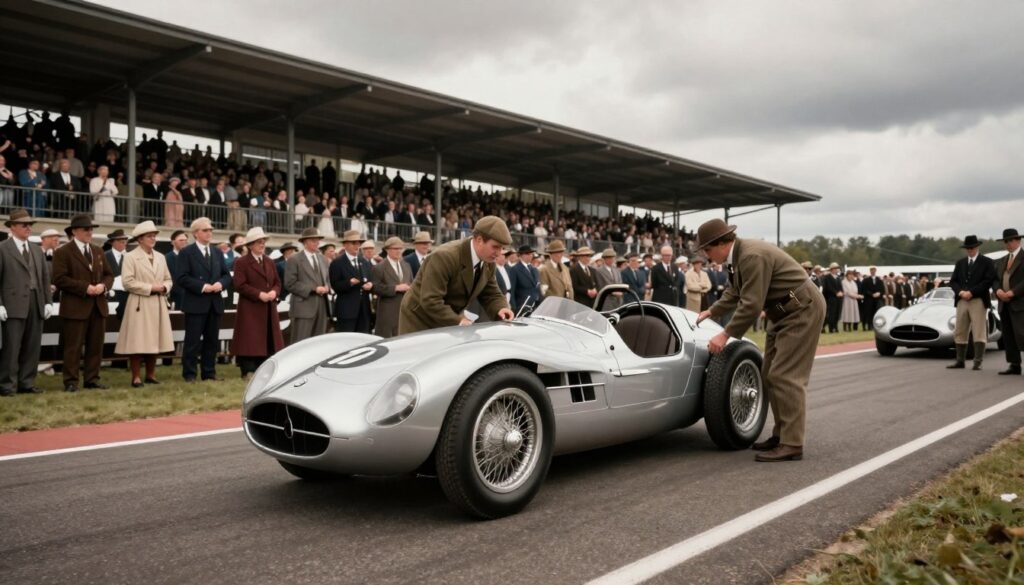
Key Races and Drivers of the Time
Rudolf Caracciola shone in the 1930s with his skill in the W125. He showed incredible precision on tough tracks. His talent is a big part of the Mercedes-Benz Grand Prix legacy.
Races back then were tests of speed, endurance, and car reliability. Drivers faced challenges on tracks without today’s safety. Their bravery made the team a top name in motorsport.
Innovations in Automotive Technology
Technical advancements in the 1930s were groundbreaking. Engineers used supercharging technology to boost engine power. They also worked on lighter, stronger chassis designs.
Aerodynamics became key in car development. The team’s streamlined designs reached speeds thought impossible then. These tech leaps not only won races but also inspired future engineers.
The Rise After World War II: A New Beginning
After the war, the world of car racing needed bold moves. This time was key in Mercedes-Benz racing history. The team had to overcome big challenges to get back racing.
They aimed to build a lean, efficient team. This was to compete at the top of motorsport.
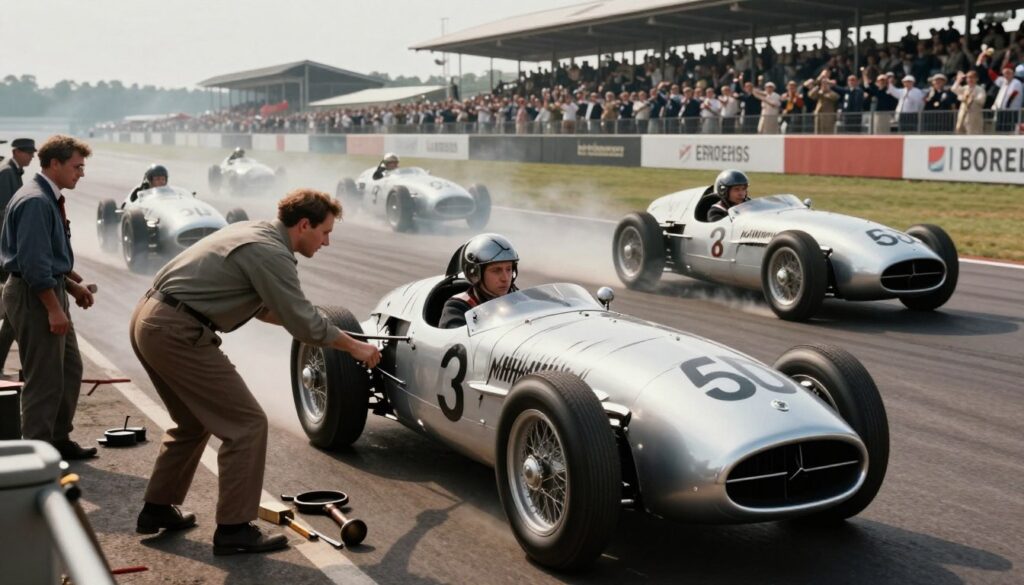
Rebuilding the Team and Its Strategy
The team didn’t just fix old cars; they innovated. They chose a new design to beat their rivals. This led to the famous W196, known for its engineering and aerodynamics.
They invested a lot in research and development. This made sure every part had a purpose. Their focus on technical excellence helped them become a top team again.
This time in Mercedes-Benz racing history was all about striving for perfection.
Key Competitions and Milestones
The team quickly found success in racing again. In 1954 and 1955, they showed unmatched speed and reliability. These years were a highlight in Mercedes-Benz racing history.
They proved they could win against the best in the world.
The table below shows the key moments of their comeback:
| Milestone | Year | Significance |
|---|---|---|
| Return to Grand Prix | 1954 | Re-established competitive presence |
| W196 Debut | 1954 | Introduced revolutionary fuel injection |
| World Championship | 1955 | Cemented dominance in F1 |
These wins were more than just trophies. They showed the team’s strength and resilience. Their legacy continues to shape car design and racing strategies today.
Legendary Drivers of the Silver Arrows
The Mercedes-Benz racing history shines through the eyes of legendary drivers. They were not just drivers; they were pioneers who pushed human limits on the track.
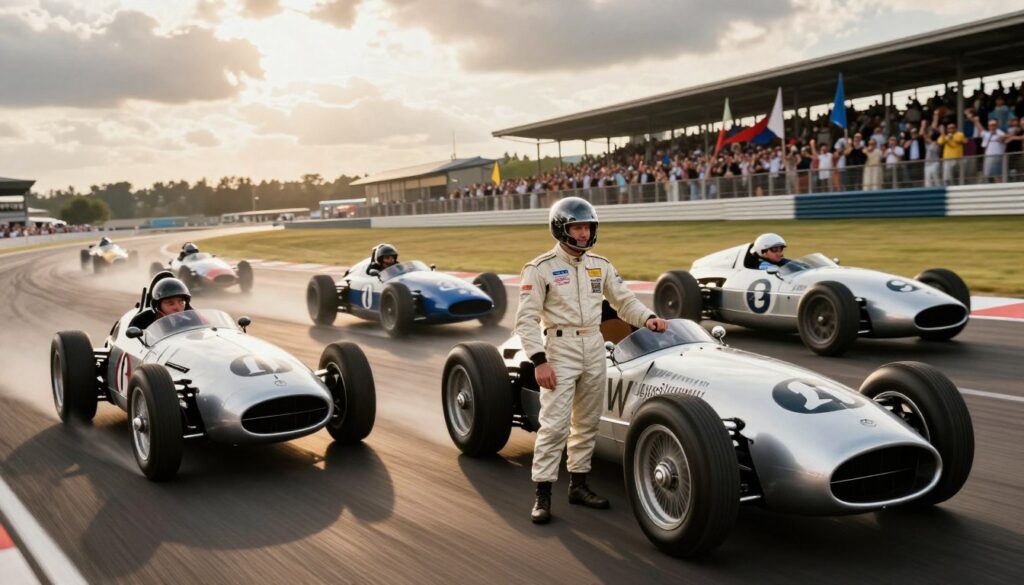
Juan Manuel Fangio: The Maestro
Juan Manuel Fangio is the most iconic figure in Mercedes-Benz history. Known as “The Maestro,” he showed unmatched precision on dangerous tracks. He knew his car’s mechanics better than anyone else.
Fangio stayed calm even with tough technical challenges. Fans today look to him for solving modern car problems, like fixing Mercedes MBUX issues, thanks to his analytical mind.
Other Notable Drivers Who Shaped the Brand
Rudolf Caracciola and Hermann Lang were also key drivers. Caracciola was known as “Regenmeister” for his skill in wet weather. His strategic thinking was vital in the pre-war era.
Hermann Lang, a former mechanic, brought a unique intensity to the team. His deep understanding of the engine allowed him to push the Silver Arrows to their limits without losing reliability.
“Racing is not just about speed; it is about the harmony between the driver’s intent and the machine’s capability.”
| Driver Name | Key Contribution | Era |
|---|---|---|
| Juan Manuel Fangio | Tactical Precision | 1950s |
| Rudolf Caracciola | Wet-Weather Mastery | 1930s |
| Hermann Lang | Mechanical Expertise | 1930s-1950s |
These drivers built the reputation that defines Mercedes-Benz today. Their commitment to excellence continues to inspire fans around the world.
Technical Advancements: The Engineering Marvels
The Mercedes silver arrows have made huge leaps in racing history. They didn’t just make fast cars; they changed how racing cars are made. Their cars combined power with physics to win races.
Pioneering Technology in Vehicle Design
The stressed-skin aircraft construction was a big breakthrough. It made the cars light and strong. This let the Mercedes silver arrows move through the air with less drag.
This focus on being light was ahead of others. It showed that being light was as important as being fast. These ideas are key in car design today.
Key Innovations That Changed Racing
The team also made big changes in the car’s mechanics. They worked on making the cars handle better in corners. These Mercedes silver arrows were more than cars; they were tools for winning.
They also improved cooling and fuel systems. This made their cars reliable, even in tough races. Their work shows the impact of relentless innovation in racing.
Dominance in the 1950s: The Golden Era
The 1950s were a time of unmatched skill and strategy for the Mercedes-Benz Grand Prix team. This decade was a key moment that shaped the sport’s future. The team didn’t just race; they set new standards for speed and reliability.
Unforgettable Races and Achievements
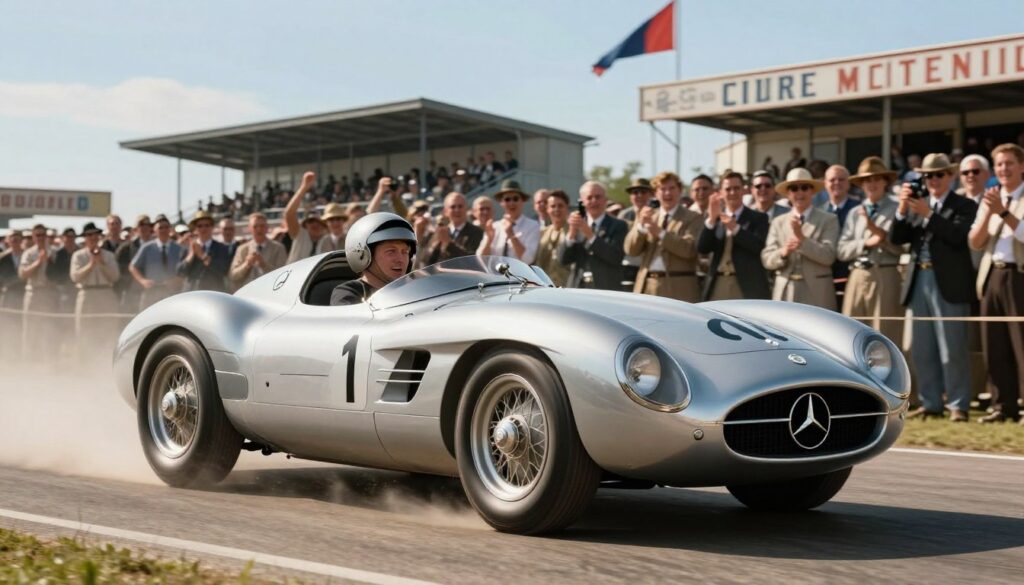
The 300 SLR was a highlight of this era. It was a marvel of engineering, showing unmatched precision that left others in the dust. The Mercedes-Benz Grand Prix team won historic races, making them the top team in international racing.
These wins were not just luck. They came from hard work and new ideas. The team pushed the limits of what was possible, achieving unmatched consistency in racing.
Influence on Global Motorsports Culture
The 1950s had a big impact beyond just winning races. The Mercedes-Benz Grand Prix team became a symbol of German engineering excellence. They set a high standard that others wanted to follow.
This era changed how people saw the link between car tech and racing success. The Silver Arrows’ legacy from this time is a key part of racing history. It shows how visionary engineering can make a lasting impact.
The Silver Arrows in Formula One: A New Chapter
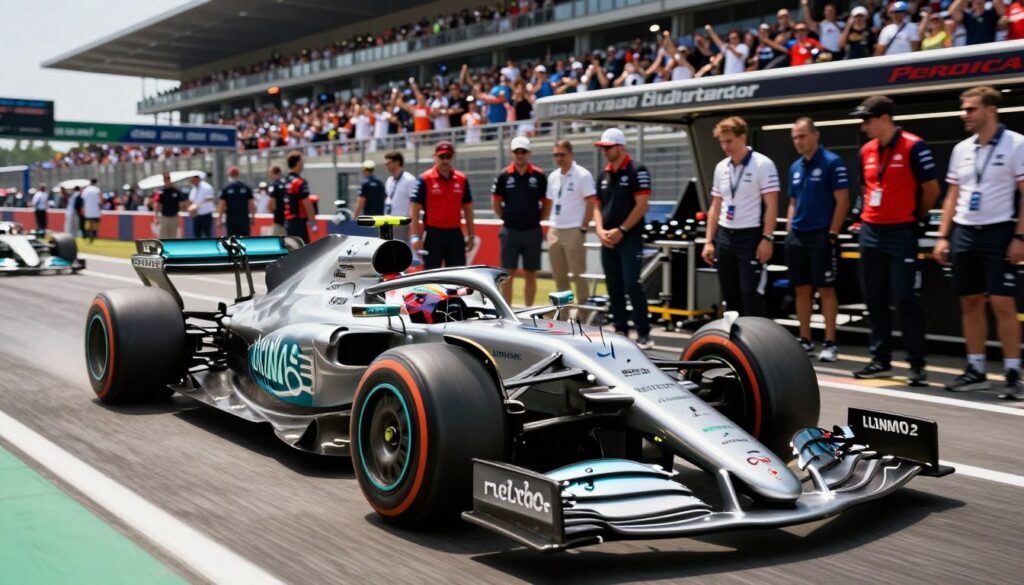
The Mercedes-Benz F1 team made a big splash in 2010 by buying Brawn GP. This move was a smart step towards becoming a full-fledged team. It marked a new era for the brand in Formula One.
Introduction of Mercedes-Benz in F1
The early years were all about growing and setting up the team. This groundwork was key for their future success. Mercedes invested a lot in their facilities to compete with the best.
Want to dive deeper into their history? Check out the rich heritage of the brand.
Key Wins and Championships
The big change came in 2014 with new rules on engines. The Mercedes-Benz F1 team seized this opportunity. They started a winning streak that changed the game.
The team’s highlights include:
- Winning eight Constructors’ Championships from 2014 to 2021.
- Creating the most efficient hybrid engines in F1 history.
- Setting record-breaking win percentages.
Mercedes-Benz showed they could tackle tough technical challenges. They kept improving and stayed ahead of rivals. Their success is a model for others in motorsport.
Modern Era: Continued Excellence and Innovation
The Mercedes-Benz F1 team has grown into a top force in motorsport. They mix power with efficiency in a way that’s both fast and smart. Their cars look sleek, showing that speed and style can go hand in hand.
Recent Drivers and Their Contributions
The Mercedes-Benz F1 team thrives on teamwork between drivers and engineers. Lewis Hamilton and George Russell have been key. They help make the cars better by sharing their insights.
These drivers keep the team ahead by adjusting to new car changes. Their efforts include:
- Sharing data to use energy wisely.
- Working with engineers to make the car lighter.
- Staying consistent under pressure.
Advancements in Hybrid and Electric Racing
Building a winning car today means balancing weight and power. The Mercedes-Benz F1 team leads in hybrid tech. They’re also moving towards electric cars, showing their commitment to green racing.
The table below shows how the team’s approach has changed:
| Feature | Traditional Approach | Modern Hybrid Focus |
|---|---|---|
| Energy Source | Pure Combustion | Hybrid ERS Integration |
| Weight Management | Heavy Materials | Advanced Carbon Composites |
| Efficiency | Low | High Thermal Recovery |
The Mercedes-Benz F1 team sets the standard in racing. They blend smart tech with light materials. Their work on electric cars shows they’re ready for the future.
The Silver Arrows in Popular Culture
The Silver Arrows have made a big impact, changing how we see speed and luxury. This team has become a global symbol of engineering perfection. Their story inspires fans and designers, as told in the Silver Arrow legend.
Influence on Automotive Industry and Fans
The Silver Arrows’ look has deeply influenced car design. Car makers aim to mix raw power with elegant design inspired by them. It’s not just about speed; it’s about the prestige of the silver look.
Fans love the history of these cars because they connect the past and future. The team’s commitment to innovation creates a deep emotional connection with fans. This loyalty keeps the brand relevant in talks about performance and style.
Portrayal in Films and Media
The Silver Arrows have been in many films and documentaries, making them cultural icons. These stories show the dramatic tension of racing and the high stakes. Media helps share the team’s technical brilliance with everyone.
Archival footage and modern films show the silver cars’ beauty. These stories teach new fans about the rich heritage of motorsports. Media keeps the Silver Arrows’ legend alive in today’s world.
Challenges and Comebacks: Overcoming Adversity
True champions are not just about winning. It’s how they handle their toughest times. The Silver Arrows have shown incredible resilience through many challenges. No racing team is safe from the ups and downs of sports, where a single rule change can change everything.
Key Moments of Setbacks
The 2022 season was a harsh reminder of how fast things can change in Formula One. After years of success, the team faced big technical struggles. Issues with aerodynamics and chassis stability forced them to rethink their designs under the spotlight.
Challenges can lead to growth. The team tackled these problems head-on, finding key gaps in their data. This tough time was a stepping stone for their future, even if it meant leaving their winning ways behind.
Resilience and Strategy to Bounce Back
The team’s comeback shows their dedication to engineering and strategy. They focused on small, steady improvements, not a quick fix. This careful approach is key when bringing the Silver Arrows back to the top.
Changes in the factory helped the team regain their edge. They created a culture of openness, turning failures into chances for innovation. The table below shows how they shifted their focus during tough times.
| Focus Area | Initial Challenge | Strategic Response |
|---|---|---|
| Aerodynamics | High-speed instability | Revised floor geometry |
| Data Analysis | Simulation correlation | Enhanced track-side sensors |
| Team Culture | Pressure to perform | Collaborative problem solving |
The Future of the Silver Arrows Racing Team
I see a future where speed and sustainability meet in elite racing. The silver arrows racing team is leading the way with green technology in every car. I’m excited as they adapt to our changing world.
Vision for the Next Decade
The next years will bring a focus on being carbon neutral and using advanced energy systems. Mercedes-Benz motorsport is dedicated to staying ahead through testing and engineering. Their hard work will keep them at the top for years.
Upcoming Technologies and Trends in Racing
Electric powertrains and synthetic fuels are the future for the silver arrows team. These innovations keep performance high while being eco-friendly. Mercedes-Benz motorsport will show how racing teams can be both traditional and green.
The legacy of this iconic brand is far from over. I’m eager to see how these new steps will change the sport. They will inspire the next generation of car lovers everywhere.
FAQ
The Birth of Mercedes-Benz in Motorsports
The early years of Mercedes-Benz motorsport set the stage for future success. The transition from white-painted cars to high-performance machines was a key moment. The 1930s saw Mercedes-Benz push the limits of speed, setting a new standard for the industry.
Early Racing Successes
The early years were marked by fierce competition with Auto Union. Mercedes-Benz proved the reliability and power of their engines. This laid the groundwork for their future dominance.
The Significance of the Color Silver
The story of the silver arrows begins with the 1934 Eifelrennen at the Nürburgring. The W25 was over the weight limit, so the team scraped off the white paint. This event made the silver color a symbol of German racing.
The Transformation into the Silver Arrows
The switch to silver was more than just a weight-saving measure. It was a branding revolution. The Mercedes-Benz F1 team’s silver cars are a symbol of power and industrial strength.
Key Races and Drivers of the Time
The pre-war years saw Mercedes-Benz push mechanical boundaries. Drivers like Rudolf Caracciola showcased the power of these machines. Their victories were displays of engineering superiority.
Innovations in Automotive Technology
The 1930s saw unprecedented speeds. Mercedes-Benz experimented with supercharging and advanced suspension. Their innovations were years ahead of civilian vehicles.
Rebuilding the Team and Its Strategy
The post-war era was inspiring for Mercedes-Benz racing. The team rebuilt from scratch. Their return to the top was a testament to their resilience.
Key Competitions and Milestones
The W196 marked a rapid recovery for the team. It dominated the 1954 and 1955 seasons. This period cemented Mercedes-Benz’s reputation for engineering excellence.
Juan Manuel Fangio: The Maestro
Juan Manuel Fangio was a standout driver for the team. His partnership with the machines was unparalleled. His feedback and calm demeanor were vital to the team’s success.
Other Notable Drivers Who Shaped the Brand
Drivers like Hermann Lang and Stirling Moss also made significant contributions. Their unique styles helped shape the Mercedes-Benz motorsport program. They were ambassadors for a brand that demanded perfection.
Pioneering Technology in Vehicle Design
The engineering of the Silver Arrows was groundbreaking. The team used aircraft construction techniques for lightweight, rigid chassis. This was ahead of its time.
Key Innovations That Changed Racing
The team’s innovations, like fuel injection and advanced aerodynamics, changed racing design. The 300 SLR chassis was a masterpiece of engineering. It outperformed rivals in endurance races.
Unforgettable Races and Achievements
The 1950s were a golden era for Mercedes-Benz. The team’s double-podium finishes and reliability were unmatched. It was a period of total dominance.
Influence on Global Motorsports Culture
The 1950s dominance changed how German engineering was viewed worldwide. The Silver Arrows became a symbol of precision and quality. They influenced the global motorsports culture.
Introduction of Mercedes-Benz in F1
The modern Mercedes-Benz F1 team began in 2010 with the acquisition of Brawn GP. This strategic move marked their return as a full constructor. It set the stage for their future success.
Key Wins and Championships
Starting in 2014, the team embarked on an unprecedented run of championships. They leveraged hybrid power units to out-engineer the competition. This era showed the spirit of the original Silver Arrows is alive in modern racing.
Recent Drivers and Their Contributions
Drivers like Lewis Hamilton and Nico Rosberg pushed the team to new heights. Their rivalry and success were instrumental in refining hybrid systems. Their feedback was key to the team’s success.
Advancements in Hybrid and Electric Racing
The team balances weight reduction with hybrid regulations. Their commitment to innovation in electric and hybrid racing keeps them at the forefront of automotive technology. They bridge the gap between the track and the road.
Influence on Automotive Industry and Fans
The Silver Arrows have a lasting impact on the automotive industry. The “Silver Arrow” aesthetic represents luxury and performance. It inspires car enthusiasts and designers alike.
Portrayal in Films and Media
The brand’s portrayal in media and documentaries solidifies its legend. The way these cars are captured on film reflects the enduring fascination with the silver arrows history. It showcases the competitive spirit they represent.
Key Moments of Setbacks
No racing team is immune to setbacks. The Silver Arrows navigated technical struggles in the 2022 season. These periods of adversity reveal the team’s true character.
Resilience and Strategy to Bounce Back
The team’s resilience is rooted in a data-driven, “no-blame” culture. They use failure as a stepping stone to regain their position at the front of the grid. This ability to bounce back is a hallmark of Mercedes-Benz racing history.
Vision for the Next Decade
The future of the silver arrows racing team is focused on sustainability. The lessons learned on the F1 track will drive the development of high-performance electric vehicles. This commitment ensures the team’s continued relevance.
Upcoming Technologies and Trends in Racing
The team is integrating artificial intelligence and advanced materials into their designs. While technology changes, the core mission of the Mercedes-Benz motorsport program remains the same. They aim to define the future of speed.
What is the significance of the year 1934 in the history of the Mercedes-Benz silver arrows racing team?
1934 was a turning point for the silver arrows. The team stripped the white paint off the W25 to meet weight requirements. This event gave birth to the Mercedes silver arrows moniker and established a visual identity that is reflected in the Mercedes-Benz F1 team today.
How has the Mercedes-Benz racing legacy influenced modern automotive engineering?
The Mercedes-Benz racing legacy has been a high-speed laboratory for the industry. Innovations like direct fuel injection and advanced aerodynamics, originally perfected for the Mercedes-Benz Grand Prix cars, eventually made their way into consumer vehicles. This shows that the silver arrows racing team has always been an engineering pioneer.
Who are the most influential figures in Mercedes-Benz racing history?
Juan Manuel Fangio and Rudolf Caracciola were key architects of the team’s success. Engineers like Rudolf Uhlenhaut also played a critical role in shaping Mercedes-Benz motorsport. Their collective brilliance allowed the team to dominate both the pre-war and post-war eras.
When did the Mercedes-Benz F1 team return to the sport as a full constructor?
The modern Mercedes-Benz F1 team began in 2010 after acquiring Brawn GP. This strategic move marked their return as a full constructor. It set the stage for their future success.
How does the silver arrows racing team handle technical challenges like those seen in 2022?
The team’s response to the 2022 regulations shows their resilience. They use a data-driven, “no-blame” culture to overcome adversity. This ability to bounce back is a hallmark of Mercedes-Benz racing history.
What role does sustainability play in the future of Mercedes-Benz motorsport?
The team is committed to sustainable innovation. They are developing high-performance hybrid and electric technologies. This commitment ensures that the silver arrows history will continue to evolve in a way that remains relevant to both racing fans and the broader automotive world.

Hi! I’m Moheen Iftikhar, the founder of “CarSpherei.” I’m passionate about everything automotive — from the latest car trends and cutting-edge technology to driving tips and expert insights. Through CarSpherei, I share in-depth reviews, helpful guides, and practical advice to keep every car enthusiast informed, inspired, and connected to the world of driving.