


Mercedes-Benz GLC 300 Towing Capacity and Trailer Hitch Guide
Did you know over 60% of luxury SUV owners don’t use their full hauling power? These vehicles are more than just status symbols; they’re for weekend adventures. This guide will help you understand your Mercedes-Benz GLC 300 towing capacity with confidence.
Knowing your vehicle’s limits is key for safe driving. Whether you’re towing a small boat or comparing to towing capacity for small campers, being prepared is essential. My Mercedes GLC 300 trailer hitch guide shows you how to meet strict standards.
Choosing the right equipment is critical for a smooth ride. By following these tips, you’ll keep your SUV safe and versatile. Let’s dive into making your vehicle ready for any trip.
Key Takeaways
- Check your vehicle’s weight limits before adding any load.
- Use only approved hardware for safety.
- Spread weight evenly for stability.
- Regularly check tire pressure for heavy loads.
- Refer to your owner’s manual for electrical connections.
Understanding the Mercedes-Benz GLC 300 Overview
The GLC 300 is a top pick for those who want luxury and practicality. It’s perfect for city driving or weekend trips. The vehicle meets your needs, no matter the situation.
Key Features of the GLC 300
The GLC 300 is known for its refined craftsmanship. Using genuine accessories is key for safety and comfort. These parts fit perfectly with the vehicle’s design.
“The essence of true engineering lies in the ability to provide a seamless experience where power meets precision in every turn.”
Performance Specifications
Looking at the Mercedes-Benz GLC 300 towing capacity specs, the engine is a highlight. It delivers power smoothly, which is great for control. For comparison, check out the Toyota Land Cruiser 300 series vs 250 series.
| Feature | Specification | Benefit |
|---|---|---|
| Engine | 2.0L Inline-4 Turbo | Efficient Power |
| Transmission | 9G-TRONIC 9-Speed | Smooth Shifting |
| Drivetrain | 4MATIC AWD | Enhanced Traction |
Safety and Technology Enhancements
Safety is a top priority for the GLC 300. It uses advanced sensors and systems to keep you safe. These features are key when towing, as they help the vehicle stay stable.
The infotainment system is intuitive and keeps you informed. This ensures you feel confident while driving. The GLC 300 is a reliable companion for any trip.
Towing Capacity of the Mercedes-Benz GLC 300
The Mercedes-Benz GLC 300 towing capacity shows a car made for precision. It’s key to know that going over these limits can harm your car’s parts. If you worry about your car lasting long, check out the common issues with used Mercedes GLE models. This can help you understand how different cars handle heavy loads.
Maximum Towing Limitations
The Mercedes-Benz GLC 300 towing capacity specs let you tow up to 3,500 pounds with brakes. But, without trailer brakes, you can only tow less. This is a big safety issue for drivers.
Tongue weight is also important. Aim for 10% to 15% of the trailer’s weight for stability. Too little weight can cause trailer sway at high speeds.
“Safety in towing is not just about what your vehicle can pull, but how well it can control that weight during an emergency stop or a sharp turn.”
Payload and Cargo Considerations
It’s as important to balance your cargo as the trailer weight. Remember, the weight of people and stuff inside counts too. If your trunk is full, you’ll need to lighten the trailer to stay safe.
Here’s a table for a Mercedes GLC 300 towing capacity comparison to plan your trips:
| Metric | Recommended Limit | Safety Impact |
|---|---|---|
| Max Braked Towing | 3,500 lbs | High (Transmission Load) |
| Max Tongue Weight | 350 lbs | Medium (Stability) |
| Payload Capacity | ~1,000 lbs | High (Suspension Wear) |
| Unbraked Trailer | 1,500 lbs | Critical (Braking Distance) |
Remember these numbers to keep your car safe and responsive. Always check your car’s manual for specific limits, as they can change.
Types of Trailer Hitches for the GLC 300
When I search for the best trailer hitch for Mercedes GLC 300, I look for strength and fit. Choosing the right hitch is key in my guide. I make sure my vehicle stays safe and stable by picking the right hitch class.
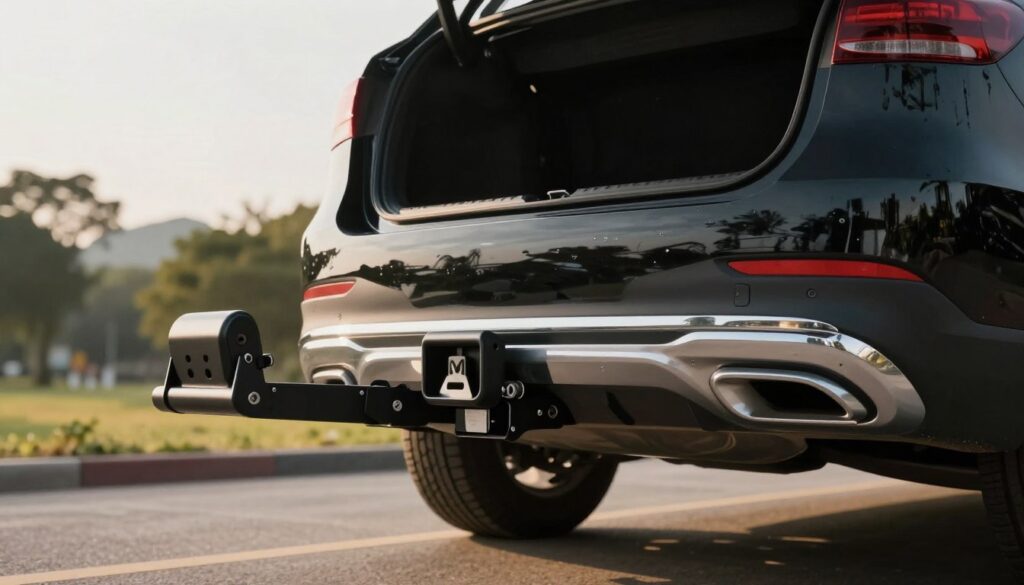
Class I, II, and III Hitch Options
For light towing, Class I or II hitches are fine. But they can’t handle heavy loads. I choose CURT Class 3 trailer hitches for their 6,000 lbs. towing capacity. They’re strong enough for various loads without harming my vehicle.
Weight Distribution Hitches
A weight distribution hitch is a big help for heavy trailers. It evenly spreads weight, reducing sway and improving control. It’s great for long trips with heavy loads.
Gooseneck and Fifth Wheel Hitches
Gooseneck and fifth-wheel hitches aren’t for the GLC 300. They’re made for pickup trucks, not SUVs. Using them on my vehicle would be unsafe and impractical. I always choose receiver-style hitches for safety.
Installing a Trailer Hitch on my GLC 300
Starting to tow with your vehicle begins with installing a hitch receiver. A good Mercedes-Benz GLC trailer hitch installation needs focus on safety and looks. It’s important to take your time to avoid damaging your car’s trim.
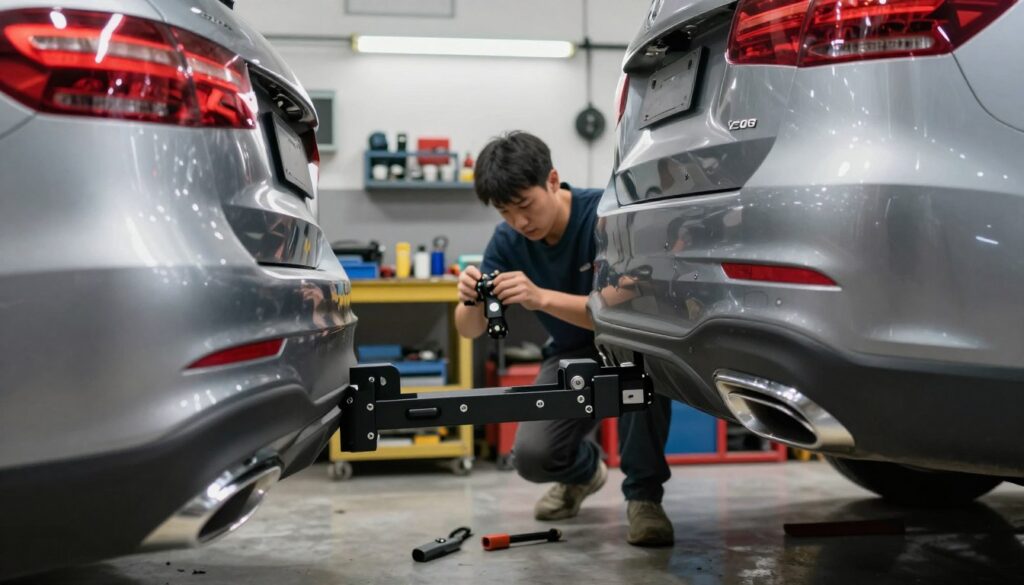
Step-by-Step Installation Process
Installing a CURT 13477 hitch usually takes 45 to 90 minutes. First, clear the area under your car and remove any plastic panels. Precision is key when fitting the hitch to the factory holes.
After placing the hitch, secure it with the right hardware. Make sure bolts are tightened evenly for balance. Always check the hitch’s alignment before tightening to avoid rattling or stability problems.
Tools Required for Installation
The right tools make the job easier. For a proper Mercedes-Benz GLC trailer hitch installation, you’ll need:
- A set of metric sockets and a ratchet handle.
- A torque wrench for safe bolt tightening.
- Non-marring tools to protect your car’s finish.
- Safety glasses and gloves for protection.
Professional vs. DIY Installation
Choosing to install it yourself depends on your comfort with car mechanics. DIY saves money but pros offer a cleaner finish, like when trimming the bumper.
“The quality of your towing setup depends on the installation. If you’re unsure about tightening bolts or handling trim, get a pro.”
If you’re doing it yourself, be patient. If unsure, call a local shop for help with the Mercedes-Benz GLC trailer hitch installation. A pro ensures your car stays in top shape while giving you the towing utility you need.
Recommended Accessories for Towing
When I started towing with my GLC 300, I quickly realized that the hitch is only the beginning of the setup. While the mechanical connection is essential, the right accessories make towing smooth and controlled. High-quality gear gives me the confidence I need when driving.
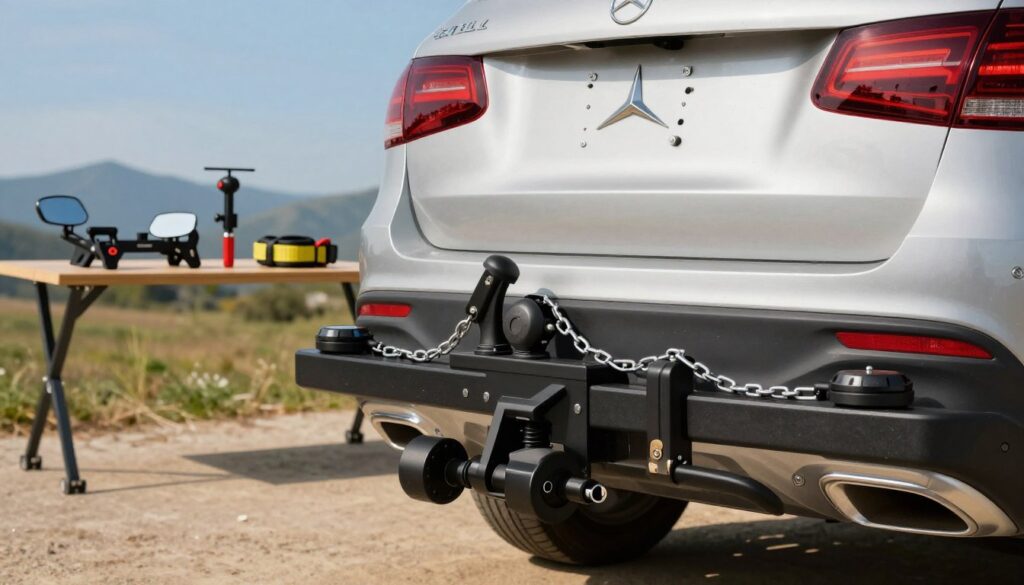
Towing Mirrors and Brake Controllers
Visibility is my top priority when towing. Standard side mirrors often fail to show the trailer’s rear corners. That’s why I use towing mirrors. These extensions greatly reduce blind spots and make lane changes safer.
A reliable brake controller is also essential for heavier loads. It makes sure the trailer brakes with the car, preventing dangerous stops and wear on the car’s rotors.
Safety Chains and Harnesses
I see safety chains as my ultimate insurance. They must cross under the trailer tongue to catch it if the hitch fails. Always ensure they’re rated for your trailer’s weight for maximum security.
Proper electrical connection is also key for safety. I use a high-quality wiring harness to keep trailer lights and signals working right. A bad connection is a legal risk and a major hazard.
Towing Gear and Equipment
I keep essential tools in my cargo area for unexpected situations. A sturdy wheel chock set is great for parking on inclines, and a high-quality hitch lock keeps my trailer safe from theft. These items make every trip more efficient.
| Accessory | Primary Function | Safety Impact |
|---|---|---|
| Towing Mirrors | Expand field of view | High |
| Brake Controller | Syncs braking force | Critical |
| Safety Chains | Emergency connection | Critical |
| Wiring Harness | Power for lights | High |
Best Practices for Towing with a GLC 300
When I plan a trip, safety is my top priority. I follow strict guidelines for my vehicle. These Mercedes-Benz GLC 300 towing capacity tips help keep my SUV and trailer in top shape. Proper preparation makes towing stress-free.
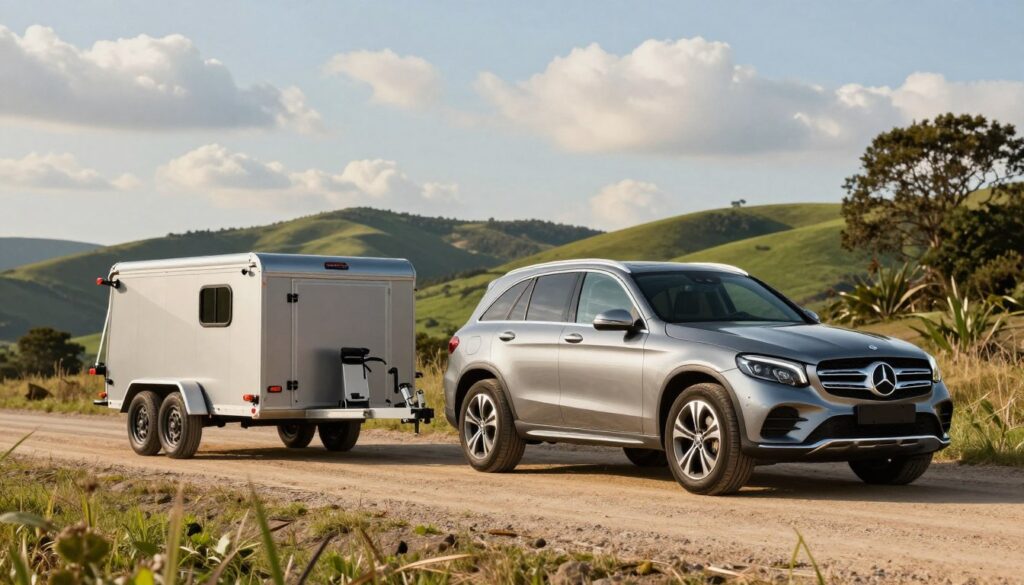
Pre-Towing Checklist
I start by checking my setup thoroughly. I make sure the hitch is secure and safety chains are attached correctly. Checking tire pressure on both the vehicle and trailer is essential to avoid blowouts.
I also check that all trailer lights work. Testing these with a partner or mirror ensures other drivers can see my signals. A well-maintained connection is key to a safe journey.
Weight Distribution and Balance
Proper weight distribution prevents trailer sway. I aim for 60 percent of cargo weight in the trailer’s front half. This balance ensures optimal handling and keeps tongue weight in check.
Too much weight in the back can make the trailer unstable at high speeds. I secure all items inside to prevent shifting. Keeping the center of gravity low is critical for stability.
Driving Techniques for Safe Towing
Driving with a trailer requires a different approach. I increase my following distance for extended braking times due to the added weight. Smooth, gradual inputs on the steering wheel and pedals are essential for control.
When turning, I make wider turns to avoid curb issues. I also avoid sudden lane changes or aggressive maneuvers to prevent sway. By following these Mercedes-Benz GLC 300 towing capacity tips, I enjoy a confident and stable drive.
Common Towing Challenges with the GLC 300
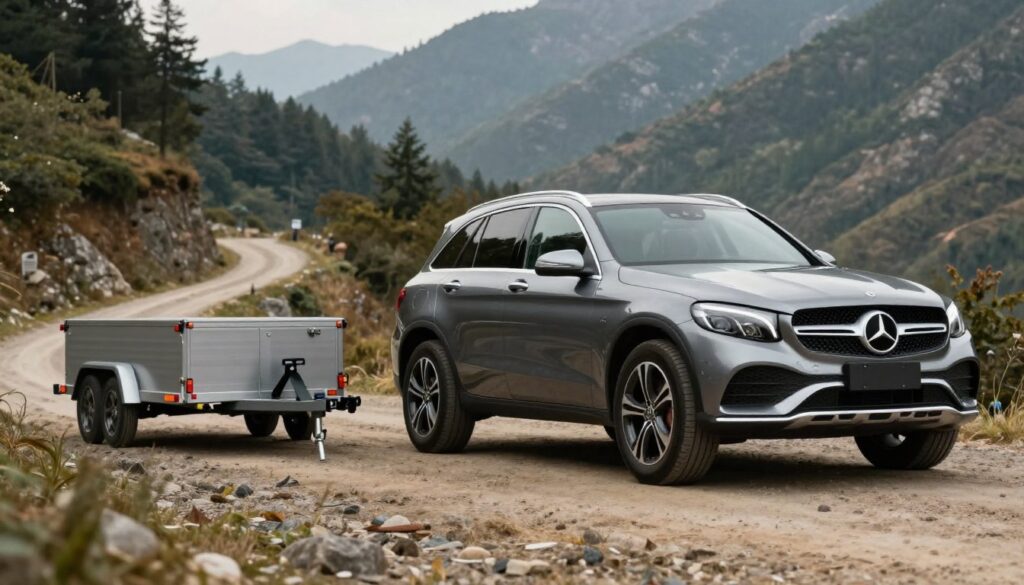
When I started towing with my SUV, I quickly realized that understanding mechanical interference is key. Knowing weight ratings is just as important. It’s vital to compare the Mercedes GLC 300 towing capacity with your trailer needs for safety.
Overcoming Weight Limitations
It’s easy to overestimate what a luxury vehicle can handle. Always check your gross trailer weight against the manufacturer’s specs. This avoids strain on the transmission and brakes.
If you’re near the limit, remove non-essential cargo. Reducing total weight helps maintain performance and protects your vehicle during long hauls.
Navigating Off-Road and Steep Terrain
Steep inclines pose challenges, like engine temperature and braking efficiency. When driving on hills, keep a steady pace and avoid sudden acceleration. This helps the engine work less hard.
Ground clearance is also important. Be careful off-road, as the trailer hitch can hit the ground on uneven surfaces.
Dealing with Sway and Stability Issues
Stability is key at highway speeds. A high-quality trailer hitch helps minimize movement and ensures a secure connection. Always check the receiver-to-muffler proximity during installation.
If you experience sway, it’s often due to improper weight distribution. Moving more weight forward of the trailer axle usually fixes these issues.
| Challenge | Primary Cause | Recommended Solution |
|---|---|---|
| Excessive Sway | Improper weight balance | Shift load forward |
| Muffler Contact | Tight receiver clearance | Adjust hitch alignment |
| Engine Overheating | Steep terrain strain | Monitor gauges closely |
| Brake Fade | Exceeding capacity | Use trailer brakes |
Maintaining Performance While Towing
Keeping your vehicle in top shape after towing is key. Towing puts extra stress on your engine and transmission. So, following Mercedes-Benz GLC 300 towing capacity tips is essential.
Regular Maintenance Tips
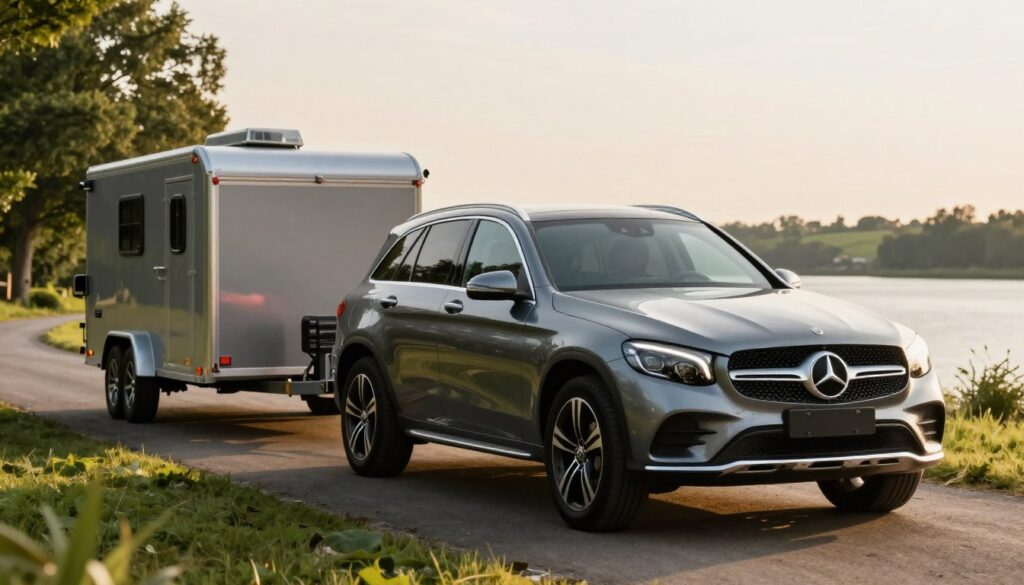
Always inspect your setup after towing. Check your Mercedes tow hitch by model for tight bolts and no rust. Consistency is key to avoid damage.
- Inspect the hitch receiver for signs of stress or metal fatigue.
- Check your tire pressure, as towing often requires higher PSI levels.
- Examine the electrical harness for any frayed wires or loose connections.
- Verify that your safety chains are not dragging or showing signs of wear.
Monitoring Engine Temperature and Performance
Towing generates a lot of heat, which can stress your cooling system. Always watch your dashboard gauges while towing. If the temperature needle goes up, pull over and let the engine idle.
Notice how your transmission shifts under load. If it hesitates or slips, check your transmission fluid. Keeping your fluids fresh is vital for your vehicle’s longevity.
When to Seek Professional Help
At times, a DIY check isn’t enough. If you hear grinding noises or feel vibrations after unhooking, see a certified technician. Ignoring these signs can lead to costly repairs.
If your vehicle pulls to one side or shows uneven tire wear, get professional help. A mechanic can do a detailed check to ensure everything is working right.
Conclusion: My Experience with the GLC 300 Towing
Testing the towing limits of the Mercedes-Benz GLC 300 showed me a lot. It’s a luxury SUV that’s also very useful. It does best when drivers know its limits and use safety features.
Evaluating Real-World Performance
The GLC 300 shows that a high-end SUV can handle light towing well. Its engine works great, as long as you don’t overload it. Keeping the weight right is key for staying stable on the road.
Reflecting on Long-Term Reliability
Keeping your GLC 300 in top shape is key for long-term towing. Using quality hitches and checking your trailer setup makes towing easy. When you’re well-prepared, you feel more confident on the road.
I suggest you make the most of your SUV’s versatility. Always put safety first when towing. This way, every trip will be smooth and worry-free.
FAQ
What is the maximum Mercedes-Benz GLC 300 towing capacity?
The Mercedes-Benz GLC 300 can tow up to 3,500 pounds when ready. It’s important to check your model year and if it has 4MATIC® all-wheel-drive. These details affect the vehicle’s stability and towing ability.
Which is the best trailer hitch for Mercedes GLC 300 owners?
I think the best hitch for the Mercedes GLC 300 is a Class 3 receiver hitch. CURT and Draw-Tite make custom-fit hitches that bolt to the frame. A Class 3 hitch is good because it has a 2-inch receiver opening. This lets you use a wide range of accessories safely.
Can I perform a Mercedes-Benz GLC trailer hitch installation at home?
Installing a trailer hitch on a Mercedes-Benz GLC at home is possible for DIY fans. You’ll need tools like a torque wrench and a trim removal tool. The job involves working around the rear bumper and exhaust shields. For a clean look and proper electrical connection, getting it done by a pro is safer.
How does a Mercedes GLC 300 towing capacity comparison look against other luxury SUVs?
The Mercedes GLC 300’s towing capacity is top-notch in the compact luxury class. It matches the BMW X3’s 3,500-pound rating. But, it has a smoother power delivery thanks to its 9G-TRONIC automatic transmission.
Do you have any specific Mercedes-Benz GLC 300 towing capacity tips for mountain driving?
For driving in the mountains, use the paddle shifters to control RPMs. This stops the transmission from shifting too much and helps with braking. Also, check your coolant and tire pressure before going to high places to handle the extra load.
Why is the Mercedes GLC 300 trailer hitch guide important for first-time towers?
The Mercedes GLC 300 trailer hitch guide is key for new towers. It explains the difference between weight-carrying and weight-distributing setups. Knowing how the hitch works with the unibody is important to avoid damage. Following the guide helps you choose the right hardware for your vehicle.
What safety accessories should I use with my Mercedes-Benz GLC 300?
You should get a good brake controller, like a Tekonsha model, if your trailer has electric brakes. Use heavy-duty safety chains and consider extended towing mirrors. These ensure you stay safe while driving a Mercedes-Benz.
How often should I inspect my vehicle after a towing trip?
Towing stresses the drivetrain and suspension. Inspect your vehicle after every long trip. Check brake pads and receiver hitch bolts for wear. Also, keep an eye on your transmission fluid to maintain performance when towing.

Hi! I’m Moheen Iftikhar, the founder of “CarSpherei.” I’m passionate about everything automotive — from the latest car trends and cutting-edge technology to driving tips and expert insights. Through CarSpherei, I share in-depth reviews, helpful guides, and practical advice to keep every car enthusiast informed, inspired, and connected to the world of driving.