


Installing a Tesla Wall Connector at Home: Cost and Requirements
Did you know that over 80% of electric vehicle charging happens at home? As I get ready to make my garage EV-ready, I know planning is key. I aim to make sure my home is ready for this change without any surprises.
Understanding the whole project helps me stay within my budget. I need to check if my electrical panel can handle the new setup. By knowing the costs and what I need, I can feel more confident about starting.
This guide is my guide to making this process clear. I’ll cover the important steps to make sure my setup is safe, efficient, and ready for daily use.
Key Takeaways
- Most EV charging happens at residential properties.
- Evaluating electrical panel capacity is a critical first step.
- Budgeting for both hardware and professional labor is vital.
- Local building codes often dictate specific installation standards.
- Proper planning prevents costly mid-project surprises.
Introduction to Tesla Wall Connectors
For a smooth EV experience, a good home charging setup is key. The right hardware ensures my battery stays charged. Installing a Tesla Wall Connector at home is the best way to keep my car ready to go.
Overview of Tesla Charging Solutions
Tesla’s charging system is designed for ease and safety. The Wall Connector connects my home’s electrical panel to my car. This ensures a steady flow of power. A professional Tesla home charging station installation ensures it fits well with my home’s electrical system.
This equipment is made for high-voltage needs, cutting down charging time. It’s not like regular outlets. It offers a safe and efficient charge that keeps my battery healthy.
Benefits of Home Charging
Home charging makes mornings easier. I don’t have to worry about public charging stations. I just plug in at home and wake up to a full battery every morning.
Charging at home also saves money. I can charge during off-peak hours, which is cheaper. This makes installing a Tesla Wall Connector at home a wise choice for EV owners.
Understanding the Tesla Wall Connector
Choosing the right equipment for my garage means looking closely at the Tesla Wall Connector’s specs. Before I set up my Tesla home charging station installation, I need to make sure it fits my car’s needs and my daily driving. This ensures a smooth charging experience.
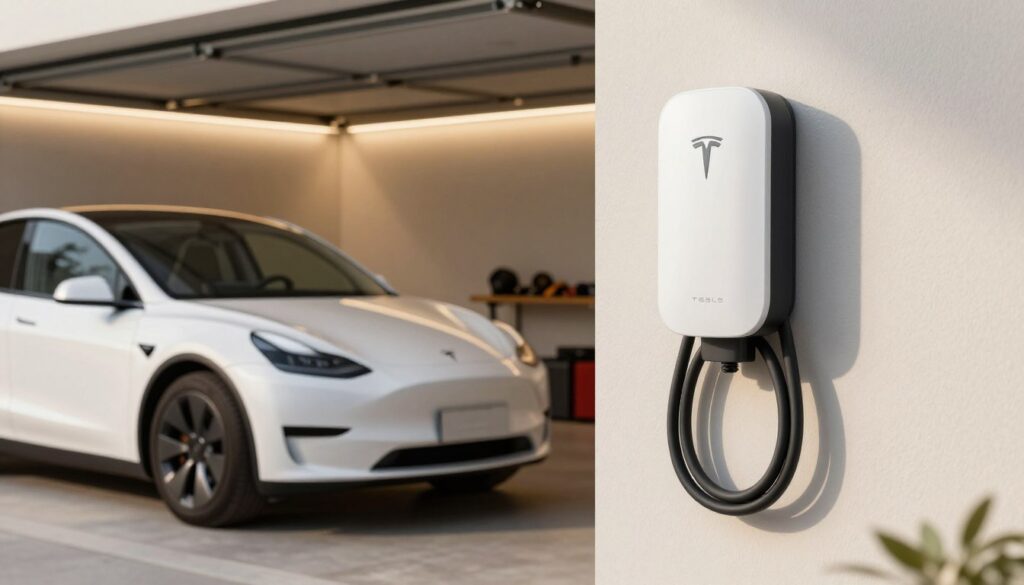
Specifications and Features
The Tesla Wall Connector makes charging easy. It can charge up to 48 amps quickly, saving time. The native in-car control lets me schedule charges from my car or app.
The load-sharing feature is also great. It lets multiple chargers share one circuit. This is perfect if I add more electric cars in the future. Just like choosing the best Tesla Model Y accessories for trips, this charger is a key part of my car’s future.
How It Compares to Other Chargers
Comparing the Tesla Wall Connector to other Level 2 chargers shows a big difference. While others just charge, Tesla’s system is more connected. It gets updates that keep it working well with new car tech.
Generic chargers might be cheaper upfront, but they don’t offer the same smart features. Choosing Tesla means my Tesla home charging station installation stays up-to-date. The Tesla system’s reliability and ease of use make it the best choice for me.
Initial Cost Considerations
When I think about getting a home charger, I see it’s not just about the price of the unit. The cost of Tesla Wall Connector installation includes many factors that can change my budget.
Looking at the Tesla Wall Connector installation cost breakdown helps me avoid surprises. Planning ahead helps me make sure my home is ready for charging.
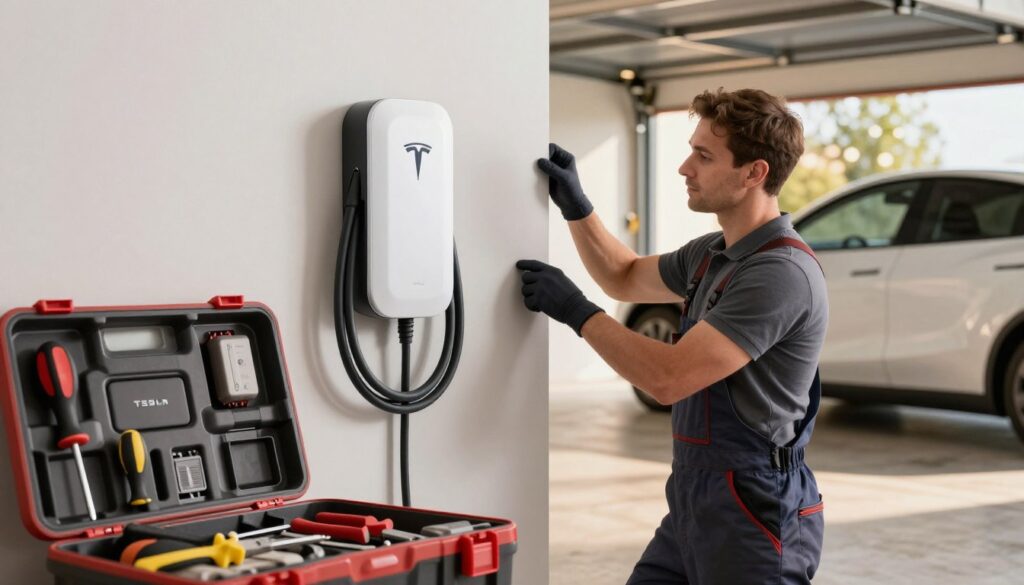
Price of the Tesla Wall Connector
The cost of the hardware is competitive for its features. I always check the latest prices from the manufacturer to stay on budget.
Comparing it to other cars, like the Hyundai Ioniq 6 vs Tesla Model 3 ultimate EV, shows charging infrastructure is key. Official hardware ensures a smooth experience with my car.
Additional Costs for Installation
There are also costs for labor and materials. My Tesla Wall Connector installation cost breakdown includes:
- Professional Labor: Fees for a licensed electrician to do the wiring.
- Electrical Upgrades: Costs for panel upgrades or circuit breaker additions.
- Materials: Expenses for conduit, wiring, and mounting hardware.
- Permitting: Fees for local safety inspections.
I’ve made a table to help me see these costs. It helps me track the cost of Tesla Wall Connector installation as I go through the project.
| Expense Category | Estimated Range | Impact on Budget |
|---|---|---|
| Hardware Unit | $450 – $500 | Fixed |
| Labor & Wiring | $500 – $1,500 | Variable |
| Permits & Fees | $100 – $300 | Variable |
By understanding these costs, I can make a realistic budget. Knowing where my money goes makes me feel more confident during the installation.
Installation Requirements for the Wall Connector
Before setting up home charging, I check if my electrical system is ready. Knowing the Tesla Wall Connector requirements is key for safe and efficient charging. Planning well avoids costly issues and ensures my car charges reliably, just like I care for my vehicle battery life.
Necessary Electrical Upgrades
I first check my home’s electrical panel capacity. Most homes can handle it, but I need to confirm enough available amperage for a high-voltage circuit. If my panel is full, I might need to upgrade or add a load management device.
Next, I check if the circuit breaker fits the charger’s amperage. Working with a pro ensures all wiring meets safety codes. This step prevents breaker trips and electrical strain.
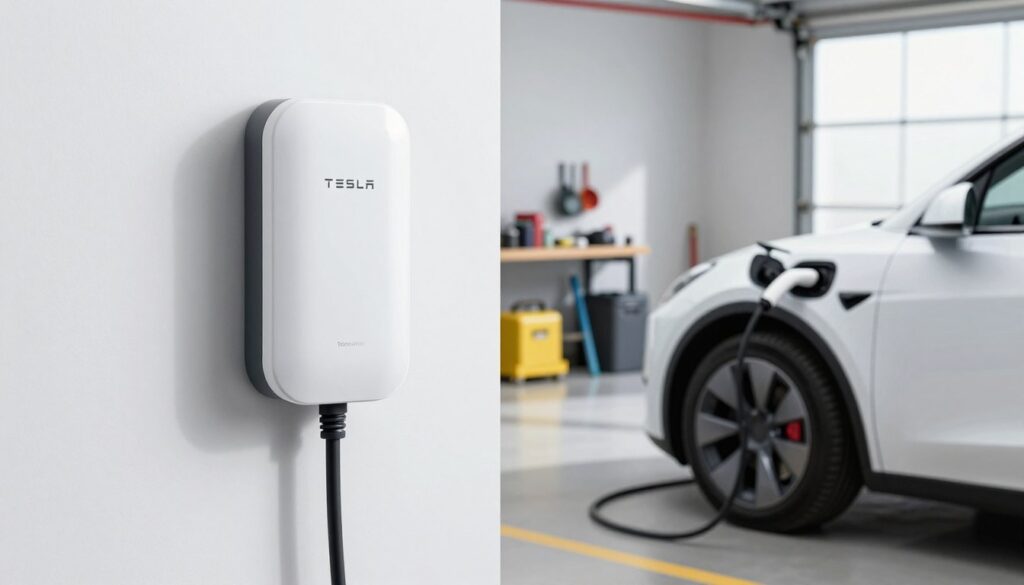
Location and Mounting Guidelines
Choosing the best place to install Tesla Wall Connector is about finding a balance. I look for a spot near the electrical panel to save on costs. It should also be easy to reach without tripping hazards.
I also think about the environment. Whether indoors or outdoors, the unit must be securely mounted. Here’s what I consider for the physical installation:
| Installation Factor | Primary Consideration | Impact on Setup |
|---|---|---|
| Proximity to Panel | Distance from main breaker | Reduces wiring and labor costs |
| Mounting Surface | Wall material and stability | Ensures long-term unit safety |
| Cable Reach | Parking orientation | Improves daily user convenience |
| Weather Protection | Exposure to elements | Maintains hardware longevity |
Hiring a Qualified Electrician
Finding a good electrician is key for my home charging setup. It’s not a DIY job because it deals with high-voltage electrical work. The safety of my home and the charger’s performance depend on the installation quality.
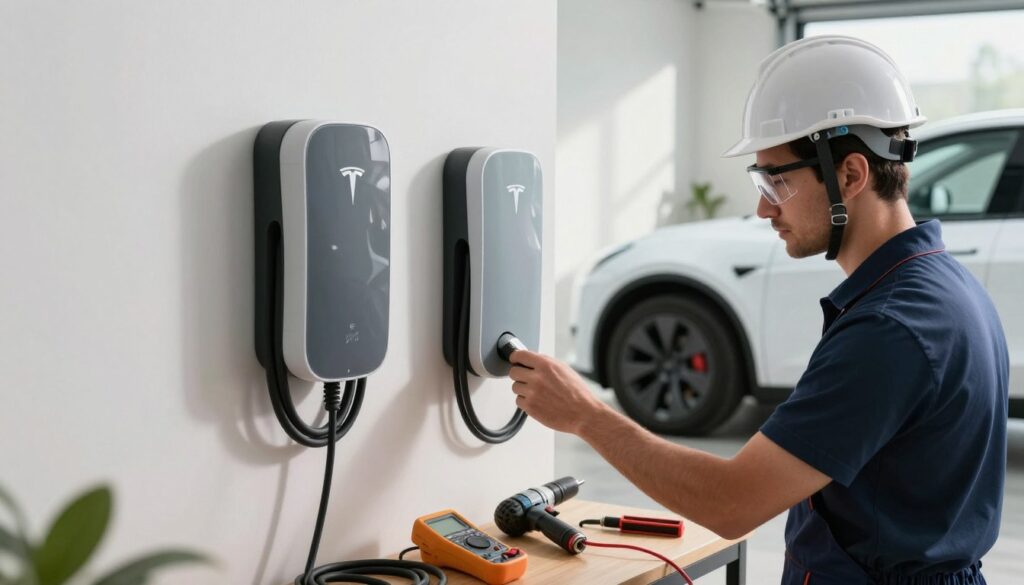
How to Find a Certified Tesla Installer
I start by checking the Tesla website for certified installers. These pros have the right training for my charging system. Choosing a certified expert means they know Tesla’s standards.
I also look for local contractors with good reviews from EV owners. It’s important they have the right licenses and insurance before I let them in.
“The integrity of your electrical system is the foundation of a safe charging experience. Never compromise on the quality of your installation to save a few dollars.” — Local Electrical Inspector
Expected Cost of Hiring an Electrician
Knowing the cost of Tesla Wall Connector installation helps me compare quotes. I don’t pick the cheapest option because quality is more important. The price changes based on my home’s electrical setup and the distance to the charger.
The table below shows what affects the installation cost:
| Cost Factor | Impact on Price | Complexity Level |
|---|---|---|
| Panel Upgrade | High | Advanced |
| Wiring Distance | Medium | Moderate |
| Permit Fees | Low | Standard |
| Labor Rates | Medium | Standard |
Getting several quotes helps me understand the average cost of Tesla Wall Connector installation in my area. I want each quote to be clear about labor and materials. This way, I know what to expect for the charger’s safe installation.
Permitting and Regulations
Before I plug in my new charger, I need to follow important legal and safety rules. It’s key to make sure my home charging setup is safe and legal. Following the Tesla Wall Connector requirements is not just for convenience. It’s about keeping my property and investment safe.
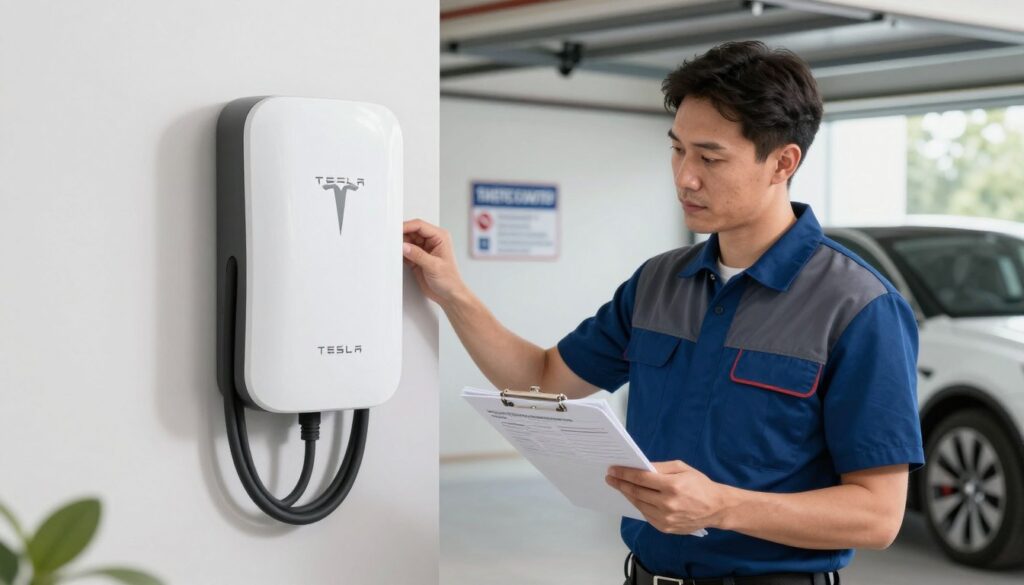
Understanding Local Building Codes
Every area has its own electrical rules for high-voltage equipment. These rules help prevent fires and make sure my home’s electrical system can handle the extra load. I need to check if my installation meets the National Electrical Code (NEC) and local rules.
If I’m not sure about these rules, I can ask a pro to check the Tesla Wall Connector requirements for my area. Following these guidelines helps avoid safety risks. For more info, I often look at this home EV charger installation guide.
Obtaining Necessary Permits
Getting a permit is a must to show the quality of the electrical work in my home. It means a certified inspector checks the installation, giving me peace of mind. Also, a permitted installation is often needed to keep my equipment warranty and insurance valid.
I see the permitting process as a safety measure, not a problem. It makes sure my setup meets all Tesla Wall Connector requirements and is ready for long-term use. After the work is done and the inspection is passed, I can charge my vehicle safely, knowing my home is protected.
Installation Process
Understanding the charger installation process makes me feel more confident. By using a Tesla Wall Connector installation guide, I can make sure everything is done right. This way, I can work well with my electrician and avoid any surprises.
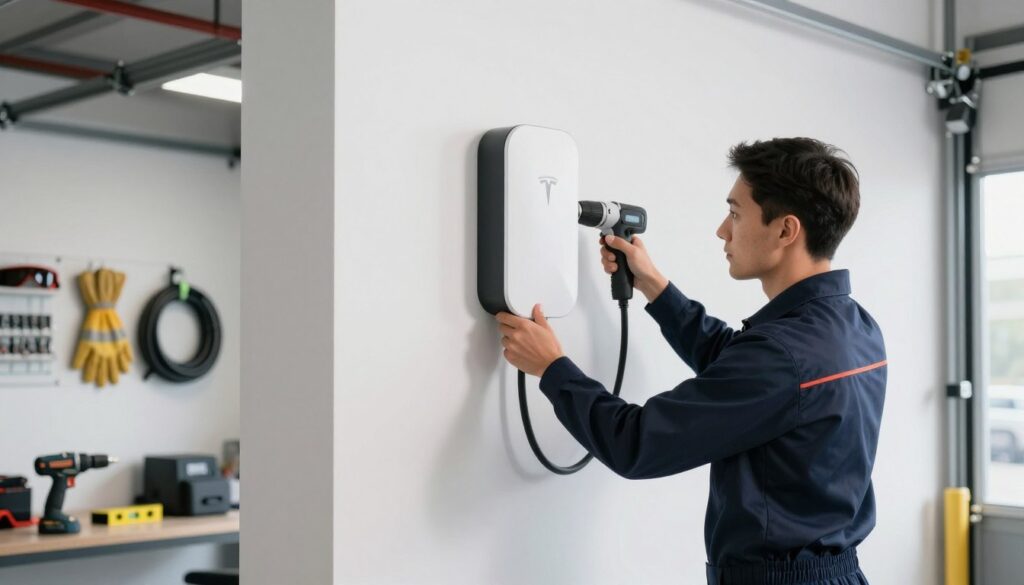
Steps to Install the Wall Connector
The Tesla Wall Connector installation process starts with checking my home’s electrical panel. My electrician will see if it can handle the new charger. Then, they’ll pick a spot, mount the unit, and connect it to the breaker box.
Once it’s mounted, the next step is careful configuration. The electrician will connect the wires and do safety tests. They’ll also make sure the charger works with my car.
Typical Timeframe for Installation
The time it takes to set up the Tesla Wall Connector depends on my home’s electrical system. Usually, it takes three to five hours. But, if my home needs big changes or long wires, it might take longer.
It’s smart to free up my schedule for the day. This way, I can focus on the installation without stress. Clear communication with my service provider helps keep things moving smoothly.
Maintenance Tips for Your Wall Connector
Keeping my home charging tech in top shape is easy with a few simple habits. The Tesla Wall Connector installation guide sets the stage for a safe start. But, regular care keeps it running smoothly for years. By being proactive, I dodge costly repairs and keep my charger in perfect working order.
Regular Checks and Maintenance
I check my charging unit monthly for any signs of wear. I look for frayed cables or cracks and make sure the handle is clean. It’s important to keep it dust-free to avoid overheating.
Here’s how I keep my gear in top shape:
- Wipe the exterior with a soft, damp cloth to remove dirt or grime.
- Check the cable for any physical damage or kinks that could restrict power flow.
- Ensure the charging port on my vehicle is clear of obstructions before plugging in.
- Verify that the mounting hardware remains tight and secure against the wall.
Troubleshooting Common Issues
Even with the best place to install Tesla Wall Connector chosen, I might run into minor problems. Most issues, like connectivity drops or charging stops, can be fixed with a few easy steps. I always start by checking the status lights on the unit, as they show the system’s status.
If I see a red light or the charger won’t charge, I follow this routine:
- Power Cycle: Turn off the circuit breaker for the charger, wait thirty seconds, and flip it back on.
- Check Wi-Fi: Make sure my home network is on if the unit won’t sync with the app.
- Inspect Connections: Double-check that the plug is fully in the vehicle port.
Choosing the best place to install Tesla Wall Connector helps avoid many problems, like moisture damage. If issues keep happening after trying a reset, I look at the official guide or call a certified expert. These small actions help my charger last longer and keep me ready to go.
Incentives and Rebates
Exploring tax credits and rebates is a smart way to cut costs for this upgrade. By looking into financial support, I can greatly reduce my Tesla Wall Connector installation cost breakdown. It’s key to check if I qualify before choosing any hardware or service.
Federal and State Incentives for EV Charging
At the federal level, I search for tax credits for charging equipment. These can effectively reduce my tax bill at year’s end. States also offer programs like grants or extra tax deductions for home charging stations.
I always check my state’s energy office website for updates. These programs change often, so staying informed is crucial for my financial planning. Keeping detailed records helps when applying for these credits.
Local Utility Rebates
Local utility companies also offer incentives for electric vehicles. These rebates can lower the cost of the equipment. Some providers have specialized rate plans for charging during off-peak hours.
Understanding rebate requirements is important in the installation process. I contact my utility provider early to see if I qualify. Using these local opportunities is a highly effective strategy to get the most value.
Conclusion: Is a Tesla Wall Connector Right for You?
Choosing to add a Tesla Wall Connector to my home means looking at my driving habits and energy use. I weigh the long-term benefits of a dedicated charger against the cost. My research on the Tesla Wall Connector setup helps me make a smart choice for my car.
Assessing Your Charging Needs
My choice depends on how much I use public charging stations versus home charging. I check my local utility rates and possible savings to make the cost worth it. This helps me keep my home ready for electric cars in the future.
Final Thoughts on Installation
Safety is key when I plan to install a Tesla Wall Connector. I know hiring a licensed electrician is important to meet all codes. A well-installed Tesla Wall Connector makes my daily routine easier and more reliable. I’m excited to move forward with my electric car journey.
FAQ
What is the average total cost of Tesla Wall Connector installation?
The hardware costs about 0, but the total cost is
FAQ
What is the average total cost of Tesla Wall Connector installation?
The hardware costs about $450, but the total cost is $1,000 to $2,500. This includes the unit, labor, materials, and permits.
Where is the best place to install Tesla Wall Connector in a two-car garage?
Install it on a central pillar or between the garage doors. This lets the 24-foot cable reach both cars, making charging flexible.
Do I need a permit for the Tesla Wall Connector setup?
Yes, you need an electrical permit for most areas. It ensures the work meets safety codes and keeps your insurance and warranty valid.
How long does the Tesla Wall Connector installation process take?
For a simple setup, it takes three to four hours. More complex installs, like long wire runs, may take a full day.
What are the primary Tesla Wall Connector requirements for my home’s electrical panel?
You need a 60-amp circuit for the fastest charging. Make sure your panel has enough space and capacity for the Wall Connector.
Are there any tax credits available for installing a Tesla Wall Connector at home?
Yes, there’s a Federal Tax Credit for EV charging equipment. It can cover up to 30% of costs. Check for local rebates to reduce costs further.
,000 to ,500. This includes the unit, labor, materials, and permits.
Where is the best place to install Tesla Wall Connector in a two-car garage?
Install it on a central pillar or between the garage doors. This lets the 24-foot cable reach both cars, making charging flexible.
Do I need a permit for the Tesla Wall Connector setup?
Yes, you need an electrical permit for most areas. It ensures the work meets safety codes and keeps your insurance and warranty valid.
How long does the Tesla Wall Connector installation process take?
For a simple setup, it takes three to four hours. More complex installs, like long wire runs, may take a full day.
What are the primary Tesla Wall Connector requirements for my home’s electrical panel?
You need a 60-amp circuit for the fastest charging. Make sure your panel has enough space and capacity for the Wall Connector.
Are there any tax credits available for installing a Tesla Wall Connector at home?
Yes, there’s a Federal Tax Credit for EV charging equipment. It can cover up to 30% of costs. Check for local rebates to reduce costs further.

Hi! I’m Moheen Iftikhar, the founder of “CarSpherei.” I’m passionate about everything automotive — from the latest car trends and cutting-edge technology to driving tips and expert insights. Through CarSpherei, I share in-depth reviews, helpful guides, and practical advice to keep every car enthusiast informed, inspired, and connected to the world of driving.