


How to Maximize Tesla Model 3 Battery Life in 2026
Did you know electric vehicle batteries are made to last longer than the car itself? They can go over 500,000 miles with the right care. Treating your car as a long-term asset makes a big difference in how you own it.
Keeping your high-voltage system in good shape is key. It helps keep your daily range strong and boosts resale value. Knowing your daily habits can also lower the chance of expensive repairs.
In this guide, I’ll share expert tips for protecting your investment. These methods will help you manage charging and storage. This way, your car will stay reliable for many years.
Key Takeaways
- Proper charging habits significantly extend the longevity of your power cell.
- Consistent maintenance prevents expensive out-of-warranty service costs.
- Daily driving patterns directly influence long-term degradation rates.
- Preserving your range is vital for maintaining high vehicle resale value.
- Strategic care transforms your vehicle into a durable, long-term asset.
Understanding Tesla Model 3 Battery Technology
The secret to long-term performance lies in the sophisticated technology hidden beneath the floor of your vehicle. By understanding how these high-energy-density materials work, you can apply Tesla Model 3 battery longevity tips to your daily routine. It’s impressive that many well-maintained packs retain significant capacity even after 200,000 miles of travel.
How Lithium-Ion Batteries Work
At the core of your vehicle, lithium-ion cells store energy through the movement of ions between a cathode and an anode. During charging, these ions migrate to the anode, while they return to the cathode when you drive. This chemical dance is the foundation of your car’s power.
Over time, the efficiency of this process can naturally decline due to chemical aging. By managing how you charge and drive, you can slow this degradation. Consistent, moderate usage helps keep the internal chemistry stable for the long haul.
Key Benefits of Tesla’s Battery Management System
Tesla uses a highly advanced Battery Management System (BMS) to protect your investment. This software acts as a digital guardian, monitoring every individual cell in real-time to ensure safety and efficiency. It prevents the pack from reaching dangerous temperatures, whether you are charging in the summer heat or driving in freezing winter conditions.
The BMS also balances the charge across all cells, which is vital for maintaining total capacity. By relying on this technology, you can focus on the road while the system handles the complex task of optimizing energy flow. Following these Tesla Model 3 battery longevity tips ensures you work with your car’s software, not against it.
| Factor | Impact on Health | Management Strategy |
|---|---|---|
| Extreme Heat | High Degradation | Park in shade |
| Deep Discharge | Moderate Stress | Keep above 20% |
| Fast Charging | Variable Stress | Use only when needed |
| BMS Monitoring | Positive Support | Keep software updated |
Best Practices for Charging Your Tesla Model 3
Managing your daily power intake is key to a healthy battery. By sticking to consistent habits, you can improve your Tesla Model 3’s battery performance. Small changes in your routine can make a big difference in the long run.
Optimal Charging Levels to Maintain
To keep your battery in top shape, charge it between 50% and 80% daily. This range avoids the stress of extreme charges. Consistency is key for your battery’s health.
Recommended Charging Frequencies
Don’t wait until your battery is low to charge. Instead, plug in your car whenever it’s parked at home. This helps manage its temperature and health.
- Plug in daily to avoid deep discharges.
- Keep the charge level within the recommended 50–80% window.
- Use scheduled charging to take advantage of off-peak electricity rates.
The Impact of Supercharging
Supercharging is great for long trips, but it’s not for daily use. It can cause heat damage over time. I advise using Level 2 home charging for daily needs. Save Supercharging for long trips when you need a quick charge.
Temperature Considerations for Battery Longevity
Thermal management is key to keeping your car’s range and battery life strong. It’s not just about how you charge it. Where you park and drive your car matters a lot. To keep your Tesla Model 3’s battery in top shape, managing its temperature is essential.

Effects of Extreme Temperatures
Heat is the biggest foe of lithium-ion batteries. Leaving your car in hot spots for too long speeds up aging. This thermal stress can cut down your battery’s capacity over time.
On the other hand, cold weather can limit your car’s power and range. Cold doesn’t cause permanent damage like heat does. But, it makes the battery work harder to stay in good shape. Knowing this helps you protect your investment.
Tips for Regulating Battery Temperature
Choosing where to park can help a lot. Try to park in a garage or a shaded spot to keep your battery cool. This stops it from getting too hot when it’s parked.
In cold areas, use the scheduled departure feature. It warms the battery before you leave, using power from the grid. This keeps your car ready to go and your battery healthy.
| Condition | Primary Risk | Recommended Action |
|---|---|---|
| Extreme Heat | Chemical Aging | Park in shade |
| Extreme Cold | Reduced Range | Use Scheduled Departure |
| Moderate Temp | Optimal Health | Standard maintenance |
By following these Tesla Model 3 battery longevity tips, you can keep your car running well for a long time. Taking care of the environment around your car helps protect its battery. Doing these small things every day is the best way to keep your battery healthy.
Smart Driving Habits to Extend Battery Life
Changing how I drive has a big impact on my car’s battery life. The way you drive every day affects your car’s parts. Making small changes can help a lot in extending Tesla Model 3 battery lifespan.

Accelerating and Braking Efficiently
One simple way to protect your battery is to avoid sudden, hard starts. When I’m not in a rush, I use Chill mode. This setting makes the car accelerate more smoothly, which helps keep the battery cool.
Driving at a steady speed is key to keeping your battery healthy. It’s important for extending Tesla Model 3 battery lifespan. Smooth driving is better for your car’s high-voltage system.
Utilizing Regenerative Braking
I always tell drivers to use regenerative braking to its fullest. This feature captures energy when you slow down and puts it back into the battery. It’s a great way to slow down without wearing out your brakes.
Using regenerative braking helps your brakes last longer and keeps your battery charged. By driving smoothly, you reduce battery stress. This keeps your battery in top shape. Regular use of regenerative braking is a smart way to extend Tesla Model 3 battery lifespan and enjoy a smoother ride.
Importance of Software Updates
Keeping your electric vehicle in top shape often depends on digital updates. Tesla regularly sends updates that improve how your car uses energy and manages heat. These updates keep your car running smoothly by using the latest technology.

How Updates Affect Battery Performance
These digital updates are key for Tesla Model 3 battery performance optimization. For example, the 2025.8.3 update added a battery health test. This lets you track your battery’s condition, giving you peace of mind.
Updates also adjust how the car handles heat. They make sure the battery cells work well together. Consistent updates protect your car’s most valuable part.
Checking for New Features
I always check for updates by going to the “Software” tab on my screen. When a new update comes, it often makes your car more efficient.
The table below shows how updates help your car last longer:
| Feature Category | Primary Benefit | Impact on Battery |
|---|---|---|
| Thermal Management | Optimized cooling cycles | Reduces cell stress |
| Charging Logic | Smoother power intake | Extends cycle life |
| Health Diagnostics | Real-time monitoring | Early issue detection |
| Energy Efficiency | Reduced phantom drain | Preserves capacity |
Being proactive with these updates is a smart move. By doing so, you help keep your Tesla Model 3 battery in great shape for years.
Regular Maintenance for Your Tesla Model 3
Keeping up with simple maintenance tasks is key to protecting your Tesla Model 3. Electric cars don’t have complex engine parts, but they need care to keep the battery in great shape. It’s important to follow Tesla Model 3 battery maintenance best practices for long-term reliability.
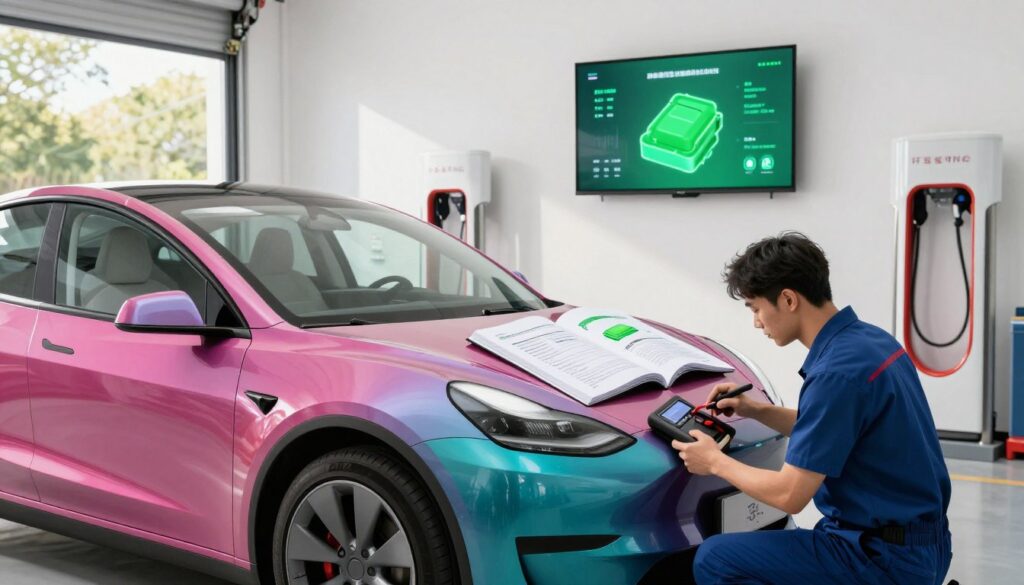
Schedule of Battery Health Checks
Using the Tesla app tools is a great way to extend your Tesla Model 3 battery lifespan. Regularly checking your car’s status helps catch problems early. If your model allows it, do an in-car battery health test once a year.
This yearly test sets a baseline for battery degradation. It lets you track how your battery performs over time. Keeping records of these tests helps spot issues before they become big, expensive problems. Regular checks give you peace of mind and keep your car running efficiently.
Keeping the Battery Clean
Physical maintenance is also important for battery health. Make sure your car isn’t carrying extra weight. This forces the battery to work harder, which can reduce your range.
Also, keep your car clean to improve aerodynamics. A clean car moves through the air more easily, which saves energy. Here’s a list of maintenance tasks to keep your car in top condition.
| Maintenance Task | Frequency | Primary Benefit |
|---|---|---|
| Battery Health Test | Annually | Tracks degradation |
| Weight Reduction | Monthly | Improves efficiency |
| Exterior Cleaning | Bi-weekly | Reduces drag |
| App Status Check | Weekly | Early issue detection |
Understanding Battery Range Management
Managing my car’s range has changed how I drive every day. The built-in tech helps my car run better and last longer. Using Tesla Model 3 battery care strategies lets me drive confidently and worry-free.

Features to Manage Driving Range
The Trip Planner is my go-to tool. It plans my route and preconditions the battery for charging. This makes charging faster and more efficient.
The Energy app on my screen is also key. It shows how much energy I’m using and how far I can go. Monitoring these metrics helps me adjust my driving to reach my destination easily.
Tips for Long-Distance Travel
For long trips, I keep my battery level healthy. I avoid letting it get too low, as it can harm the battery over time. Keeping it in a moderate state is a top Tesla Model 3 battery care strategy.
Planning my stops ahead of time also helps. I choose Supercharger spots that are reliable and efficient. Strategic planning makes my long drives enjoyable and stress-free.
When to Seek Professional Help
Knowing when your car needs a pro is important. I stick to Tesla Model 3 battery care strategies to keep mine in top shape. But, some problems need a pro’s help. It’s important to know when it’s just normal wear and tear versus a real issue.
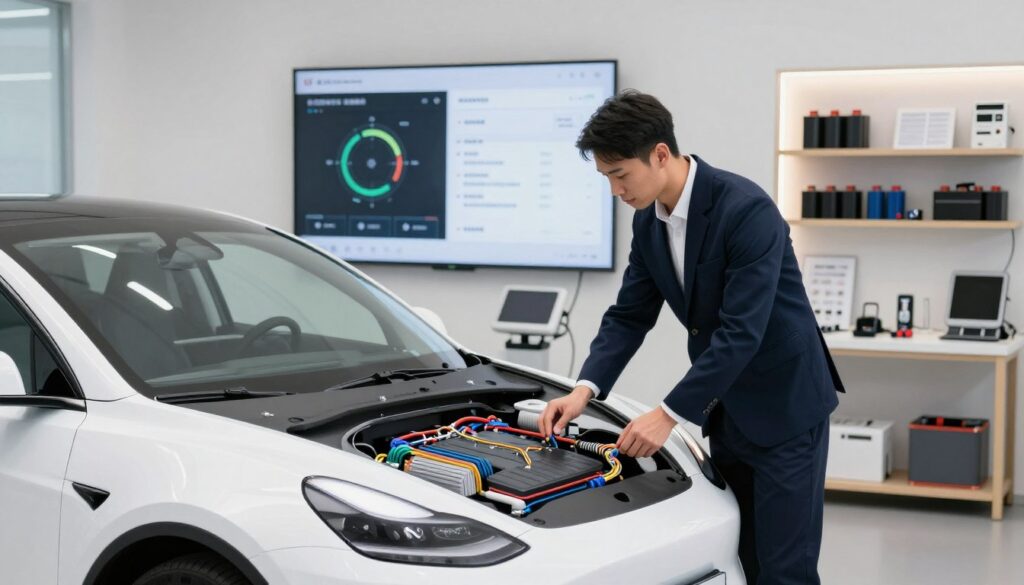
Signs of Battery Problems
Battery wear happens slowly over years. If you want to know how long they last, check out this article. But, if your range drops suddenly, get a tech to check it out.
Red flags show up as dashboard alerts. Any messages about the high-voltage system are urgent. Don’t ignore them, or you might damage your car’s powertrain or charging system.
Choosing the Right Service Center
For any issue, go to an authorized service center. They use the right tools and follow Tesla’s rules. This keeps your warranty good and your car well cared for.
| Condition | Status | Recommended Action |
|---|---|---|
| Gradual range loss | Normal | Continue routine charging |
| High-voltage alert | Critical | Schedule service immediately |
| Slow charging speed | Variable | Check ambient temperature |
| System error codes | Urgent | Contact roadside assistance |
Accessories to Enhance Battery Efficiency
When it comes to preserving Tesla Model 3 battery health, the right accessories are key. Many gadgets claim to fix battery issues quickly. But, the best way is to invest in quality hardware that supports your car’s systems.
By picking the right tools, you ensure a steady power flow. This protects your investment for many years.
Importance of Quality Charging Equipment
Consistent and controlled charging is vital for a healthy battery. I suggest using a dedicated Level 2 home charger, like the Tesla Wall Connector. Level 2 charging is gentler on the battery cells, which helps keep your battery efficient over time.
Using DC fast chargers too often can cause heat damage. This can speed up battery wear. Charging at home keeps your battery in the best condition. Reliable hardware is the best insurance policy for your vehicle’s power storage.
Battery Insulation Solutions
Keeping your vehicle’s temperature in check is also important. The car has a built-in thermal management system. But, using insulated garage covers or charging cable organizers can help more. These items protect your charging ports and cables from damage.
By focusing on these solutions, you ensure a stable connection every time. Prioritizing quality over cheap alternatives means your vehicle gets a safe, consistent power supply. These small steps help keep your electric vehicle reliable and long-lasting.
Environmental Impact on Battery Life
Your local environment plays a big role in how your vehicle uses energy over time. I’ve learned that things outside your car are as important as how you charge it. Knowing these factors helps you understand your car’s daily range and long-term performance better.
Driving Conditions & Their Effects
Extreme weather affects your car’s performance. Driving in cold weather limits regenerative braking and reduces range until the battery warms up. This is a safety feature to keep the battery stable.
Once the car and battery warm up, these features return to normal. Regularly facing these temperature changes is important for keeping your Tesla Model 3’s battery healthy over time.
The Role of Elevation and Terrain
The terrain of your daily drive also affects energy use. Hills and mountains require more power than flat roads. This extra load makes the battery work harder, affecting efficiency.
Driving fast on highways also puts a strain on the battery. Planning your trips with these factors in mind helps avoid unnecessary wear. Here’s a quick look at how different environments impact your car’s energy use and maintenance needs.
| Environmental Factor | Primary Impact | Efficiency Effect |
|---|---|---|
| Extreme Cold | Reduced Regen | High Energy Drain |
| Steep Elevation | Increased Load | Moderate Energy Drain |
| High-Speed Driving | Wind Resistance | High Energy Drain |
| Moderate Climate | Optimal Performance | Maximum Efficiency |
Being mindful of these conditions helps you keep your Tesla Model 3’s battery in top shape. Making small changes to your driving in tough terrain can greatly improve your battery’s long-term health.
Preparing for the Future of Battery Technology
Tesla is always improving electric vehicle performance. They’re working on new battery chemistry and management software. They’re even looking into extended warranties that could last up to 12 years.
This shows Tesla’s dedication to making your car reliable for a long time.
Emerging Innovations
New energy density developments will change our car use. It’s important to stay updated on these changes. This way, you can keep your Tesla Model 3 running smoothly in 2026 and later.
Adapting Your Ownership Strategy
Keep an eye on Tesla’s official updates for new hardware and software. Using this info in your daily routine helps protect your investment. Learning how to care for your Tesla Model 3’s battery will ensure it lasts long.
Share your battery care tips in the community forums. This helps other owners too.
FAQ
What are the best Tesla Model 3 battery care strategies for a new owner?
Keep your daily charge between 50% and 80%. Avoid frequent Supercharging. Always plug in at home to let the BMS manage cell health.
How can I focus on preserving Tesla Model 3 battery health during the summer?
Park in the shade and avoid high charge levels in sunlight. Heat is a big factor in degradation, so keep the pack cool.
What are the top Tesla Model 3 battery longevity tips for cold climates?
Use ‘Scheduled Departure’ to precondition the battery while plugged in. This warms the cells using grid power, protecting them from cold stress.
Are there specific Tesla Model 3 battery maintenance best practices I should follow annually?
Run the in-car battery health test through the service menu once a year. This helps track your battery’s capacity and catch any unusual degradation early.
How does driving style contribute to maximizing Tesla Model 3 battery efficiency?
Use ‘Chill Mode’ and maximize regenerative braking. This reduces thermal load and electrical spikes on the battery. A smoother driving style extends range and battery life.
Does the Tesla Model 3 battery performance optimization change with software updates?
Yes, Tesla frequently releases updates that improve battery management. Stay current with software to benefit from the latest engineering refinements and battery protection algorithms.
What is the most effective way of extending Tesla Model 3 battery lifespan over 200,000 miles?
The best approach is moderate charging limits, avoiding extreme heat, and using Level 2 home charging for daily needs. This is the gold standard for high mileage with minimal capacity loss.
Why is preconditioning important for Tesla Model 3 battery performance optimization?
Use the built-in Trip Planner to precondition the battery before Supercharging. This brings cells to the ideal temperature for fast charging, reducing internal resistance and protecting long-term health.

Hi! I’m Moheen Iftikhar, the founder of “CarSpherei.” I’m passionate about everything automotive — from the latest car trends and cutting-edge technology to driving tips and expert insights. Through CarSpherei, I share in-depth reviews, helpful guides, and practical advice to keep every car enthusiast informed, inspired, and connected to the world of driving.