


Tesla Autopilot vs Full Self-Driving: Is the Upgrade Worth It?
Did you know over 90% of car accidents are caused by human mistakes? As we move forward with driver-assistance tech in 2026, picking between software tiers gets tricky. Many think these systems make cars fully self-driving, but constant human supervision is always needed for safety.
I aim to give you a clear upgrade comparison to choose the right features for your daily drive. Whether you need better highway driving or city navigation, knowing your car’s capabilities is key. Let’s explore these digital tools to see if they really make driving better.
Key Takeaways
- Current driver-assistance systems require active human monitoring at all times.
- Marketing terminology often masks the reality of limited vehicle autonomy.
- Hardware versions dictate which software features your car can actually support.
- Selecting a package depends heavily on your unique driving environment and habits.
- Evaluating these options requires looking past the hype to assess real-world utility.
Understanding Tesla Autopilot Features
Getting to know the Tesla driving features is key for new owners. Tesla is known for its innovation, but it’s vital to know the difference between basic driver help and full autonomy. I see it as a helpful assistant, not a replacement for my own driving skills.
What is Tesla Autopilot?
Tesla Autopilot is a set of advanced systems to make driving easier on highways. It acts as a smart cruise control and steering aid. It is not a self-driving system, and drivers must stay alert at all times.
The system uses cameras and sensors to watch the road. It keeps a safe distance from other cars and stays in its lane. I use it to reduce driver fatigue on long drives, not to ignore the road.
Key Capabilities of Autopilot
The main strength of Autopilot is handling repetitive tasks. It has two main parts:
- Traffic-Aware Cruise Control: This feature matches the car’s speed to traffic.
- Autosteer: This helps steer the car in a marked lane.
These Tesla driving features work best on highways with clear lanes and steady traffic. They make driving smoother and less stressful.
Limitations of Autopilot
Autopilot has its limits that drivers must follow. It’s not made for complex city driving, like busy intersections or stop-and-go traffic.
The software might have trouble with certain traffic lights or unexpected road items. Because of this, I always keep an eye on the road. Human supervision is mandatory for safe driving in all situations.
Exploring Full Self-Driving Features
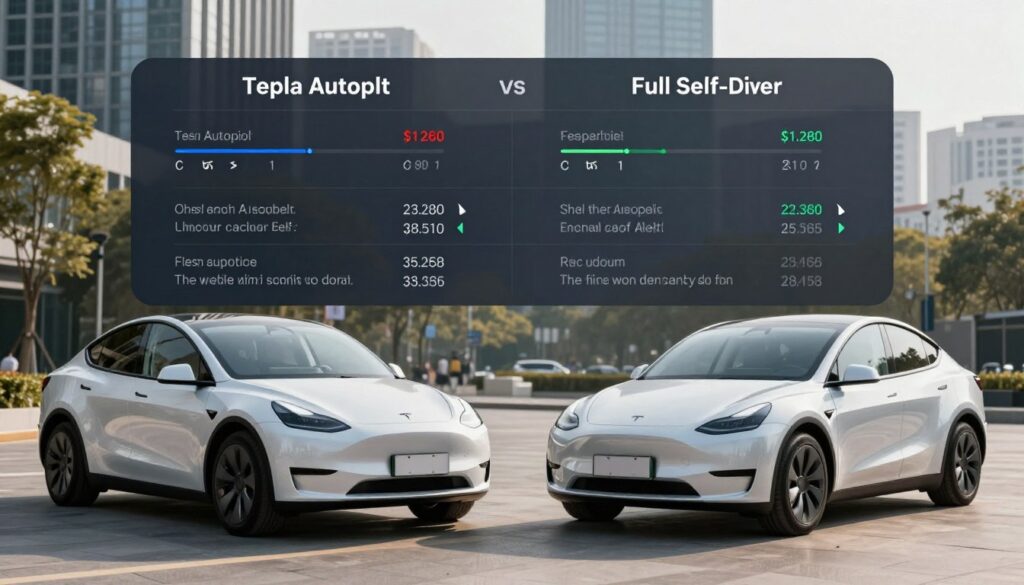
When we look at Tesla Autopilot vs Full Self-Driving, the difference is clear. Autopilot keeps the car stable on highways. But Full Self-Driving handles more complex environments.
What is Full Self-Driving?
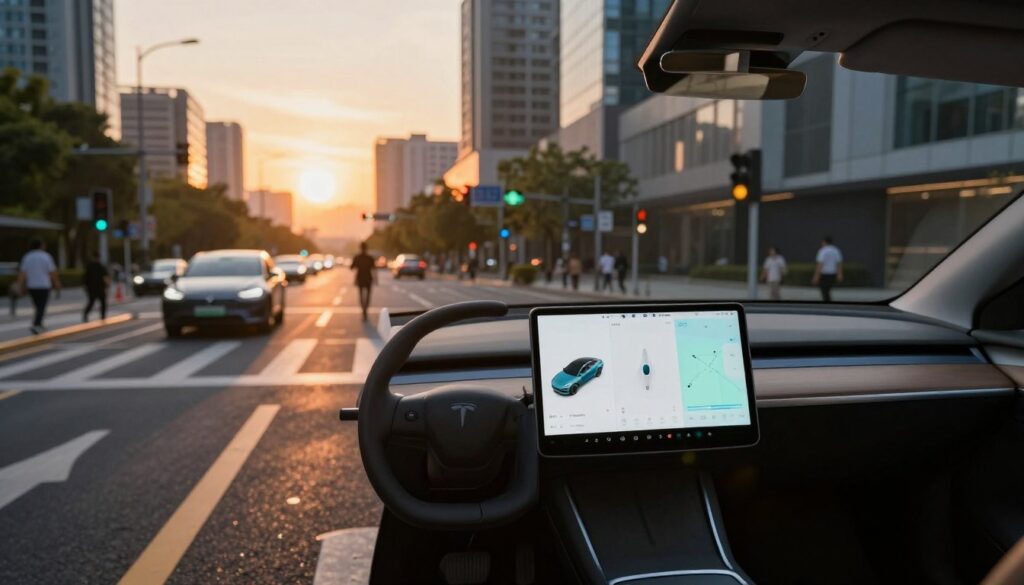
Full Self-Driving (Supervised) is a big step up in Tesla driving features. It uses advanced software that gets better with updates. This system is always learning.
But, it’s important to remember. Even with these advanced features, the driver must stay alert. They need to be ready to take control at any time.
“The goal of Full Self-Driving is to provide a seamless experience that eventually handles the vast majority of driving tasks, though we are currently in a supervised phase of this journey.”
Key Capabilities of Full Self-Driving
This package can handle complex city driving. It can recognize traffic lights, stop signs, and roundabouts. It’s a big improvement over standard systems.
The software is great at making lane changes and turns in busy traffic. It uses real-time data to make smart decisions. This keeps the drive smooth and efficient.
Differences from Autopilot
The difference between Autopilot and Full Self-Driving is huge. Autopilot is for keeping the car in the lane and controlling speed. Full Self-Driving is for dynamic city navigation.
So, the choice between Tesla Autopilot vs Full Self-Driving depends on where you drive. If you’re in the city a lot, Full Self-Driving offers more help than Autopilot.
Cost Analysis: Autopilot vs Full Self-Driving
When I look at upgrading my car, I see a big change in prices. It’s important to understand the costs upfront and the new subscription options. This helps me make a smart choice for my car.
Initial Purchase Prices
Before, getting advanced features meant a big upfront payment. This significant investment was added to my car loan. It made my monthly payments higher.
This method gives permanent access to the software. But, it’s a big upfront cost. Owners must think about future software updates and if they’re included in the initial price.
Subscription Model Overview
The monthly subscription model has changed how I think about Tesla autonomous driving upgrade. Now, I can pay a recurring fee instead of a one-time payment. This gives me more flexibility.
- Lower barrier to entry: The monthly cost lets me test features without a long-term commitment.
- Budget control: I can pause or cancel the service when I don’t need advanced features.
- Financial agility: This model is great for those who don’t want big, non-refundable upfront costs.
Long-Term Value Assessment
Looking at the total cost over five years, it depends on how I use the software. If I only use it for occasional trips, the subscription is more cost-effective.
But, for daily users, the one-time purchase might be better in the long run. It’s a choice between daily convenience and the peace of mind from a one-time payment.
User Experience: Driving with Autopilot
My daily commute changed a lot when I started using Tesla Autopilot benefits. When I hit the highway, the system makes me feel calm. It handles steering and speed, so I arrive feeling refreshed.
Ease of Use
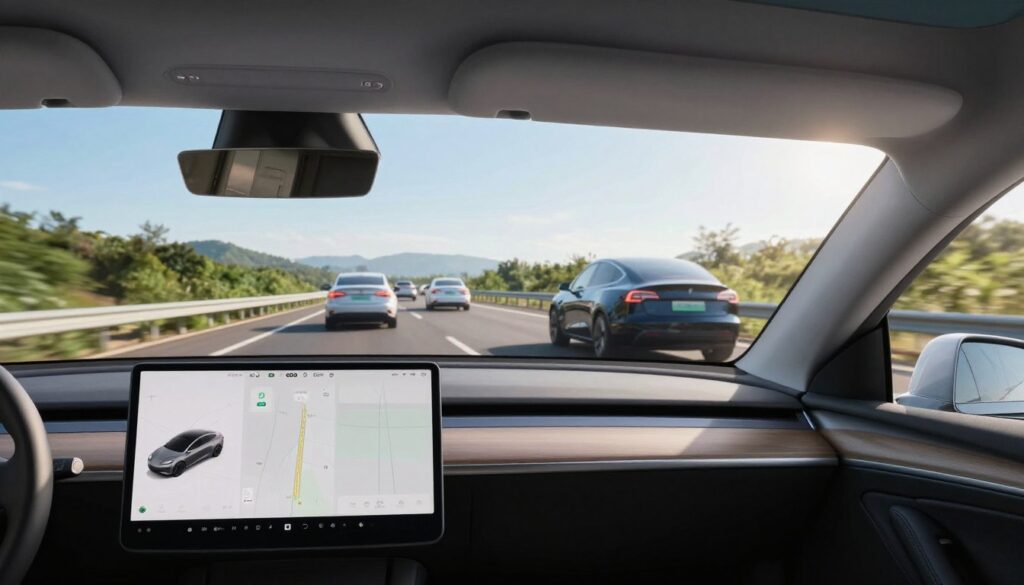
Turning on the system is easy, just a quick flick of the gear stalk. The car stays in the center of the lane, even on curves. Speed adjustments are smooth, matching traffic flow.
This seamless integration makes long trips easier. I don’t need to constantly adjust the wheel or check my speed. It’s a smart tool for driving on marked roads.
Safety Features
Safety is the system’s main focus. It watches closely and alerts me if I’m not paying attention. These alerts remind me to stay ready to take control.
The system is a helper, not a replacement. It keeps me focused on the road. This mix of automation and human oversight is key for safety.
Real-Life Testimonials
Many owners feel less tired when using the system. Frequent travelers say it lowers their stress on long drives. It’s not fully autonomous, but it makes driving more comfortable.
| Feature | Functionality | Driver Impact |
|---|---|---|
| Lane Centering | Active steering support | Reduces physical strain |
| Traffic-Aware Cruise | Dynamic speed control | Lowers mental fatigue |
| Attention Monitoring | Nag alerts and sensors | Ensures road focus |
User Experience: Driving with Full Self-Driving
Getting into a Tesla with Full Self-Driving (Supervised) feels like stepping into the future. The system does a lot, but it’s important to remember it’s a supervised tool. As the driver, I’m key to keeping everyone safe and on track.
Navigating Complex Scenarios
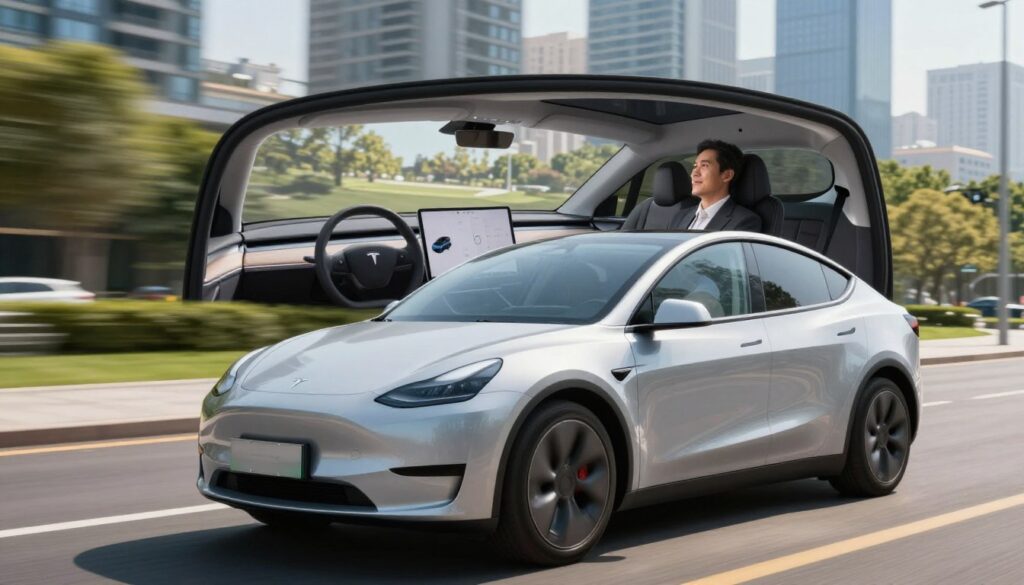
The system is great at handling city streets. It spots stop signs, deals with traffic lights, and gets through busy spots with skill. These Full Self-Driving advantages let the car make smart choices in real time.
But, I need to stay alert. I must be ready to step in if the system faces a tricky situation or an unexpected obstacle. The tech is impressive, but it’s not a full replacement for human insight yet.
Enhanced Safety Measures
Safety is at the heart of the system. It uses cameras and sensors for a 360-degree view. This setup helps prevent mistakes during everyday driving.
“The true power of autonomous technology lies not in removing the driver, but in empowering them with a co-pilot that never tires and never loses focus.”
The car keeps an eye on me all the time. If I look away for too long, it alerts me to stay focused. This mix of human and machine is a big Full Self-Driving advantage for those who value safety.
User Feedback and Satisfaction
Many tech-savvy drivers love the experience. Working with such advanced software offers a glimpse into AI’s progress. Here’s how users generally see the system’s performance in different settings.
| Environment | Performance Level | Driver Role |
|---|---|---|
| Highway Driving | High | Supervisory |
| Urban Intersections | Moderate | Active Monitoring |
| Residential Streets | Moderate | High Vigilance |
Opinions vary, with some loving the ease and others finding it challenging. The Full Self-Driving advantages shine for those who enjoy new tech. As updates come, the system gets better and more user-friendly.
Safety Ratings and Comparisons
Safety is key for drivers, making a self-driving technology comparison essential. These tools help the driver, not replace them. I aim to explain how these systems work with the car’s safety features.
NHTSA Ratings for Autopilot
The National Highway Traffic Safety Administration (NHTSA) crash tests vehicles. These tests show how well a car protects passengers in crashes. It’s wrong to think Autopilot changes these safety scores.
Autopilot uses cameras and sensors to watch the road. It offers active safety benefits like emergency braking. But, the NHTSA rating focuses on the car’s physical build. For more on these systems, check out this Tesla FSD vs Autopilot comparison.
NHTSA Ratings for Full Self-Driving
Like Autopilot, Full Self-Driving (FSD) doesn’t change a car’s crash safety rating. The NHTSA checks how well a car does in crashes. It looks at the car’s chassis and airbags.
FSD adds enhanced safety measures to prevent accidents. It uses advanced machine learning to spot dangers. These safety layers work with the car’s high safety ratings.
Comparison of Safety Features
Here’s a clear self-driving technology comparison. Both systems use the same sensors for tasks like lane keeping and obstacle detection.
| Feature | Autopilot | Full Self-Driving |
|---|---|---|
| Emergency Braking | Included | Included |
| Lane Centering | Included | Included |
| Traffic Light Control | Not Available | Included |
| Auto Lane Change | Not Available | Included |
Both systems need the car to detect obstacles and react fast. Whether you use Autopilot or Full Self-Driving, the core safety hardware is the same. It provides a solid base for all driver-assist functions.
Regulation and Legal Considerations
The use of autonomous driving technology in our daily lives raises important legal questions. As we explore these new features, we must remember that the law holds the driver responsible. Even if the car can drive itself, the driver is legally liable for it.
Current Legal Landscape for Autonomy
In the United States, laws about self-driving cars vary by state and federal rules. Most places say the driver must stay alert and ready to take control at any moment. This rule makes sure autonomous driving technology doesn’t skip the need for human supervision on public roads.
Tesla’s Approach to Regulations
Tesla is active in working with safety regulators to improve its technology. The company shares data to show how its features work in real life. By doing this, Tesla wants to meet safety standards and help make new rules.
Future Implications for Full Self-Driving
As autonomous driving technology gets better, laws might change. I think we’ll see new rules as cars become more self-driving. It’s important for car owners to keep up with these changes to use these features safely and legally.
Customer Support and Updates
Having a modern electric vehicle means you get remote updates. These updates keep your car feeling new without needing a visit to the service center. By focusing on Tesla vehicle upgrades, the company makes sure your car gets better over time.
Access to Software Updates
Managing your car’s smarts is easy through the main screen. Always check the software tab to see what features you have. This is key, even if you bought a used car, to know about your Tesla vehicle upgrades.
Customer Service Experience
For tech questions, the mobile app is my go-to. The support team quickly solves problems without needing a visit. This makes customer care a big part of owning a Tesla.
Community and Online Resources
I often check online forums and groups for tips. These places are great for fixing common problems with your car’s features. Talking with other owners can reveal settings that make your Tesla vehicle upgrades even better.
| Resource Type | Primary Benefit | Accessibility |
|---|---|---|
| Mobile App | Remote Diagnostics | High |
| Software Menu | Feature Verification | Instant |
| Owner Forums | Community Insights | 24/7 |
| Service Centers | Hardware Repairs | Scheduled |
Comparing Technology and Innovation
The real strength of Tesla lies in its advanced software. Unlike others, Tesla views its cars as high-tech computers. This approach is key to modern autonomous driving technology.
AI and Machine Learning in Driving
Every Tesla has a powerful neural network at its core. It learns from millions of miles of driving data. This network adapts to new situations, unlike systems based on fixed rules.
For a closer look at how these features work, check out this Tesla Autopilot ultimate guide. The car uses sensor data to map its surroundings. This lets it react to dangers faster than a human.
Future Innovations to Expect
Next, we’ll see improvements in edge computing and sensor fusion. Better hardware will lead to faster processing of complex situations. This will expand what’s possible in self-driving technology comparison.
Future updates will also include predictive models for pedestrians and other drivers. This will make driving safer and more reliable. Soon, human help will be needed less often.
Tesla’s Competitive Advantage
Tesla stands out because of its own chip design and vast data fleet. Unlike others, Tesla makes its own silicon for its neural networks. This makes it hard for competitors to catch up.
In a self-driving technology comparison, Tesla’s data lead is clear. Each car helps improve the AI models. This keeps Tesla’s software ahead of the rest.
Pros and Cons of Each System
Choosing between Tesla’s driver-assistance packages means understanding what each offers. It’s best to think about your driving habits when deciding. A detailed comparison of Tesla’s software tiers can help clarify the differences.
Advantages of Autopilot
The main Tesla Autopilot benefits are for highway driving. It keeps the car at a steady speed and in its lane. This reduces driver fatigue on long trips.
Advantages of Full Self-Driving
The Full Self-Driving advantages are in navigating city streets. It handles traffic lights, stop signs, and turns. It’s the latest in car tech for those wanting to see the future.
Drawbacks of Each System
Both systems need the driver to stay alert. They’re not fully autonomous, and you must always supervise. There’s also a learning curve to know when to let the system take over.
| Feature | Autopilot | Full Self-Driving |
|---|---|---|
| Primary Use | Highway Driving | City & Highway |
| Core Benefit | Reduced Fatigue | Advanced Navigation |
| Supervision | Required | Required |
Choosing depends on what you value more: comfort on highways or city driving. Try both if you can. Remember, these tools are meant to help, not replace, the driver.
Final Thoughts: Is the Upgrade Worth It?
Choosing between standard features and advanced software depends on your daily driving. It’s about valuing cutting-edge automation or practical highway assistance.
Summary of Key Points
Standard Autopilot is great for long trips on highways. It offers safety and convenience. Full Self-Driving is better for complex city driving. Your commute decides the upgrade’s value.
Considerations for Future Buyers
Money matters in this choice. The monthly subscription is a smart way to try it out. It lets you test the tech without a big upfront cost.
Making an Informed Decision
Think about your interest in AI before buying. If you like new tech, the premium package is appealing. Take your time to decide what’s best for you.
FAQ
What is the main difference in a Tesla Autopilot vs Full Self-Driving comparison?
Autopilot is for highways, focusing on keeping you in your lane and at the right speed. Full Self-Driving, on the other hand, can handle city streets and traffic lights. But you must stay alert and ready to take control in both cases.
Are there any specific Tesla Autopilot benefits for daily commuters?
Yes, Autopilot makes long drives easier by handling traffic and keeping you in your lane. It’s a big help for morning commutes.
What are the primary Full Self-Driving advantages over the standard package?
FSD offers city driving, Autopark, and Navigate on Autopilot. It makes driving from start to finish smoother, without needing you to intervene.
How does a self-driving technology comparison look between Tesla and other brands?
Tesla uses cameras and neural networks, while others use LiDAR and maps. Tesla’s approach is scalable and works in areas without detailed maps.
Is the Tesla autonomous driving upgrade a permanent purchase?
It can be. You can buy it outright or subscribe for a month. The subscription is a good way to try it without a big upfront cost.
Can I get Tesla vehicle upgrades for my older model?
It depends on your car’s hardware. Some older cars need a hardware upgrade to support the latest features. Check your car’s menu to see if you’re eligible.
Does using these Tesla driving features mean the car is fully autonomous?
No. Even with the upgrade, you’re always in charge. You must stay alert and ready to take control at any time.

Hi! I’m Moheen Iftikhar, the founder of “CarSpherei.” I’m passionate about everything automotive — from the latest car trends and cutting-edge technology to driving tips and expert insights. Through CarSpherei, I share in-depth reviews, helpful guides, and practical advice to keep every car enthusiast informed, inspired, and connected to the world of driving.


