


Toyota Land Cruiser 300 Series vs 250 Series: Key Differences
Did you know over 80% of off-road fans value long-term reliability over raw power? Finding the right model can be tough, like picking between a Hyundai Ioniq 6 and a Tesla for daily driving. I’ve spent a lot of time comparing the Toyota Land Cruiser 300 series vs 250 series to help you make a choice.
In this guide, I explain the nuanced distinctions between these two legendary vehicles. I cover engine performance, interior tech, and off-road features. This way, you can find the perfect fit for your lifestyle. Whether you want ultimate luxury or rugged utility, knowing these models is key to a smart investment.
Key Takeaways
- The 300 model offers superior power and premium cabin materials for long-distance comfort.
- The 250 variant focuses on agility and a classic aesthetic for technical trail navigation.
- Both vehicles utilize advanced suspension systems to maintain legendary off-road capability.
- Technology suites vary significantly, impacting both daily usability and resale value.
- Choosing between them depends on your specific balance of highway driving and wilderness exploration.
Introduction to the Land Cruiser Series
The Land Cruiser’s journey shows a legacy of tackling the toughest terrains. It’s a global icon for ruggedness and off-road skills. A Toyota Land Cruiser comparison reveals why it’s the top choice for those who need reliability everywhere.
Brief History of the Toyota Land Cruiser
The Land Cruiser started in the 1950s with the BJ model. It was built for extreme conditions and became known for its toughness. Over time, it evolved into a luxury vehicle that doesn’t sacrifice performance.
This change reflects the auto industry’s shift towards comfort and tech. Like comparing the Mercedes-Benz C-Class vs E-Class, buyers now consider their needs against each Land Cruiser’s strengths.
Overview of the 250 and 300 Series
The current lineup has two main options. The Toyota Land Cruiser 300 series vs 250 series debate focuses on size and purpose. Both share top-notch engineering but serve different needs:
- 300 Series: This flagship offers the most space, power, and luxury for the ultimate experience.
- 250 Series: A modern, compact alternative with a unique, retro look.
The 250 Series is great for those who want agility on tight trails but also legendary capability. Toyota provides both a large family vehicle and a quick off-road partner, meeting various needs.
Exterior Design Comparisons
Looking at the Land Cruiser 300 vs 250 shows a clear difference. The 300 is all about modern luxury, while the 250 has a rugged, heritage look. Each vehicle has its own unique style, appealing to different tastes.
Styling Differences
The 250 Series has a bold, retro-inspired look. It’s boxy and utilitarian, paying tribute to classic models. This design is perfect for tough trails.
The 300 Series, on the other hand, is sleeker and more aerodynamic. It has smoother curves and a refined look. This makes it stand out as a premium SUV.
Dimensions and Weight
The size of these models is a big difference. The 250 Series is 4,925mm long, 1,980mm wide, and 1,870mm tall. It’s big enough to be spacious but agile.
The 300 Series is even bigger, with a larger frame. This is to fit its advanced tech. Knowing these sizes helps understand how each handles in the city versus the wild.
Color Options Available
Toyota offers special colors for each series. The 250 Series has earthy tones that match its off-road vibe.
The 300 Series, being the premium model, has metallic and pearlescent finishes. These colors highlight its sleek lines and luxury feel.
Interior Features and Comfort
When you step inside these vehicles, you notice a focus on modern comfort and utility. Both models are built to last, but they have different Land Cruiser features for different tastes. The interior combines luxury with the toughness you expect from the Land Cruiser name.

Cabin Space and Material Quality
The interior design aims for a premium feel without losing practicality. The 300 Series has more soft-touch surfaces and leather for long trips. For those who want family-friendly luxury, check out the best Mercedes-Benz luxury sedans for families.
The 250 Series has a more practical look, with durable plastics and strong fabrics. Quality is key in both, making every touch feel solid and well-made. This makes the cabin a cozy place, no matter where you are.
Technology and Infotainment Systems
The dashboard is designed for easy access to important info. The 250 Series has a clear 12.3-inch screen for navigation and media. Toyota also kept physical buttons for climate and audio, which are great Land Cruiser features for off-road driving.
These buttons make quick changes easy, without getting lost in digital menus. The system is easy to use, making tech accessible to all. It’s a mix of digital and traditional that works well for everyone.
Seating Configurations
These SUVs are known for their flexibility, both for passengers and cargo. The 250 Series can seat up to seven people, spread across three rows. This is perfect for families needing space for daily tasks or weekend trips.
The seats are designed for long trips, with adjustable bolsters and comfy cushioning. Whether driving in the city or on trails, everyone stays comfortable. These Land Cruiser features show the brand’s commitment to practicality and capability.
Performance and Engine Specifications
When looking at the Land Cruiser 300 vs 250, the engines show their unique sides. The heart of these SUVs shapes their role on and off the road. They meet the needs of different drivers.
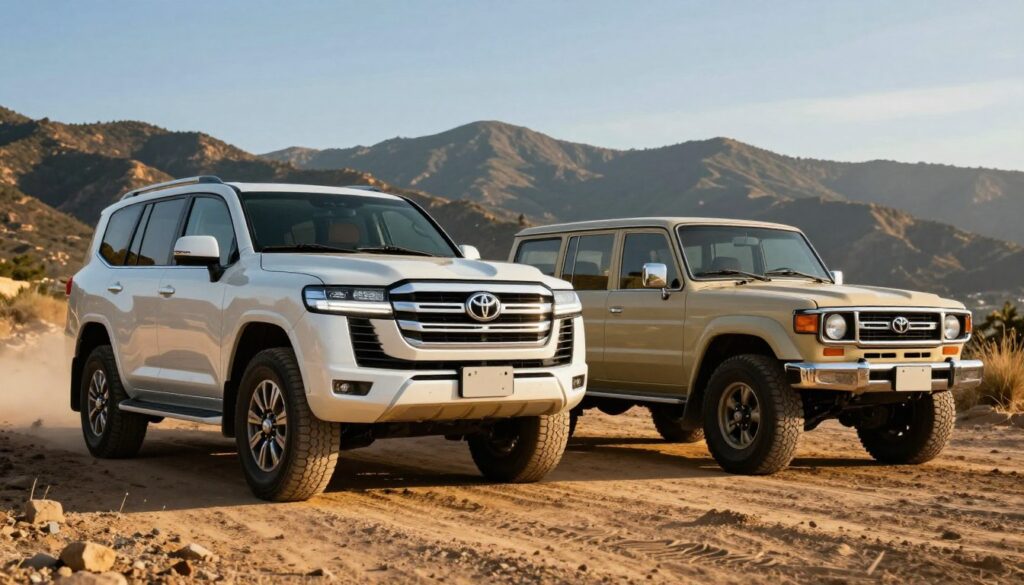
Engine Options for Both Series
The 300 Series is a real powerhouse. It has a strong 3.3L twin-turbo V6 diesel engine. This engine gives a lot of torque, perfect for those who need strength and can travel far.
The 250 Series takes a different path with a 2.4L turbo hybrid engine. Looking at the Land Cruiser specifications, we see this hybrid balances power with better city driving and quick responses.
Towing Capacity and Performance
If you need to tow a lot, the 300 Series is the better pick. Its design and engine work well together for heavy towing over long distances.
The 250 Series is more about being agile and versatile. It’s great for city driving or navigating mountain roads. It’s not as good for towing big trailers over long distances.
Fuel Efficiency Ratings
Fuel economy is key for SUV owners. The 300 Series has great power, but the 250 Series gets better gas mileage in city driving thanks to its hybrid tech.
Knowing how these engines affect your costs is important. You can learn more about which has better fuel economy to compare them. Your choice between the Land Cruiser 300 vs 250 should match your driving style and the Land Cruiser specifications that fit your life.
Off-Road Capabilities
The true spirit of these SUVs comes alive when the road ends and dirt starts. The 250 and 300 series are built for durability, ensuring your adventure continues even on rough roads. Reviewing the latest Land Cruiser specs shows they’re made for reliability in extreme environments.
Four-Wheel Drive Systems
At their core, these SUVs have a full-time four-wheel drive system. This setup gives power to all four wheels, ensuring traction on loose surfaces. Both models have a robust transfer case for smooth transitions between high and low ranges.
Locking rear differentials are standard, helping maintain momentum in mud or on rocks. This feature keeps both rear wheels rotating at the same speed, preventing power loss when one wheel loses contact.
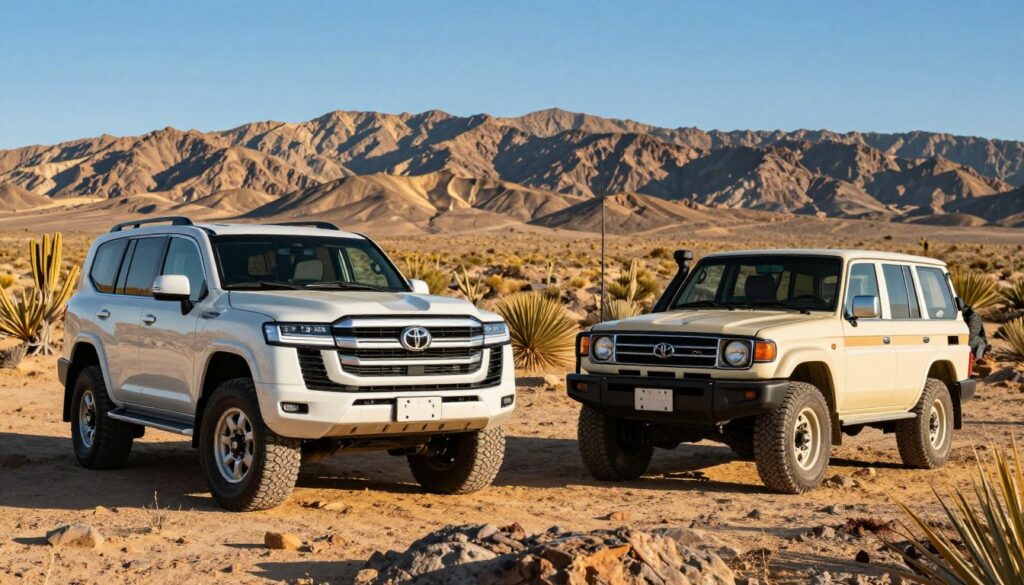
Terrain Handling Features
Toyota has added advanced digital assistance to the mechanical hardware. The Multi-Terrain Select system adjusts throttle and braking for different surfaces. These vehicles also have technology to make driving on tough terrain easier for everyone.
- Crawl Control: Acts as a low-speed cruise control for difficult terrain.
- Multi-Terrain Select: Optimizes traction for mud, sand, or rocks.
- KDSS: Enhances wheel articulation while maintaining stability on uneven ground.
Ground Clearance
Ground clearance is key for any serious explorer. Both series have generous ride heights, allowing them to clear large obstacles. This is vital for navigating deep ruts or crossing streams safely.
With high approach and departure angles, these SUVs can tackle steep inclines confidently. Their design, combined with electronic aids, makes them excel in slow-speed crawling and high-speed desert driving.
Safety Features and Ratings
Protecting your family on the road starts with a vehicle that has top security systems. The 250 and 300 Series have the latest Land Cruiser features to keep you safe in any situation. When comparing wagons, these vehicles stand out for their safety.

Advanced Safety Technologies
Toyota uses strong steel frames to protect you in crashes. These vehicles have many airbags and strong cabin zones. The 300 Series also has a premium sound system and ventilated seats for long drives.
Crash Test Ratings
Both models pass tough tests to meet safety standards. They have advanced collision-avoidance tech, making them very safe. Reliability and protection are key to Toyota’s reputation, giving owners peace of mind.
Driver Assistance Features
The Toyota Safety Sense suite is a big plus for daily driving and off-road adventures. These Land Cruiser features include adaptive cruise control and automatic emergency braking. They help keep an eye on the road for you.
| Feature Category | 250 Series | 300 Series |
|---|---|---|
| Safety Suite | Standard TSS | Advanced TSS |
| Audio System | Premium Audio | 14-Speaker JBL |
| Seating Comfort | Heated Seats | Ventilated Seats |
| Driver Assist | Included | Enhanced |
Choosing between these models depends on what you value more: luxury or utility. Both offer great Land Cruiser features for safe and comfortable travel.
Pricing and Trim Levels
When looking at the Toyota SUV comparison, cost is key for many families. It’s important to understand what each trim level offers. This helps decide which model is best for you.
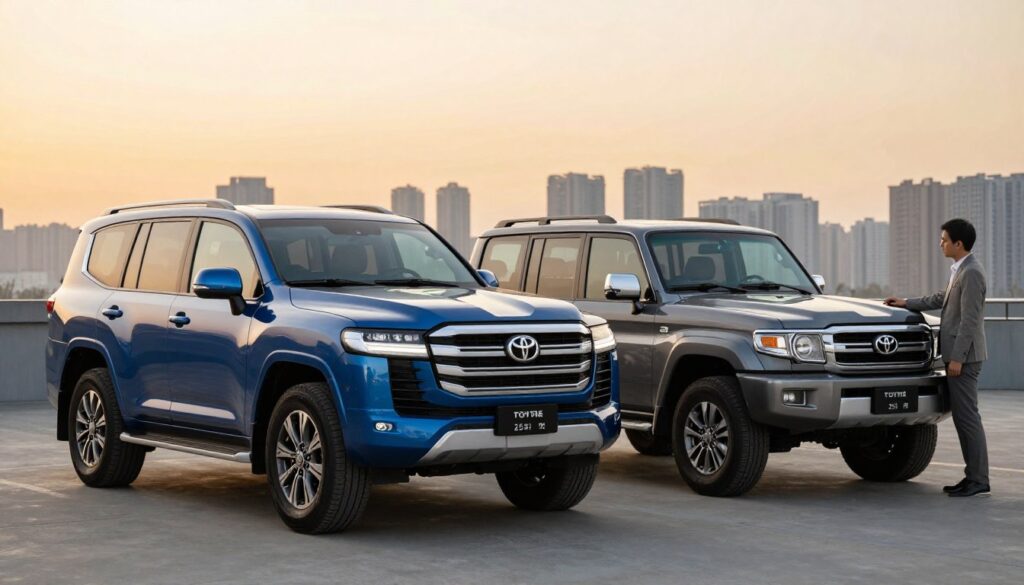
Base Models and Available Trims
The 250 Series starts at about $50,000, making it more affordable. This lets more people enjoy Toyota’s reliability without the high cost of the 300 Series. Both series have various trims, from practical to luxurious.
Each trim meets different needs, like off-road ability or comfort. Check out the 2025 Toyota Prado vs LandCruiser 300 series spec to compare them.
Price Range for Both Series
The 250 Series is more affordable, while the 300 Series costs more for its advanced features and luxury. The price difference shows their different roles. Choosing the right vehicle depends on your needs.
“Price is what you pay. Value is what you get.”
Value Proposition
Figuring out the best value in this Toyota SUV comparison means considering your driving habits. The 300 Series is great for heavy towing and rough terrain. But, the 250 Series is better for daily driving at a lower price.
The best value comes when the vehicle fits your lifestyle perfectly. Both models are top in their segments, ensuring your investment is worth it.
Fuel Economy and Environmental Considerations
Fuel economy is key when looking at the latest Toyota models. Today’s drivers want vehicles that are tough yet kind to the planet. This Toyota SUV comparison shows how different designs meet these needs.
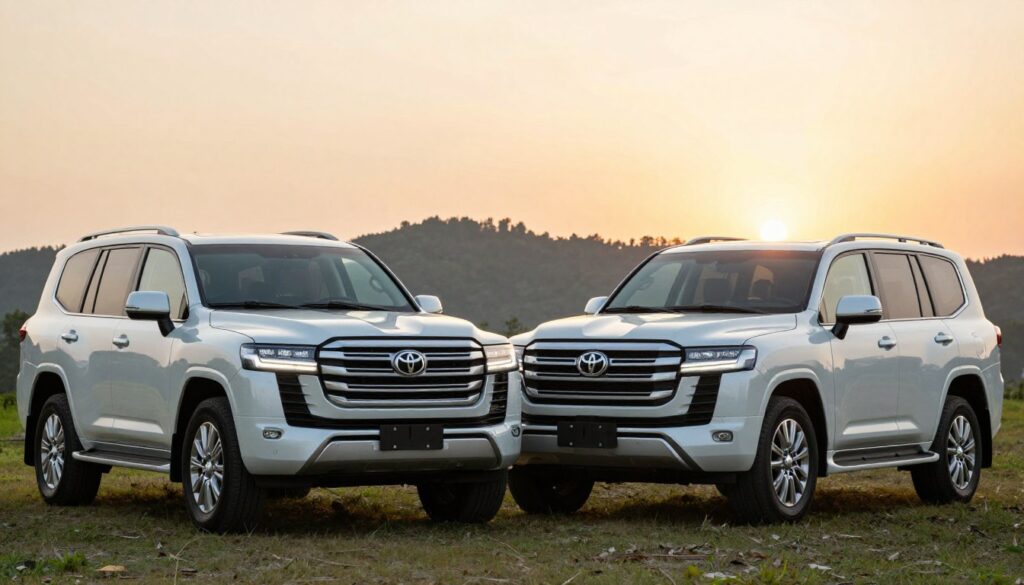
Comparison of Fuel Efficiency
The 250 Series is a big step up in fuel efficiency for Toyota. It uses about 7.6L per 100km. The 300 Series, on the other hand, focuses on power and heavy-duty use, leading to higher fuel use.
Deciding between these models depends on your driving habits. If you face a lot of traffic or long drives, the 250 Series is more cost-effective. It’s made for those who want to be eco-friendly without losing utility.
Eco-Friendly Features
The 250 Series uses advanced hybrid tech to save energy. It captures energy when you brake, cutting down fuel use. Aerodynamic improvements also help reduce drag, making it greener.
The 300 Series has smart engine tech to boost power while keeping emissions low. It uses light materials to improve its power-to-weight ratio. This Toyota SUV comparison shows both vehicles aim to be eco-friendly through design.
Impact on Driving Range
Efficiency means less time at the gas station. The 250 Series lets you go further without needing to refuel. This is great for road trips or areas with few gas stations.
The 300 Series needs more stops but offers unmatched power. Your choice depends on whether you want long-distance efficiency or raw power. Both models lead in their classes for a great driving experience.
User Experiences and Reviews
Looking at owner feedback, we see the unique sides of these two vehicles. Real-world data shows the 4×4 vehicle differences that matter most. These are the differences that drivers notice when using their SUVs for daily tasks and weekend fun.
Customer Feedback on 250 Series
Many owners say the 250 Series shines in city driving, where it’s easy to maneuver. Families love it for its practical utility and ease of use. It’s great for school runs or grocery shopping.
Check out a detailed Toyota Land Cruiser Prado 250 Series long-term review. It shares these positive views. Drivers say it’s more accessible than its bigger brother, making it a top choice for those who want power without the size.
Owner Insights on 300 Series
The 300 Series, on the other hand, is seen as the ultimate long-distance traveler. Owners call it a legendary powerhouse that handles long drives and heavy towing with ease.
When comparing these Toyota off-road vehicles, it’s clear the 300 Series is for those who want raw power and luxury. My review shows the 300 Series is respected for its heritage. But the 250 Series is preferred by those looking for a modern, versatile daily driver.
Conclusion: Which Series is Right for You?
Choosing between these two legendary vehicles depends on your daily needs and long-term goals. Your decision is based on whether you need raw towing power or modern, efficient versatility for your adventures.
Key Decision Factors
First, think about how many passengers you need to carry and how much cargo you’ll haul. The 300 Series offers a classic, luxury experience. On the other hand, the 250 Series brings a fresh, boxy look to the North American market. You can check out a detailed Land Cruiser comparison review to see how these dimensions fit in your garage.
Summary of Differences
The 300 Series is the top choice for luxury touring and heavy-duty towing. The 250 Series, with its hybrid powertrain, balances performance with daily use. This comparison shows that both models keep the brand’s reputation for rugged reliability, no matter the trim.
Final Recommendations
If you need maximum towing capacity and a top-notch interior, go for the 300 Series. For a more agile, tech-savvy, and fuel-efficient ride, the 250 Series is the better pick. Both vehicles are the best in automotive engineering, built to last for decades.
User Experiences and Reviews
Brief History of the Toyota Land Cruiser
The Toyota Land Cruiser has a rich history spanning over seven decades. It has evolved from a simple work vehicle to a global symbol of durability. Toyota has always pushed the limits of engineering excellence, ensuring each model can handle the toughest terrains.
Overview of the 250 and 300 Series
The Toyota Land Cruiser 300 series vs 250 series highlights Toyota’s focus on different lifestyles. The 300 Series is a flagship luxury tourer. On the other hand, the 250 Series is a more accessible, mid-size entry point that emphasizes rugged versatility.
Styling Differences
The visual difference between the two is clear. The 250 Series has a boxier, retro-inspired look, paying homage to classic models. In contrast, the 300 Series boasts a more aerodynamic and sophisticated profile. The 250 Series looks modern yet rugged.
Dimensions and Weight
The 300 Series has a larger footprint for presence and stability. The 250 Series is more compact, ideal for tight off-road trails or urban environments. These dimensions affect the vehicle’s gross weight and handling.
Color Options Available
Toyota offers a range of colors that reflect each model’s personality. The 250 Series often features two-tone paint schemes for its retro charm. The 300 Series, on the other hand, has elegant, metallic finishes fitting its premium SUV status.
Cabin Space and Material Quality
The 300 Series features premium materials like high-grade leather and real wood accents. The 250 Series is well-built but uses durable, soft-touch plastics and rugged fabrics for active lifestyles.
Technology and Infotainment Systems
Both models have a 12.3-inch infotainment screen. Toyota kept physical buttons for climate and volume, ensuring functionality even with gloves or over bumpy terrain.
Seating Configurations
Both SUVs can seat up to seven passengers. The 300 Series offers more legroom in the third row, making it better for large families or long trips.
Engine Options for Both Series
The Land Cruiser specifications show a big difference in engines. The 250 Series uses a 2.4L turbo hybrid engine. The 300 Series has more powerful V6 twin-turbo options for maximum output and torque.
Towing Capacity and Performance
If towing is important, choose the 300 Series. Its heavy-duty architecture allows for a higher towing capacity. The 300 Series feels more stable when pulling heavy loads.
Fuel Efficiency Ratings
The 250 Series is more fuel-efficient, using about 7.6L per 100km thanks to its hybrid tech. The 300 Series focuses on power over fuel economy.
Four-Wheel Drive Systems
Both models use full-time four-wheel drive with a locking center differential. They are built on the TNGA-F global body-on-frame platform for high torsional rigidity.
Terrain Handling Features
In off-road testing, I used Crawl Control and Multi-Terrain Select extensively. The 300 Series stands out with the Electronic Kinetic Dynamic Suspension System (E-KDSS), providing great wheel articulation.
Ground Clearance
Both models have impressive ground clearance. The 300 Series has better approach and departure angles. Both can handle extreme off-road challenges.
Advanced Safety Technologies
Both SUVs come with Toyota Safety Sense. This includes pre-collision systems and adaptive cruise control, which work well on highways.
Crash Test Ratings
While ratings vary, both series meet highest safety standards globally. Their high-tensile steel frames contribute to excellent crashworthiness.
Driver Assistance Features
The 300 Series has more sensors and a 360-degree Multi-Terrain Monitor. These cameras are vital for spotting hidden obstacles.
Base Models and Available Trims
The 250 Series is more affordable, starting with the “1958” trim in the U.S. The 300 Series is offered in GR Sport and Sahara ZX trims internationally.
Price Range for Both Series
The 300 Series is pricier. Its larger engine and luxury features justify the cost. The 250 Series offers great value for the money.
Value Proposition
The 250 Series is the best value proposition for those seeking a rugged off-roader without a high price. The 300 Series is for those who want the pinnacle of Toyota’s SUV lineup.
Comparison of Fuel Efficiency
The 250 Series’ hybrid powertrain reduces its carbon footprint. The 300 Series, with its internal combustion engine, consumes more fuel in urban driving.
Eco-Friendly Features
The 250 Series’ i-FORCE MAX hybrid system is its standout feature. It provides instant torque while being environmentally friendly.
Impact on Driving Range
The 250 Series’ hybrid efficiency makes it great for long trips. It’s ideal for those who want to travel far without needing extra fuel.
Customer Feedback on 250 Series
Owners praise the 250 Series for its daily drivability. It’s seen as less “bulky” than the 300 Series but is just as capable off-road.
Owner Insights on 300 Series
300 Series owners love its effortless power. It’s the top choice for desert crossings or towing heavy loads.

Hi! I’m Moheen Iftikhar, the founder of “CarSpherei.” I’m passionate about everything automotive — from the latest car trends and cutting-edge technology to driving tips and expert insights. Through CarSpherei, I share in-depth reviews, helpful guides, and practical advice to keep every car enthusiast informed, inspired, and connected to the world of driving.