


Toyota RAV4 Hybrid vs Plug-in Hybrid (Prime) Comparison
Did you know over 1.5 million electrified vehicles were sold in the U.S. last year? This shows how many people now want fuel-efficient cars with the latest tech.
Choosing the right car can be tough with so many choices. I made this Toyota RAV4 Hybrid vs Plug-in Hybrid (Prime) comparison to help. We’ll look at the main differences in power, efficiency, and value to help you decide.
I want to help you pick the best car for your daily driving habits and future needs. Whether you want more electric range or a lower starting price, knowing the details is key.
Key Takeaways
- Standard models offer great fuel efficiency for long trips.
- The plug-in version has a lot of electric range for short trips.
- Think about your charging options before choosing the plug-in model.
- Both cars keep their value well and are reliable.
- Your choice depends on weighing upfront costs against fuel savings.
Overview of the Toyota RAV4 Hybrid and Prime
When comparing the Toyota RAV4 Hybrid and Plug-in Hybrid (Prime), it’s key to understand their energy use. Both models have the RAV4 look, but they manage energy differently. This affects their efficiency and power.
What is the Toyota RAV4 Hybrid?
The Toyota RAV4 Hybrid doesn’t need plugging in. It uses a gas-electric system that captures energy when you brake. This energy recharges its battery pack automatically.
This setup is great for those who want better fuel economy without changing their driving habits. Just fill up with gas, and the car takes care of the rest.
What is the RAV4 Prime?
The RAV4 Prime is a plug-in hybrid electric vehicle (PHEV). It has a bigger battery that you can charge at home or a charging station.
This lets you drive electric-only for short trips. When the battery runs out, it switches to hybrid mode. So, you’re always ready for longer drives.
Key Differences Between Hybrid and Plug-in Hybrid
The main differences between the Hybrid and Prime are how you charge them. Knowing these differences is important for your happiness with the car.
- Charging Infrastructure: The standard hybrid doesn’t need charging, but the Prime does.
- Battery Capacity: The Prime has a bigger battery for longer electric-only trips.
- Performance Dynamics: The Prime has more horsepower for a sportier drive than the Hybrid.
- Daily Utility: The Hybrid is better for those without easy charging access. The Prime is for those who can plug in often.
Your choice depends on your charging access and driving habits. Both cars show Toyota’s dedication to efficiency and reliability.
Performance and Powertrain
Looking at these SUVs, we see two different ways to use electric power. Both use Toyota’s hybrid tech, but they aim for different things. This is to meet the needs of different drivers.
Engine Specifications of RAV4 Hybrid
The standard model has a 2.5-liter engine and an electric motor. The Toyota RAV4 Hybrid specs show it’s all about being efficient and smooth.
This combo makes 219 net horsepower. It gives reliable and consistent speed for daily driving and merging onto highways.
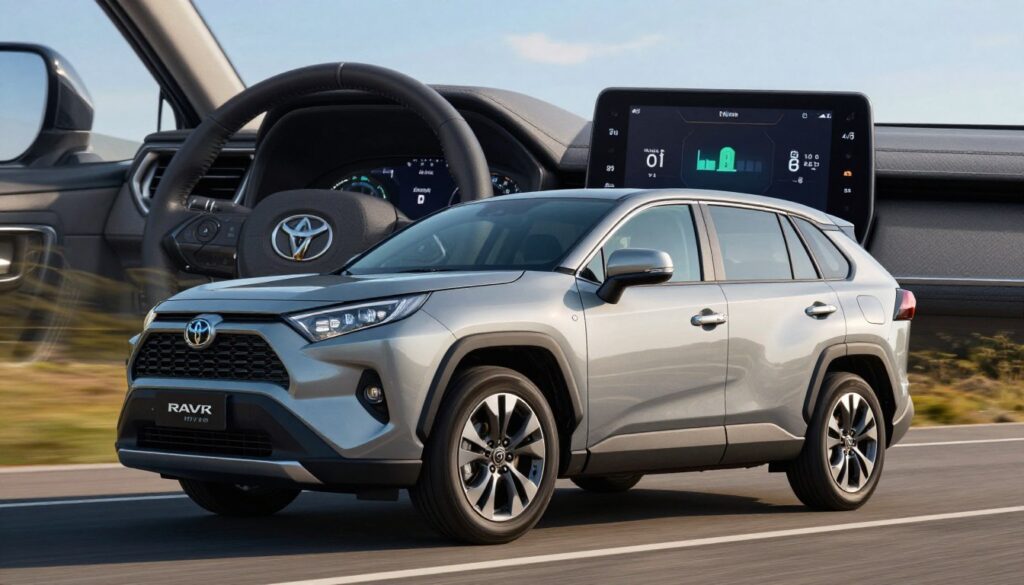
Engine Specifications of RAV4 Prime
The Prime model goes for more power. It has a bigger battery and stronger electric motors. This makes the Toyota RAV4 Prime performance hit 302 horsepower.
This setup means the SUV can pull harder. It turns the SUV into a much quicker car than the standard model.
Acceleration and Driving Experience
The driving feel shows the difference between these two models. The standard hybrid is balanced and easy to use. It’s great for those who want comfort.
The Prime, on the other hand, is spirited and punchy. It goes from 0-60 mph in just 5.7 seconds. This makes it one of the fastest in Toyota’s lineup.
In the end, it’s up to you. Do you want a calm, efficient ride or a fast, exciting SUV? Both models use electric motors to make driving special in their own ways.
Fuel Efficiency and Economy
Fuel economy is key for many drivers when looking at the Toyota RAV4 lineup. It’s important to know how each model uses energy. This is true for both daily drives and long trips.
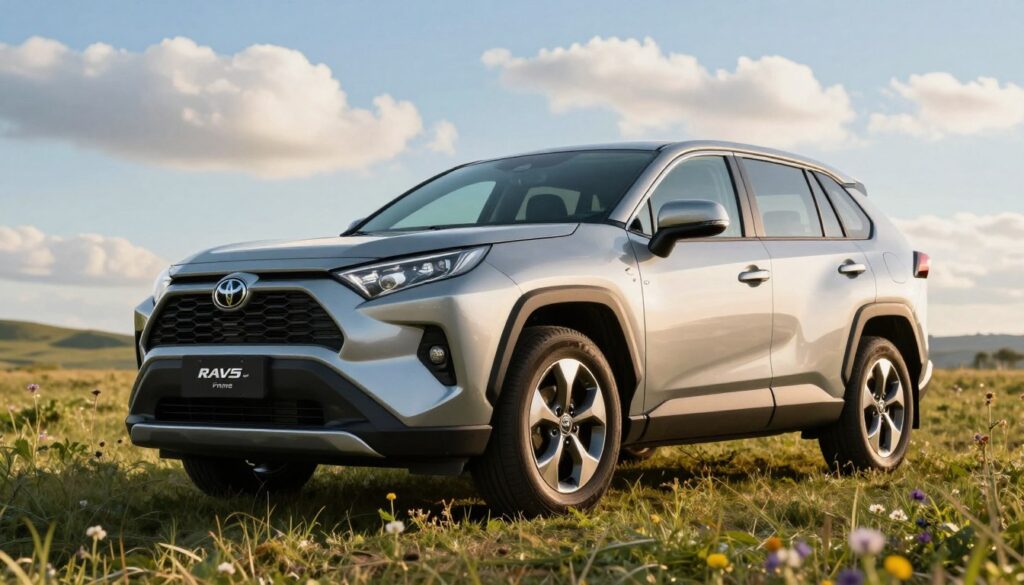
Hybrid Fuel Efficiency Ratings
The standard hybrid model is great for everyday driving. It gets an EPA-estimated 41 mpg in the city and 38 mpg on the highway. This makes it a strong choice for those who want good fuel efficiency without extra effort.
Plug-in Hybrid Fuel Economy
The Toyota RAV4 Prime fuel efficiency is special because it has two modes. When fully charged, it gets an amazing 94 MPGe for electric-only driving. After the battery runs out, it switches to hybrid mode, keeping a high rating of 38 mpg combined.
Real-World Mileage Results
Real-world results can vary a lot. Driving fast or using the AC a lot can lower the expected range. But, driving smoothly and using eco-modes can help get the best fuel efficiency.
| Model Type | City MPG | Highway MPG | Combined MPGe |
|---|---|---|---|
| RAV4 Hybrid | 41 | 38 | 40 |
| RAV4 Prime (Hybrid Mode) | 38 | 36 | 94 |
| RAV4 Prime (Electric Only) | N/A | N/A | 94 |
Charging Options and Times
Knowing how to charge your car is key to getting the most out of the Toyota RAV4 Prime battery range. This car needs outside power to run in electric-only mode. So, it’s smart to learn how to keep the battery charged for daily driving.

Charging the RAV4 Prime
The car offers flexibility based on your power source options. Charging with a 120V household outlet takes about 12 hours for a full charge.
This method is great for charging overnight in your garage. For quicker charging, using a dedicated setup can cut down the time to about 2.5 hours.
Home Charging Solutions
Many owners get a Level 2 home charging station for easier charging. These stations charge faster and more reliably than a standard wall plug.
It’s wise to talk to a professional electrician before installing a charger at home. A dedicated charger means you’ll start each day with a full charge. This is important for keeping the Toyota RAV4 Prime battery range at its best during your daily drive.
Public Charging Availability and Infrastructure
Public charging stations are growing in number across the U.S. You can find them using mobile apps that show charger locations near you.
While public charging isn’t essential, it’s a great way to extend your electric-only driving when you’re out. Most public stations use Level 2 chargers, which work well with the car’s system. This makes it easy to charge while you’re out shopping or eating.
Interior Features and Comfort
The interior of these two models shows their biggest differences. Both have a nice cabin, but they focus on different things like space and luxury.
Cabin Design and Space in RAV4 Hybrid
The hybrid model has a spacious and practical design. It’s familiar to SUV owners. The cargo area is big, perfect for groceries, luggage, or sports gear.
The seats are made for long trips, using strong materials. The controls are easy to find, making driving stress-free.
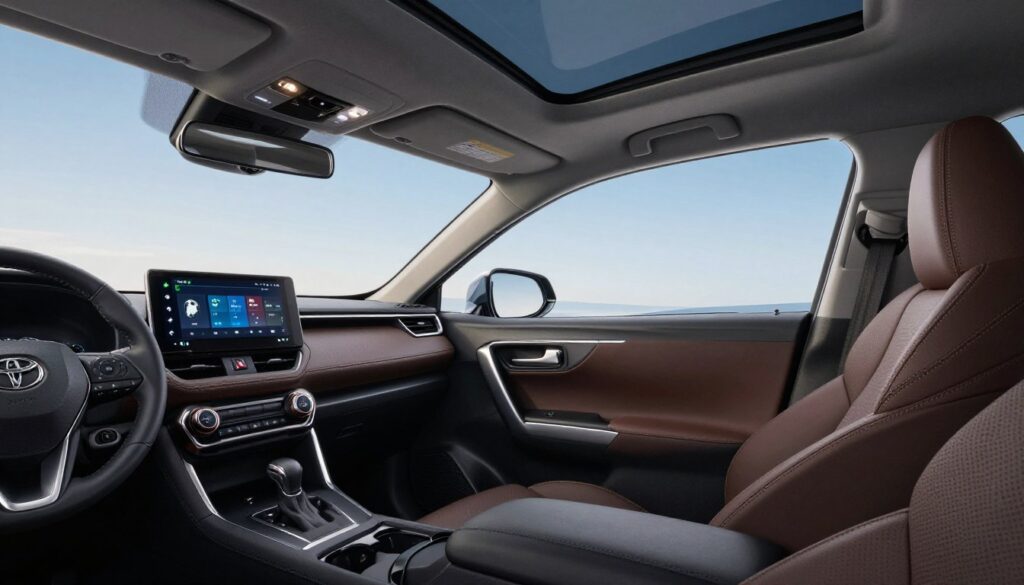
Cabin Design and Space in RAV4 Prime
The Prime’s interior is more luxurious, showing it’s a premium model. But, the big battery pack makes the cargo area a bit smaller.
Even with this change, the Prime is great for daily use and family trips. It has Toyota RAV4 Prime features like better seats and sound-dampening materials for a quieter ride.
Technology and Connectivity Options
Connecting your devices is easy with the Toyota RAV4 Hybrid technology. Both models have a touchscreen for easy phone integration. You can control your music and maps easily.
The Prime has an even bigger screen and a better head-up display. These Toyota RAV4 Prime features let you see important info without looking away from the road.
| Feature | RAV4 Hybrid | RAV4 Prime |
|---|---|---|
| Infotainment Display | 8.0-inch Standard | 9.0-inch Available |
| Cargo Capacity | 37.6 cubic feet | 33.5 cubic feet |
| Upholstery | Fabric/SofTex | Premium SofTex/Leather |
| Connectivity | Apple CarPlay/Android Auto | Wireless Integration |
Safety Features and Ratings
Safety is key when picking a daily driver. I’ve looked into the safety features of these Toyota models. Both the hybrid and plug-in versions have a strong platform to absorb impacts. Toyota always puts safety first in its vehicles.
Safety Ratings for RAV4 Hybrid
The hybrid model gets top marks from major testers. The Insurance Institute for Highway Safety (IIHS) often gives it the Top Safety Pick award. This shows the vehicle’s strong structure in crash tests.
The National Highway Traffic Safety Administration (NHTSA) also rates it well. The Toyota RAV4 Hybrid safety features work well in real-world situations. This makes driving safer, even in bad weather or heavy traffic.
Safety Features in RAV4 Prime
The plug-in version has the same strong chassis as the hybrid. The battery pack makes it more stable, lowering the risk of rollovers. This is a smart design choice.
It comes with many airbags, including a driver’s knee airbag and side-curtain airbags for both rows. These systems protect everyone inside without taking up too much space. It’s impressive how they fit everything together.
Advanced Driver-Assistance Systems
Both models have the Toyota Safety Sense suite. It includes a pre-collision warning with pedestrian detection to prevent accidents. The lane departure alert with steering assist helps keep drivers focused on the road.
The table below shows the main safety technologies in these vehicles:
| Safety Technology | Functionality | Benefit |
|---|---|---|
| Pre-Collision System | Detects vehicles and pedestrians | Prevents frontal impacts |
| Lane Tracing Assist | Keeps vehicle centered | Reduces driver fatigue |
| Full-Speed Range Cruise | Adjusts speed automatically | Maintains safe following distance |
| Road Sign Assist | Reads traffic signs | Increases situational awareness |
These systems work together to add an extra layer of safety. By combining strong structure with smart software, Toyota makes both models very safe. They stand out in the SUV market.
Pricing and Value Comparisons
When I look at the cost of these vehicles, I consider both the initial price and long-term savings. It’s key to see beyond the sticker price to understand the real cost of owning each SUV. By comparing the Toyota RAV4 Hybrid vs Prime mpg, I aim to help you choose the best option for your budget.

Price Range of RAV4 Hybrid
The standard hybrid model is a more affordable choice for many families. Its lower starting price makes it appealing for those seeking excellent fuel efficiency without a high initial cost. This model stays competitive in the compact SUV market.
Price Range of RAV4 Prime
The plug-in hybrid model starts at a higher price due to its bigger battery and stronger engine. Though the initial cost is higher, it’s important to think about any federal or state tax incentives. These can greatly reduce the effective purchase price, making the higher cost more reasonable over time.
Which Offers Better Value for Budget-Conscious Buyers?
The best value depends on your daily driving habits. If you drive short distances, the plug-in model can help you save a lot on fuel costs. But, if you want a lower monthly payment, the standard hybrid is the clear winner for your budget.
When comparing the Toyota RAV4 Hybrid vs Prime mpg, the plug-in model often wins for those who can charge at home often. Here’s a table to help you see the financial differences between both vehicles.
| Feature | RAV4 Hybrid | RAV4 Prime |
|---|---|---|
| Starting MSRP | Lower | Higher |
| Tax Incentives | None | Potential Credits |
| Fuel Savings | High | Very High |
| Best For | Budget-Focused | Efficiency-Focused |
Driving Range and Electric Miles
When I look at these vehicles, the driving range is key for my daily drive. Knowing how far you can go on one charge or tank is vital. This info helps you get the most out of your vehicle. You can learn more in this comprehensive EV guide.
Electric-Only Driving Range of RAV4 Prime
The Toyota RAV4 Prime battery range is great for those who care about the environment. It can go 42 miles on electric power alone. This lets me do most of my local tasks without using gas.
Overall Driving Range of RAV4 Hybrid
The Prime shines in electric mode, but the hybrid is better for long trips. The Toyota RAV4 Prime performance is enhanced by its hybrid system. The standard hybrid, with its gas tank, goes over 500 miles. It’s perfect for long road trips.
Factors Influencing Driving Range
Several things can affect how far you can go. Temperature is a big one, as cold weather hurts battery life. Also, driving uphill or fast on the highway uses more energy than city driving.
| Model | Electric-Only Range | Total Combined Range |
|---|---|---|
| RAV4 Hybrid | N/A | ~580 Miles |
| RAV4 Prime | ~42 Miles | ~600 Miles |
| Key Advantage | Emission-Free Commuting | Long-Distance Flexibility |
Maintenance and Ownership Costs
When I think about the cost of owning these SUVs, I focus on service times and battery life. Taking care of an electric car is different from a gas car. Proper care keeps your car running well for years.
Expected Maintenance Costs for Both Models
Maintenance for these cars is quite affordable. The regenerative braking makes brake pads last longer. Looking at the Toyota RAV4 Hybrid specs, we see the hybrid system is kinder to the engine. This means fewer mechanical problems later on.
Service visits usually include tire rotations, cabin air filter changes, and oil changes. It’s wise to stick to the manufacturer’s schedule. This keeps your warranty valid and your car running great.
Long-Term Ownership Considerations
Choosing a Toyota hybrid means you get reliable battery tech. These batteries are made to last as long as the car. For more on electric vs. hybrid, check out this guide on electric vehicles.
Fuel savings can make up for the higher initial cost over time. Keeping service records can help your SUV’s resale value stay high.
Warranty Comparisons
Toyota offers strong coverage for your car. The warranty includes the hybrid battery for extra protection. This means you’re covered for major issues in both the engine and electrical system.
The Toyota RAV4 Hybrid safety features are standard. But, knowing your warranty details is key. Always check with your local dealer to understand your coverage.
Environmental Impact
I think it’s key to know how our cars affect the environment. Choosing the right vehicle is important for a greener future. Hybrid models, like the Toyota RAV4, are better than gas-guzzlers.
Emissions of RAV4 Hybrid
The hybrid RAV4 uses smart tech to save fuel and cut emissions. It captures energy when you brake, making every drive cleaner. This tech makes each mile you drive better for the planet.
Emissions of RAV4 Prime
The Toyota RAV4 Prime fuel efficiency shines in electric mode. It’s great for daily trips, cutting down on fossil fuel use. Using green energy to charge it makes it even better for the environment.
“The transition to electrified transportation is a critical step in reducing the global carbon footprint and ensuring a healthier environment for future generations.”
Benefits of Driving Eco-Friendly Vehicles
Driving an eco-friendly car saves money and helps the planet. It’s good for your wallet and the environment. Lowering your carbon footprint is a big plus of owning a modern car.
| Feature | RAV4 Hybrid | RAV4 Prime |
|---|---|---|
| Primary Power | Gas/Electric | Plug-in Electric/Gas |
| Electric Range | Minimal | Up to 42 Miles |
| Emission Profile | Low | Very Low |
| Sustainability | High | Excellent |
The Toyota RAV4 Prime fuel efficiency is top-notch for electric fans. Both models show we can drive responsibly today.
Customer Reviews and Feedback
Listening to car owners is the best way to know what a car is like. Technical specs tell part of the story. But, what owners say every day gives a clearer view of the car’s real-life experience.
What Owners Say About RAV4 Hybrid
Many praise the exceptional reliability and ease of the standard hybrid model. Commuters love how it handles in traffic. They say the switch between gas and electric is smooth, making the ride smooth.
What Owners Say About RAV4 Prime
Prime model drivers are thrilled with its electric-only range. They say they can drive to work without using gas. The plug-in power adds surprising speed, making it feel sporty for a family SUV.
Common Themes in Customer Feedback
Both models get high praise for Toyota RAV4 Hybrid technology. Users love how easy the infotainment and driver-assistance features are to use. This makes the car’s tech feel like a natural part of driving, not a distraction.
Another common point is the impressive quietness of the cabin. Owners say the interior is quiet, even at high speeds. This shows the quality of the car. It’s clear that the Toyota RAV4 Hybrid technology makes drivers confident in their choice.
Conclusion: Which is Right for You?
Choosing the right car depends on how you use it. I’ve looked at the good points of both models. This helps you pick the best Toyota SUV for your needs.
For City Drivers and Commuters
The Toyota RAV4 Prime is great for city driving if you can charge at home. It runs on electric power for most city trips. This saves money and cuts down on pollution.
For Those Who Prefer Longer Trips
The standard Toyota RAV4 Hybrid is best for long trips. It’s fuel-efficient without the hassle of charging. It’s perfect for road trips across the country.
Final Recommendations Based on Lifestyle
Your choice depends on your lifestyle and travel habits. Go for the Prime if you like plug-in tech and short electric drives. Choose the Hybrid for easy, consistent performance. Try both at your local Toyota dealer to see the difference.
FAQ
What is the primary difference in the Toyota RAV4 Hybrid vs Plug-in Hybrid (Prime) comparison?
The main difference is how they use electric power. The Toyota RAV4 Hybrid uses regenerative braking. The Toyota RAV4 Prime can be charged from outside and has a dedicated electric mode.
How does the Toyota RAV4 Prime performance compare to the standard Hybrid?
The Toyota RAV4 Hybrid has 219 horsepower, enough for daily driving. But, the Toyota RAV4 Prime has 302 horsepower. It’s much faster, making it one of the quickest Toyotas.
What should I expect regarding Toyota RAV4 Hybrid vs Prime mpg?
The Toyota RAV4 Hybrid gets 41 mpg city and 38 mpg highway. The Toyota RAV4 Prime gets 94 MPGe on electricity. After the battery runs out, it gets about 38 combined mpg.
What is the Toyota RAV4 Prime battery range on a full charge?
The Toyota RAV4 Prime can go 42 miles on electric alone. This is enough for many daily commutes without using the gas engine.
Does the Toyota RAV4 Hybrid technology suite differ from the Prime?
Both vehicles are top-notch, but they differ slightly. The Hybrid focuses on efficiency and smartphone integration. The Prime has more premium features like bigger screens and head-up displays.
What are the standard Toyota RAV4 Hybrid safety features?
Both models have great safety features. They include Toyota Safety Sense 2.5. This includes Pre-Collision System, Lane Departure Alert, and Full-Speed Dynamic Radar Cruise Control.
How long does it take to charge the RAV4 Prime at home?
Charging time varies by power source. On a 120V outlet, it takes 12 hours. With a 240V charger, it’s 2.5 to 4.5 hours.
Which model offers better long-term value for a budget-conscious buyer?
The Toyota RAV4 Hybrid is cheaper to start with. But, the Prime might be better value over time. It offers electric-only miles and tax incentives that can save money.
Does the Prime’s larger battery reduce the interior cargo space?
The Prime has less vertical cargo space due to its battery. But, the difference is small. Both vehicles are great for families and outdoor lovers.

Hi! I’m Moheen Iftikhar, the founder of “CarSpherei.” I’m passionate about everything automotive — from the latest car trends and cutting-edge technology to driving tips and expert insights. Through CarSpherei, I share in-depth reviews, helpful guides, and practical advice to keep every car enthusiast informed, inspired, and connected to the world of driving.


