


Common BMW Oil Leak Locations and How to Fix Them
Did you know that nearly 70% of high-mileage German luxury vehicles will experience at least one seal failure during their lifespan? Ignoring these small drips can lead to catastrophic engine damage that costs thousands of dollars to repair. I understand that maintaining your vehicle requires precision, much like when you fix Mercedes MBUX infotainment system glitches, but mechanical issues demand immediate attention.
In this guide, I will explore the most frequent Common BMW oil leak locations to help you stay ahead of possible failures. My goal is to give you actionable advice to fix BMW oil leaks effectively. By identifying these trouble spots early, you save significant time and protect your investment from long-term wear.
Key Takeaways
- Early detection prevents expensive engine repairs.
- Gaskets and seals are the primary culprits for fluid loss.
- Regular inspections help maintain peak vehicle performance.
- Professional diagnostic steps ensure accurate troubleshooting.
- DIY maintenance saves money when performed correctly.
Understanding Oil Leaks in BMW Vehicles
Even the most advanced cars, like BMWs, can have BMW engine oil leaks. These vehicles are known for their speed and power. But, the parts under the hood face a lot of heat over time.
What Causes Oil Leaks?
The main reason for leaks is the wear and tear on rubber gaskets and seals. High engine temperatures make these materials hard and brittle. They lose their ability to seal well.
Engine vibrations can also cause fasteners to come loose. This creates gaps where oil can leak out. If you’re worried about other issues, check out BMW X5 air suspension repair costs to keep your car in top shape.
Common Signs of Oil Leaks
Spotting BMW oil leak symptoms early can save you money. Dark spots on your driveway or garage floor are a clear sign of trouble.
You might also smell a burning smell while driving. This happens when oil hits hot exhaust parts. Sometimes, you’ll see smoke coming from the engine after a long drive.
Importance of Addressing Oil Leaks
Getting a proper BMW oil leak diagnosis is key to keeping your engine running well. If you ignore leaks, your engine might not get enough oil. This can cause serious damage.
Fixing these problems quickly keeps your car running smoothly. Here’s a table showing what happens if you ignore leak signs:
| Indicator | Potential Risk | Urgency Level |
|---|---|---|
| Driveway Spots | Minor seal failure | Low to Medium |
| Burning Smell | Oil hitting exhaust | High |
| Visible Smoke | Severe engine leak | Critical |
Valve Cover Gasket: A Common Culprit
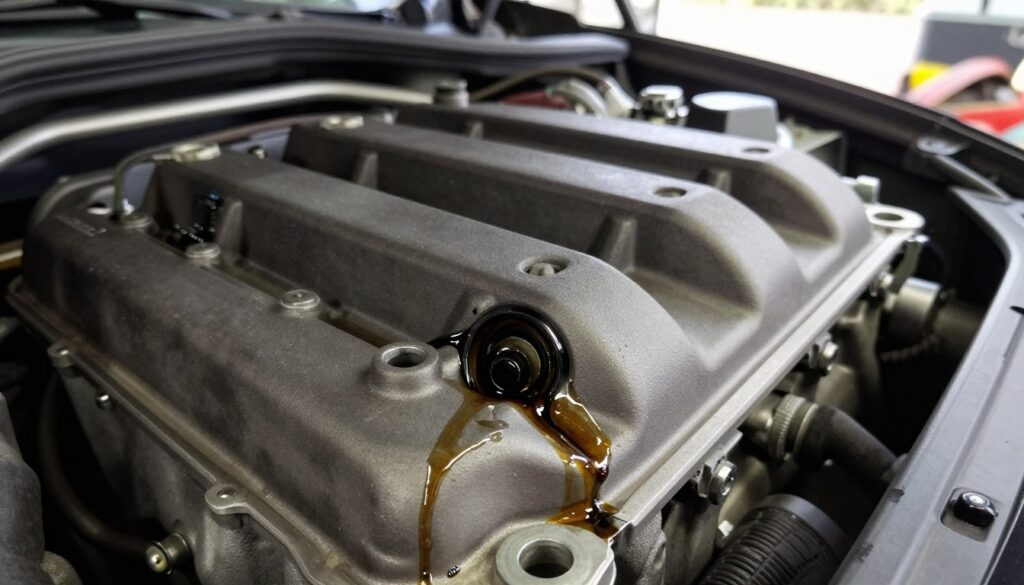
The valve cover gasket is often the main cause of oil leaks in BMWs. It’s exposed to a lot of heat from the engine. Over time, this heat causes the rubber seal to harden and crack, letting oil leak out. This means you’ll need a professional BMW oil leak repair.
Identifying Valve Cover Gasket Leaks
To find a BMW valve cover gasket leak, check the top of your engine. Look for oil stains around the spark plug wells or under the engine cover. A burning smell while driving might mean oil is leaking onto the exhaust manifold.
“Proper maintenance is the difference between a car that lasts for decades and one that fails prematurely.”
The table below shows signs of leaks near the engine’s top:
| Symptom | Likely Location | Severity |
|---|---|---|
| Burning oil smell | Exhaust Manifold | High |
| Oil in spark plug wells | Valve Cover Gasket | Medium |
| Wet engine block | Cylinder Head | High |
How to Replace the Valve Cover Gasket
Replacing the gasket is a common fix. Start by removing the engine cover and disconnecting the ignition coils. This lets you access the valve cover bolts. Make sure to clean the surfaces well before putting in the new gasket.
After installing the new gasket, tighten the bolts as the manufacturer suggests. This ensures a tight seal. Doing this BMW oil leak repair right will stop oil leaks for good. Always choose high-quality parts for a lasting fix.
Oil Filter: Check for Leaks
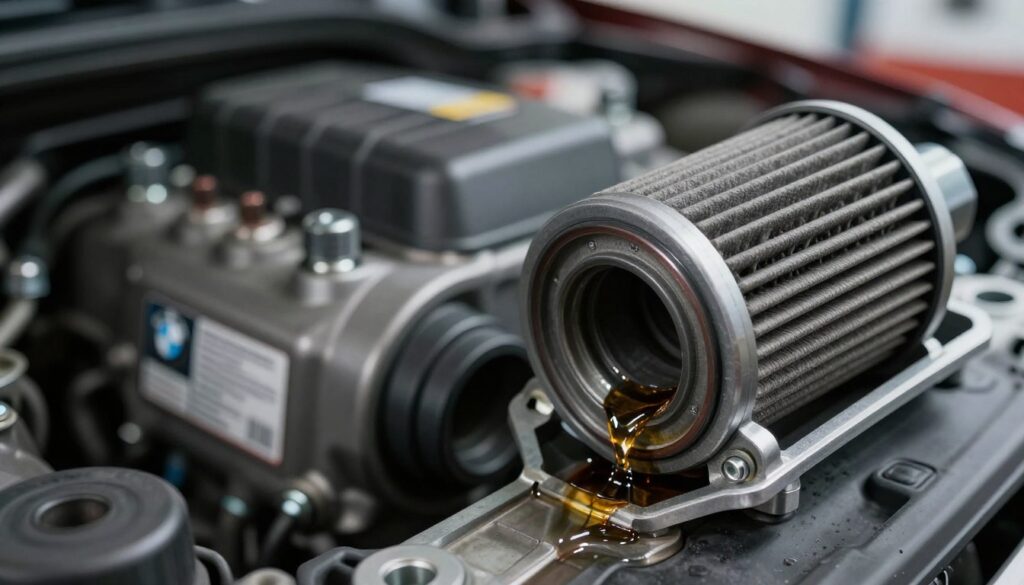
A BMW oil filter housing gasket leak is a common problem that needs quick action. It often happens in older 3-Series and 5-Series models. If ignored, oil can spill around the housing and damage your car’s underside.
Signs of an Oil Filter Leak
Look for oil stains near the filter housing in the engine bay. Persistent drips or a burning smell while driving are also signs. These are clear indicators of a leak.
If not fixed, oil will spread down. It might stain the engine block and drip onto plastic guards under the car. Catching a BMW oil filter housing gasket leak early helps avoid big messes and damage.
Steps to Replace the Oil Filter
Replacing the gasket is doable with the right tools and patience. Always use high-quality Viton gaskets for a better seal than regular ones.
- Drain the engine oil first to avoid spills.
- Remove the air intake duct and oil filter cap for better access.
- Unbolt the housing from the engine block carefully, noting the bolt positions.
- Clean the surfaces well to ensure the new gasket fits right.
- Put in the new Viton gasket and reassemble, following the torque specs.
After installation, fill the engine with new oil and run it for a few minutes. Check again for leaks. These steps keep your engine clean and safe for many miles.
Oil Pan: Location and Issues
Fixing a BMW oil pan gasket leak can be tough for DIY fans. The oil pan is at the engine’s bottom, facing road debris and extreme temperatures. If you’re also dealing with other car issues, you might need to fix BMW iDrive problems to keep your car’s electronics working while you repair the engine.
Recognizing Oil Pan Leak Symptoms
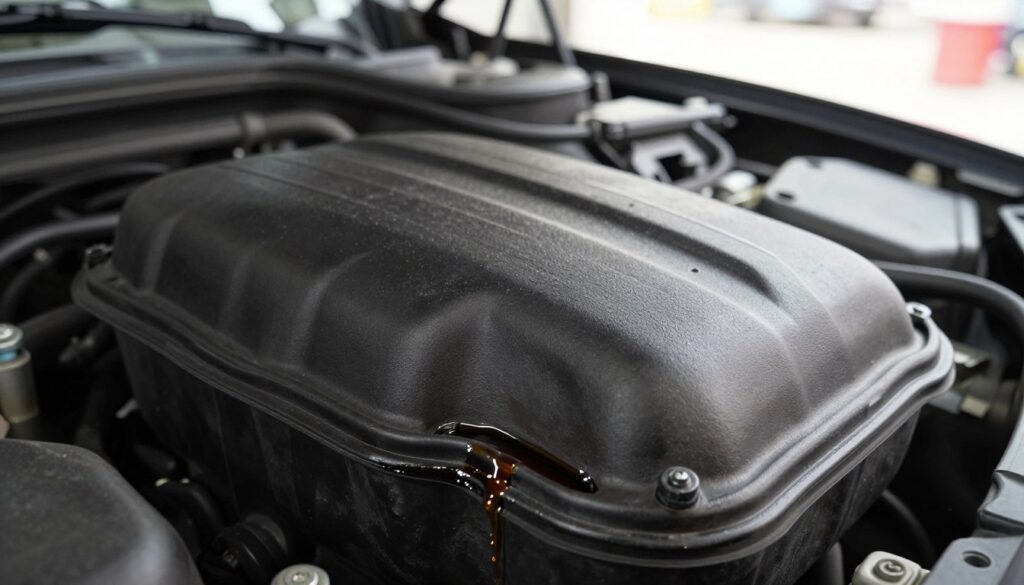
A leak often shows as oil under your car’s center. You might smell burning oil, which happens when oil hits hot parts. If your oil light keeps coming on, check your engine for leaks.
Repairing or Replacing Your Oil Pan
Fixing the oil pan is a big job, as many cars need you to drop the subframe to get to it. I suggest using Permatex Ultra Black sealant on both sides of the new gasket. This helps the seal last under pressure. Taking your time is key to avoid future leaks and keep your engine strong.
| Symptom | Severity | Recommended Action |
|---|---|---|
| Minor Seepage | Low | Monitor oil levels weekly |
| Active Drip | Medium | Schedule repair soon |
| Heavy BMW oil pan gasket leak | High | Immediate professional service |
Engine Seals: Understanding the Problem
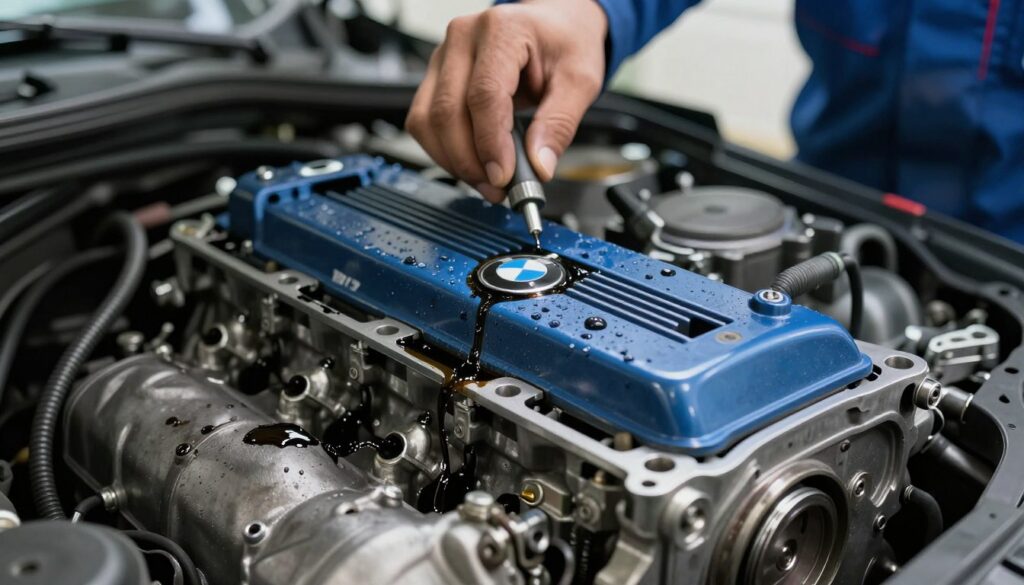
When you see BMW engine oil leaks all the time, it’s usually because of a worn-out engine seal. These parts keep oil inside the engine and let shafts move smoothly. But, heat and friction make them hard and lose their shape, causing leaks.
Types of Engine Seals Prone to Leaking
The most common seals to fail are the crankshaft and camshaft seals. They’re at the front and rear of the engine, where they face high speeds. To learn more about these issues and their impact on your car, check out BMW oil leaks explained and how they affect your vehicle.
Front crankshaft seals often fail due to dirt and extreme temperatures. Rear main seals are harder to get to but also fail often. When these seals break, they let oil leak out, causing messy and potentially damaging BMW engine oil leaks that need quick fixing.
How to Repair Engine Seals
Fixing these seals is a detailed job that needs high precision and specialized tools. Because these seals must fit perfectly with the shafts, any mistake can lead to early failure. I suggest using a seal driver kit to ensure the seal fits right without damaging the housing.
To fix the seal, you need to remove parts around it to get to the seal area. After taking out the old seal, clean the surface well to stop future leaks. Patience is key during this step, as rushing can lead to more problems that cost a lot to fix again.
Oil Pressure Sending Unit: Don’t Overlook It
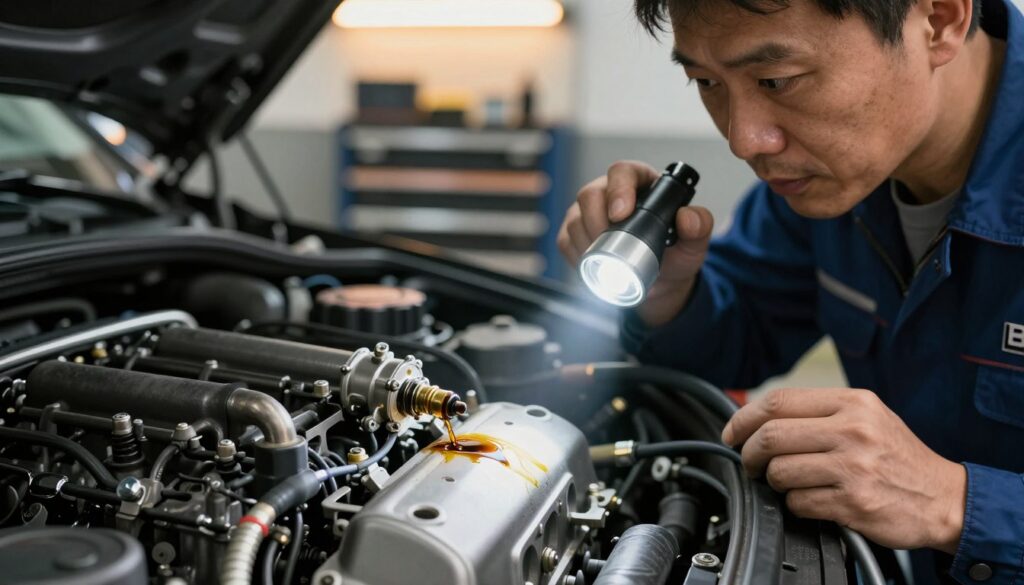
When I do a BMW oil leak diagnosis, I always check the oil pressure sending unit for leaks. This small part is often missed, but it can cause a big problem. If it fails, it can leak oil inside and into the electrical connector.
Identifying a Faulty Oil Pressure Sending Unit
To find this problem, just unplug the electrical connector from the sensor. If you see oil inside the plug, the diaphragm has broken. This oil pressure sensor failure can cause dashboard errors or warning lights. Don’t ignore these signs, as the leak will get worse.
How to Fix the Sending Unit
Replacing the unit is easy and only needs basic tools. First, make sure the engine is cool to avoid burns. Remove the engine covers to get to the sensor. Then, disconnect the wiring and use a deep-well socket to remove and replace the unit with a new crush washer.
| Symptom | Likely Cause | Severity |
|---|---|---|
| Oil in connector | Sensor Diaphragm Failure | Moderate |
| Erratic gauge reading | Electrical Short | High |
| Visible drip under engine | External Seal Leak | Low |
Fixing this yourself can save money and keep your car running well. Remember to use high-quality parts for your next BMW oil leak diagnosis. This way, your engine stays clean and well-monitored.
Transmission Oil Cooler Lines
I often find that transmission oil cooler lines are overlooked during routine inspections. This leads to messy leaks that can be quite deceptive. Because these lines sit near the engine block, a BMW oil cooler gasket leak is frequently misdiagnosed as a standard engine oil issue. It is important to distinguish between these fluids to ensure you perform the correct repair on your vehicle.
Signs of a Leak in Cooler Lines
Identifying a leak early can save your transmission from overheating and long-term damage. Look for specific indicators that suggest the lines or the associated seals are failing.
- Fluid puddles: Look for reddish or brownish fluid accumulating directly under the front of the transmission area.
- Damp connections: Inspect the metal fittings where the hoses meet the cooler for signs of seepage.
- Degraded hoses: Check for cracks, bulges, or hardening along the rubber sections of the lines.
- Misdiagnosis: Always verify if the issue is a BMW oil cooler gasket leak before replacing the entire line assembly.
Repair Process for Transmission Oil Cooler Lines
Once you have confirmed the source of the leak, the repair process requires patience and the right tools. I recommend working on a cool engine to avoid burns from hot transmission fluid.
- Drain the fluid: Place a catch pan under the cooler lines and carefully loosen the fittings to drain the remaining fluid.
- Remove the lines: Use a flare nut wrench to disconnect the lines from the transmission and the cooler unit to prevent rounding the bolts.
- Inspect the seals: Check the O-rings and gaskets at the connection points, as these are common failure points.
- Install new parts: Attach the new lines, ensuring that all fittings are tightened to the manufacturer’s specified torque settings.
- Refill and test: Top off your transmission fluid to the correct level and run the engine to check for any new drips.
Taking the time to properly secure these connections ensures your vehicle remains reliable. Regularly monitoring these lines will prevent unexpected fluid loss and keep your transmission shifting smoothly for years to come.
Timing Chain Cover: The Hidden Leaks
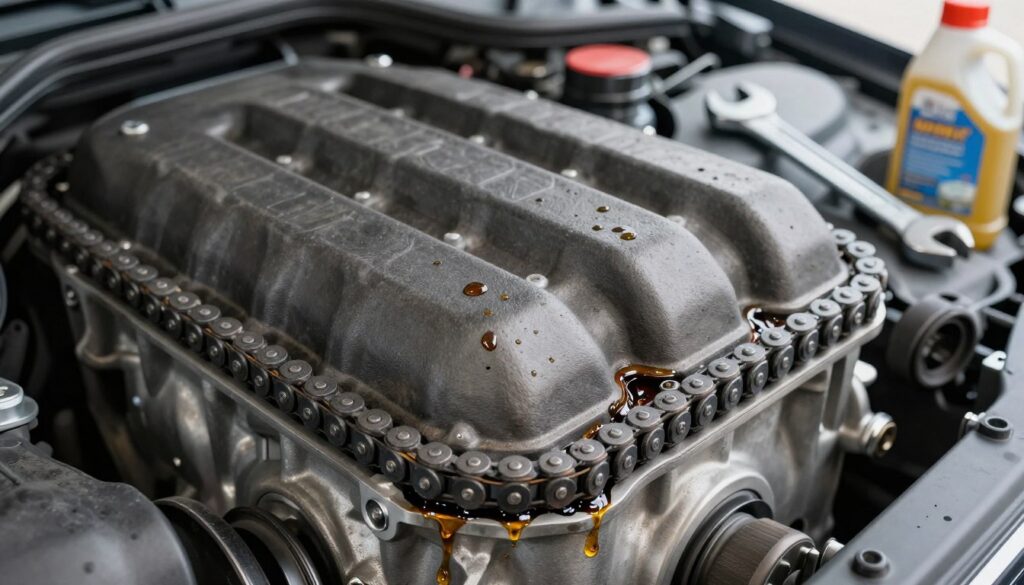
Oil leaks from the timing chain cover are tricky to spot. This part is hidden behind engine accessories. It’s often overlooked by technicians.
Leaks here show up as slow drips that build up on the engine block. They can be hard to catch early.
Symptoms of Timing Chain Cover Leaks
Spotting BMW oil leak symptoms in this area is key. You might smell burning oil while driving. This happens when oil hits hot engine parts.
Also, look for dark spots on your garage floor under the engine. These signs can be subtle but important.
Grime and oil buildup on the engine cover is a clear sign. Use a flashlight to check for wetness behind pulleys. Ignoring these signs can lead to bigger problems.
How to Address Timing Chain Cover Issues
Fixing these leaks needs a careful and expert touch. The timing chain cover is hard to get to. Always inspect it first to confirm the leak source.
If you’re not sure about fixing it, get professional BMW oil leak repair. It’s safer for your engine.
To fix it, you’ll need to remove engine accessories. Clean the area well before putting everything back. Use top-quality parts to avoid future leaks.
| Symptom Type | Severity Level | Diagnostic Action |
|---|---|---|
| Burning Oil Smell | Moderate | Check exhaust proximity |
| Front Engine Grime | Low | Degrease and monitor |
| Active Oil Drips | High | Immediate gasket replacement |
| Low Oil Warning | Critical | Professional inspection |
Preventative Measures for Avoiding Future Leaks
Keeping your vehicle in top shape requires a proactive mindset toward engine health. I find that consistent care prevents small drips from turning into major mechanical failures.
Proactive Maintenance Habits
I suggest performing visual inspections under your hood every few weeks. Catching a damp seal early makes it much easier to fix BMW oil leaks before they damage other components. Sticking to a strict oil change schedule keeps internal pressure stable and protects your gaskets from premature wear.
Selecting Superior Components
My experience shows that using only OEM-approved engine oil and components is vital for the longevity of your seals. Cheap aftermarket parts often fail under the high heat of a German engine. Investing in quality materials ensures your BMW oil leak repair lasts for years.
Reach out to your local mechanic or share your own maintenance tips to keep these high-performance machines running smoothly on the road.
FAQ
What Causes Oil Leaks?
BMW engine oil leaks often stem from the extreme heat these engines face. This heat causes rubber and plastic parts to crack. Age and mileage are key factors, as seals lose their elasticity over time.
Common Signs of Oil Leaks
Spotting BMW oil leak symptoms early is key. Look for dark spots on your driveway or garage floor. A burning smell or smoke from the engine bay also indicates a leak.
Importance of Addressing Oil Leaks
Ignoring oil leaks is risky. They can lead to low oil pressure, harming engine parts. A simple BMW oil filter housing gasket leak can cause big problems if not fixed.
Identifying Valve Cover Gasket Leaks
The BMW valve cover gasket leak is common. I check the valve cover area for oil pooling. This often causes the “burning oil” smell.
How to Replace the Valve Cover Gasket
To fix BMW oil leaks at the valve cover, remove ignition coils and covers. Clean the surfaces well. Use a high-quality replacement like Elring or Genuine BMW.
Signs of an Oil Filter Leak
A BMW oil filter housing gasket leak is tricky to spot. Look for oil on the engine block near the intake manifold. This can be mistaken for a main seal leak.
Steps to Replace the Oil Filter
Replacing the housing gasket is a common BMW oil leak repair. Drain the oil and remove the filter housing. Use a Viton gasket for better seal.
Recognizing Oil Pan Leak Symptoms
A BMW oil pan gasket leak shows as oil on the engine bottom. It doesn’t smell like burning oil. Check the oil pan bolts for looseness.
Repairing or Replacing Your Oil Pan
Fixing this is a big job. You might need to hoist the engine. Use Permatex Ultra Black sealant for extra protection.
Types of Engine Seals Prone to Leaking
The front and rear crankshaft seals are common leak points. They can dry out if the car sits for a long time. The rear main seal is a big concern because of its location.
How to Repair Engine Seals
Fixing these seals needs special tools. Make sure the crankshaft is clean before installing the new seal. This is a job for a pro.
Identifying a Faulty Oil Pressure Sending Unit
The oil pressure sending unit can leak internally. Look for oil inside the plug if you unplug it. This can cause erratic readings or oil migration through the wiring.
How to Fix the Sending Unit
Replacing this unit is a simple BMW oil leak repair. Just unscrew the old unit and install a new one. Make sure to replace the O-rings for a complete seal.
Signs of a Leak in Cooler Lines
A BMW oil cooler gasket leak can be mistaken for an engine leak. Look for oil near the oil filter housing. This can mix with coolant if not fixed.
Repair Process for Transmission Oil Cooler Lines
Fixing these leaks usually means replacing the lines. Make sure they are routed correctly and secured properly. This prevents rubbing against the chassis or engine.
Symptoms of Timing Chain Cover Leaks
Leaks here are hard to spot because they’re hidden. Look for oily grime on the front of the engine. This can attract dirt and damage other parts.
How to Address Timing Chain Cover Issues
Fixing this requires a deep engine teardown. While you’re in there, check the timing chain guides and tensioners. This way, you can avoid going back in later.
Regular Maintenance Tips
Regular oil changes with synthetic oil are key. Use Castrol or Liqui Moly for better seal conditioners. Regular engine cleanings help with early leak detection.
Importance of Using Quality Parts
Using cheap parts is a bad idea. Stick with OEM (Original Equipment Manufacturer) parts. Brands like Victor Reinz and FCP Euro ensure a long-lasting repair.
What are the most common BMW oil leak locations I should check?
The main spots for common BMW oil leak locations are the valve cover gasket, oil filter housing, and oil pan. These areas face high heat and pressure.
What are the most obvious BMW oil leak symptoms?
The most telling BMW oil leak symptoms include a burning oil smell, visible smoke, and oil puddles. A “Low Oil” warning light is also a sign.
How do I perform a BMW oil leak diagnosis?
To diagnose accurately, clean the engine first. Then, run the engine and look for wet spots. Remember, oil flows down, so a leak might be higher than expected.
Why is a BMW oil filter housing gasket leak so dangerous?
A BMW oil filter housing gasket leak is dangerous because it can drip on the drive belt. This can cause the belt to snap or slip, leading to engine damage.
Is it expensive to fix BMW oil leaks at the oil pan?
Fixing a BMW oil pan gasket leak is costly due to labor. You might need to drop the front subframe. Use Permatex Ultra Black sealant for a lasting fix.
How can I identify a BMW oil cooler gasket leak?
A BMW oil cooler gasket leak shows as oil near the oil filter housing. This can mix with coolant if not fixed.
What is the best way to ensure a successful BMW oil leak repair?
For a successful fix BMW oil leaks, use OEM-quality parts. Replace all related O-rings and hardware. Use a Viton gasket and follow the manufacturer’s torque specs for a long-lasting seal.

Hi! I’m Moheen Iftikhar, the founder of “CarSpherei.” I’m passionate about everything automotive — from the latest car trends and cutting-edge technology to driving tips and expert insights. Through CarSpherei, I share in-depth reviews, helpful guides, and practical advice to keep every car enthusiast informed, inspired, and connected to the world of driving.