


Why is the BMW check engine light on?
Did you know over 80% of dashboard alerts are minor? The check engine light is a key warning. It connects your car to you, ensuring safety and efficiency.
Seeing a warning light can be incredibly stressful. But, proper interpretation often shows simple fixes. Knowing how to reset maintenance lights can also be helpful.
Getting a BMW check engine light diagnosis from a pro can ease your mind. Fixing these issues early prevents damage and keeps your car running well.
Key Takeaways
- The OBD-II system is a vital diagnostic tool for your vehicle.
- Most dashboard warnings come from minor sensor issues, not major failures.
- Understanding these alerts reduces unnecessary stress for every driver.
- Early intervention prevents expensive repairs down the road.
- Regular monitoring keeps your vehicle performing at its best.
Understanding the Check Engine Light in BMWs
To figure out why is the BMW check engine light on, we need to look at the tech under the hood. Your car has an advanced On-Board Diagnostic (OBD-II) system. It’s like the brain of your car, checking sensors to keep the engine running smoothly.
What Does the Check Engine Light Indicate?
The light is a digital alert from the OBD-II system. It checks over 100 engine and emissions parts to keep your car running right. If a reading is off, the light comes on to tell you it’s time for a BMW check engine light diagnosis.
This light doesn’t always mean your car is about to fail. But it does mean something’s not right. It could be a small glitch or a bigger problem. The system is trying to protect your engine.
Importance of Ignoring the Light
Many drivers ignore the light if the car seems okay. But this is risky and can cause serious damage over time. Even if the car seems fine, the issue could be making the engine run poorly.
Driving with the light on can lead to expensive repairs. For example, ignoring a sensor problem can damage your catalytic converter. If you’re having other car issues, you might also want to check out how to fix Mercedes MBUX infotainment system to see how car software and hardware work together.
Brief Overview of System Components
The OBD-II system watches over many parts to keep your BMW running well. It tracks these parts to find where a problem is. The main systems it checks include:
- Fuel System: It looks at fuel pressure and delivery for good combustion.
- Ignition System: It checks spark plugs and ignition coils for proper timing.
- Emission Control: It checks the catalytic converter and oxygen sensors for clean emissions.
- Air Intake: It measures airflow to keep the air-fuel mix right.
Common Causes of BMW Check Engine Light
Many drivers get worried when they see a warning light. But, understanding the common culprits can help a lot. These alerts are often due to simple issues. Knowing these BMW check engine light causes makes car care easier.
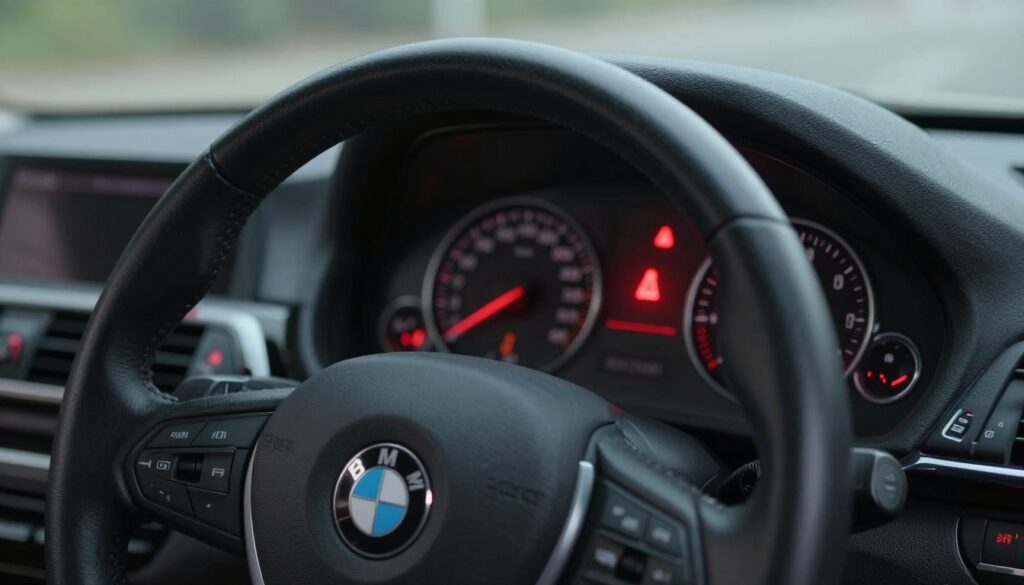
Understanding BMW check engine light alerts is key for any car owner. Many common problems are easy to fix and won’t break the bank. If you’re also worried about oil leaks, check out common BMW oil leak locations to keep your engine running well.
Faulty Oxygen Sensors
The oxygen sensor checks the exhaust system’s oxygen levels. If it fails, your car’s computer can’t adjust the air-fuel mix right. This hurts fuel economy and can damage the catalytic converter if not fixed.
Defective Mass Airflow Sensor
The mass airflow sensor, or MAF, measures air intake for the engine. It helps the engine control unit figure out the right fuel amount. A bad sensor can cause poor engine performance, rough idling, or stalling.
Loose or Damaged Gas Cap
A loose or damaged gas cap is a common reason for a dashboard light. It’s part of the EVAP system, which controls fuel vapors. If the cap isn’t tight, vapors leak out, setting off the light.
Always tighten your gas cap until you hear a click after refueling. If the light stays on, check the seal for damage. These small actions can help keep your car in good shape and avoid mechanic visits.
Engine Performance Issues Leading to the Light
If your car hesitates or jolts while driving, it’s a sign of engine trouble. This usually means your engine is having trouble burning fuel smoothly. The onboard computer will alert you to this problem to prevent bigger issues.
Understanding BMW check engine light alerts is key to keeping your car in top shape. Some problems are minor, but engine issues can get worse fast if ignored. It’s a good idea to check your BMW system to make sure your alerts are correct and current.
Misfiring Engine
An engine misfire happens when a cylinder doesn’t ignite the fuel mix correctly. You might feel a sudden jolt or power loss when you accelerate. This problem makes the engine control unit flag a fault, turning on the dashboard light.
Worn Spark Plugs
Spark plugs ignite the fuel in your engine. Over time, they wear out, causing poor fuel burning and less efficiency. If your spark plugs are bad, your engine will struggle, and the check engine light will come on.

Clogged Catalytic Converter
Ignoring engine misfires can damage your catalytic converter. Unburned fuel can overheat and melt the converter, causing it to clog. This is a serious problem that’s hard and costly to fix.
“Regular maintenance is not just a suggestion; it is the foundation of vehicle longevity and safety on the road.”
| Issue | Primary Symptom | Risk Level |
|---|---|---|
| Misfiring Engine | Jolting/Hesitation | High |
| Worn Spark Plugs | Rough Idling | Medium |
| Clogged Converter | Power Loss | Critical |
By taking care of your car, you can avoid expensive repairs. Always notice how your car feels while driving. Knowing how to understand BMW check engine light alerts will help keep your car running well for a long time.
Emission Control and the Check Engine Light
Many car owners don’t realize how important their vehicle is for the environment. Your BMW has advanced sensors and valves to manage exhaust gases. This keeps your car running well and meets strict government rules.
Role of the Emission System
This system stops harmful vapors from getting into the air. It catches fuel vapors and sends them back to the engine to burn. Proper operation of these parts is key for your car’s health.
How it Affects the Environment
Your car uses a catalytic converter to make toxic pollutants safer before they leave the tailpipe. This is essential for lowering your car’s environmental impact. If this part fails, your car emits much more harmful emissions.
Common Emission-Related Faults
One common BMW check engine light issue is small leaks in the EVAP system. These leaks set off specific trouble codes that tell you there’s a problem. Finding these problems early is important for fixing them.
Ignoring these signs can hurt your car’s fuel efficiency and damage other engine parts. I suggest fixing these issues quickly to keep your car running right. Regular checks help your emission system work as it should.
Diagnostic Tools for Identifying Issues
Identifying common BMW check engine light issues starts with a simple plug-in device. Every owner should know the basic tools to talk to their car’s computer. This way, you can go from guessing to knowing exactly what your car needs.
OBD-II Scanners Overview
An OBD-II scanner is a handheld device that plugs into a port under your dashboard. It reads Diagnostic Trouble Codes (DTCs) from the engine control unit. These codes show you which part is causing the warning light.
Benefits of Professional Diagnostic Tools
Basic scanners are helpful but limited compared to factory tools. Professional technicians use advanced software that reads BMW-specific codes. These tools offer deeper system analysis, including live data and component testing.
Using professional tools ensures you don’t replace healthy parts by mistake. They give a detailed view of the emission and ignition system. This precision is key to finding the right BMW check engine light solutions fast.
When to Consider Professional Help
When a scanner’s data isn’t enough, it’s time for a certified technician. This is true for complex codes or if the engine runs roughly. Also, if the light stays on after a basic repair, professional help is needed.
| Diagnostic Method | Data Depth | Cost Level | Best For |
|---|---|---|---|
| Basic OBD-II Reader | Generic Codes | Low | Quick Checks |
| Advanced Scanner | System-Specific | Moderate | DIY Enthuasiasts |
| Professional Dealer Tool | Full Diagnostics | High | Complex Repairs |
Always remember safety first when working on your car. If unsure about diagnostic results, seek professional help. Expert advice prevents damage and keeps your BMW running well.
Addressing BMW Engine Issues
Keeping a BMW in top shape means regular care and expert checks. Proactive habits help spot small problems early. This way, you avoid big repairs and keep your car running smoothly.
Regular Maintenance and Checks
Stick to the car’s service schedule. Regular oil changes and fluid checks keep the engine running well. These checks can catch wear and tear before it turns into a bigger issue.
When DIY Solutions Are Effective
Some small problems can be fixed at home. For example, a loose gas cap can cause the check engine light to come on. If you find the problem, the light might go away on its own. But if it stays on, it’s time to see a pro to check for deeper issues.
Importance of Professional Services
For bigger problems, you need a certified mechanic. They use special tools to find the problem. A flashing check engine light means you need to act fast to avoid serious damage.
| Service Type | Complexity | Recommended Action |
|---|---|---|
| Loose Gas Cap | Low | Tighten or Replace |
| Oxygen Sensor Fault | Medium | Professional Diagnostic |
| Engine Misfire | High | Immediate Repair |
| Catalytic Converter | High | Specialist Inspection |
Impact of Ignoring the Check Engine Light
When that amber light glows on your dashboard, it’s not just a hint to keep driving. Your vehicle is trying to tell you something important. Ignoring these warnings can harm your engine and your wallet.

Potential Damage to Vehicle
A flashing light means your engine is misfiring badly. If you see this, stop driving right away. This helps avoid damage to your catalytic converter and other parts. Catastrophic engine failure is a real risk if you keep driving.
“An ounce of prevention is worth a pound of cure.” — Benjamin Franklin
Increased Repair Costs
Waiting to fix your BMW’s check engine light can cost more. What starts as a simple fix can turn into a big repair. Early action can prevent this from happening.
Learn more about resolving BMW check engine light problems to save money.
Safety Risks While Driving
Ignoring your car’s warning lights can also be dangerous. Knowing why your BMW’s light is blinking is key. A sudden loss of power in traffic can be risky. Your safety and others’ depend on a reliable vehicle.
How to Reset the Check Engine Light
Clearing a warning light without fixing the issue is risky. Many drivers try to turn off the indicator. But fixing BMW check engine light on needs more than just a digital reset.

Simple Steps for Resetting
Using an OBD-II scanner is a common method. Plug it into the port under the dashboard. Then, choose to erase the codes to turn off the light.
Another way is to disconnect the battery’s negative terminal for a few minutes. This resets the engine control unit. But, I advise against it, as it can mess with other settings like your clock or radio.
Importance of Fixing Underlying Issues
Fixing the light without solving the problem is entirely ineffective. The vehicle’s computer keeps checking sensors. If the fault is not fixed, the light will come back soon.
“A warning light is a messenger, not the problem itself; silencing the messenger does nothing to repair the engine.”
Ignoring the real problem can damage your engine or emission parts. Fixing BMW check engine light on right ensures your car stays reliable and safe.
When to Seek Professional Assistance
If the light stays on after a basic fix, get a certified technician. They use advanced tools to find issues scanners might miss.
If your engine acts strangely, makes noises, or uses more fuel, get help. An expert will give your BMW the care it needs to run well.
The Role of BMW’s Onboard Diagnostic System
The complex network of sensors in your BMW is truly amazing. It acts as the vehicle’s brain, always checking for problems. When you’re fixing BMW check engine light on issues, you’re working with this advanced system.
How It Works
The system gathers data from sensors in the engine and exhaust. It compares this data to what’s expected to keep your car running well. If something’s off, it alerts you to avoid engine damage.
This early warning system helps catch small problems before they get big. If you see the warning light, you can learn more about fixing BMW check engine light on by checking out professional guides.
Understanding Diagnostic Trouble Codes (DTCs)
When a problem is found, the system creates a Diagnostic Trouble Code, or DTC. These codes are like a precise roadmap for fixing the issue. They help mechanics find the exact problem area.
Understanding these codes is key to keeping your car in top shape. Each code points to a specific problem, making repairs more focused. This way, your BMW stays in great condition for years.
Preventative Measures for BMW Owners
I think taking care of your BMW before problems start is key. This way, you can dodge the hassle of sudden dashboard lights and the need for BMW engine light troubleshooting.
Regular Maintenance Tips
Following your car’s service schedule is the best way to keep it in top shape. Always use high-quality fuel to avoid carbon buildup and sensor problems.
Don’t forget to change your oil and filters regularly. These steps keep your engine clean and prevent warning lights from coming on.
Importance of Using Genuine Parts
If repairs are needed, go for genuine OEM parts. Aftermarket parts might be cheaper but they’re not as precise for your car’s systems.
“Quality is never an accident; it is always the result of high intention, sincere effort, intelligent direction and skillful execution.”
Using real parts makes sure your sensors and actuators talk right with the computer. This is key for good BMW engine light troubleshooting and keeping your car in good shape.
Keeping Up with Software Updates
Today’s cars are like computers on wheels. Sometimes, the computer needs a software update to work better or fix small issues.
Make sure to visit your local service center for these updates. Keeping your car’s software current is important for BMW engine light troubleshooting. It stops false error codes from showing up because of old software.
Conclusion: Taking Action When the Light Comes On
Your dashboard is like a messenger between you and your car. If you ignore warning signs, you might face big problems later. These issues could have been fixed if you acted sooner.
When you see a warning light, don’t wait. Fixing it right away keeps your car running well. It also makes sure you have a safe and smooth drive.
Prioritizing Timely Responses
Acting fast stops small problems from getting worse. This saves you money on big repairs. It also keeps your car’s systems working right.
Safety and Performance Benefits
A well-kept BMW is powerful and precise. Regular checks and fixes keep it running great. This also cuts down on harmful emissions.
Final Thoughts on Maintenance
You can take good care of your car. Regular visits and using genuine parts extend its life. Stay ahead to ensure a safe and fun drive.
FAQ
Why is the BMW check engine light blinking reasons?
A blinking light means a severe engine misfire that could damage the catalytic converter. I recommend pulling over and turning off the engine immediately. This is a high-priority emergency compared to a steady light.
What are the most common BMW check engine light issues I should look for?
Common issues include faulty oxygen sensors, worn mass airflow sensors, or a loose gas cap. These parts are key for managing air-fuel mix and emissions.
How should I begin BMW engine light troubleshooting?
Start by using an OBD-II scanner to get the Diagnostic Trouble Codes (DTCs). This removes the guesswork and tells you exactly which system is failing.
Are there reliable BMW check engine light solutions for a car that drives fine?
Yes, even if the car seems fine, solutions often involve replacing an aging oxygen sensor or fixing a small vacuum leak. Ignoring it can lead to higher repair costs later.
What is involved in a professional BMW check engine light diagnosis?
A professional diagnosis goes beyond just reading codes. Technicians use factory-level software to run active tests on components like the VANOS system or fuel pumps.
How do I go about resolving BMW check engine light problems permanently?
To fix problems permanently, always address the root cause indicated by the diagnostic codes. This often means using Genuine BMW parts to replace the failed sensor or component.
Is fixing my BMW check engine light on a DIY basis difficult?
It depends on the code. DIY fixes are manageable for tasks like tightening the gas cap, replacing spark plugs, or swapping out an air filter. But, deeper engine or transmission issues are best left to specialists.
Why is understanding BMW check engine light alerts helpful for resale value?
Understanding these alerts and keeping repair records shows you’ve maintained the vehicle well. A car with a clear dashboard and documented repairs is more valuable on the market.

Hi! I’m Moheen Iftikhar, the founder of “CarSpherei.” I’m passionate about everything automotive — from the latest car trends and cutting-edge technology to driving tips and expert insights. Through CarSpherei, I share in-depth reviews, helpful guides, and practical advice to keep every car enthusiast informed, inspired, and connected to the world of driving.