


Hyundai 10-Year/100,000-Mile Warranty: What is Actually Covered?
Did you know only about 10% of new cars have a warranty lasting 10 years? When I looked at cars for sale, I learned it’s key to understand the warranty details. This ensures long-term peace of mind.
Knowing what the Hyundai 10-year/100,000-mile warranty covers is vital before you buy. This warranty is a top choice for reliability in the US car market.
Whether I’m checking the Hyundai Santa Fe towing capacity or looking for a daily car, knowing my engine and transmission are covered is reassuring. This guide helps you understand these complex terms.
Key Takeaways
- The powertrain plan offers extensive protection for major engine and transmission parts.
- Coverage lasts much longer than the standard for new cars.
- Knowing what’s not covered helps avoid surprise repair costs later.
- This warranty helps keep your car’s value over time.
- Always check if your car model gets the full warranty.
Overview of the Hyundai Warranty
In 1999, Hyundai changed the car industry with its Hyundai 10-year/100,000-mile warranty. This move showed that Hyundai’s cars were built to last. It was a bold step to win over hesitant buyers.
Brief History of Hyundai’s Warranty
Before 1999, car warranties were much shorter. Hyundai’s long warranty changed the game. It made Hyundai a top choice in the US.
This move changed how people saw Hyundai. It went from being seen as cheap to reliable. Even now, it shapes how I think about car parts.
Importance of a Comprehensive Warranty
A good warranty gives me peace of mind. I look for a Hyundai extended warranty or standard coverage. It protects me from big repair costs.
The table below shows how Hyundai’s warranty stacks up against others:
| Coverage Type | Hyundai Standard | Industry Average |
|---|---|---|
| Powertrain | 10 Years / 100k Miles | 5 Years / 60k Miles |
| New Vehicle | 5 Years / 60k Miles | 3 Years / 36k Miles |
| Roadside Assistance | 5 Years / Unlimited | 3 Years / 36k Miles |
| Anti-Perforation | 7 Years / Unlimited | 5 Years / 100k Miles |
The Hyundai 10-year/100,000-mile warranty is unmatched. While some might want extra coverage, Hyundai’s basic warranty is impressive. It’s a big reason I choose Hyundai for my daily drive.
Key Benefits of the 10-Year/100,000-Mile Warranty
When I look at buying a car, I check the warranty first. J.D. Power says warranty coverage is key for buyers. That’s why the Hyundai 10-year/100,000-mile warranty is a big deal for Hyundai.

Peace of Mind for New Owners
This warranty gives me genuine peace of mind. It protects my car from sudden breakdowns. This means I can drive without worry, thanks to Hyundai vehicle protection.
Hyundai also uses cool tech to make owning a car easier. For example, learning how to use Hyundai digital key adds convenience. It’s a great match for the warranty’s long-term security.
Enhanced Resale Value
A car with a good warranty history and a long warranty is more attractive. When I sell my car, the Hyundai 10-year/100,000-mile warranty is a big plus. It shows the car was well cared for.
This makes my car worth more when I sell it. It’s a smart move that keeps my investment safe over time.
Competitive Advantage in the Market
The Hyundai vehicle protection plan is a big draw for budget-conscious buyers. It makes owning a Hyundai more affordable. This builds loyalty among drivers who want reliability and savings.
In short, the Hyundai 10-year/100,000-mile warranty is a promise of quality. It’s a key reason I choose Hyundai over other brands.
What’s Covered Under the Powertrain Warranty?
Knowing what my car’s warranty covers makes me feel secure on the road. The Hyundai warranty coverage protects the car’s most important and expensive parts. This means I don’t have to worry about unexpected repair costs ruining my day.

Engine and Transmission Coverage
The engine is the heart of my car, and the warranty covers it well. It includes all parts that need oil, like the block and head. Reliability is key, and knowing the transmission is also covered gives me extra peace of mind.
Thinking about a Hyundai extended warranty later? The engine and transmission are already well-protected. This warranty focuses on the main parts that keep my car running smoothly. It’s a strong safety net for my vehicle’s performance over time.
Other Powertrain Components
The warranty also covers other drive systems that are key for my car’s operation. These parts work together to efficiently power the wheels. Here’s a list of what’s included in the Hyundai warranty coverage:
- Drive Axles: Includes front and rear axle assemblies and constant velocity joints.
- Propeller Shafts: Essential for transferring power in rear-wheel and all-wheel drive configurations.
- Transfer Case: Vital for vehicles equipped with four-wheel drive systems.
While some might consider a Hyundai extended warranty for extra security, the standard warranty is quite detailed. It covers the essential mechanical parts that connect the engine to the road. Regular maintenance keeps my car reliable for years to come.
Understanding the New Vehicle Limited Warranty
My car ownership is more than just about how fast it goes. The New Vehicle Limited Warranty is key. It protects me from surprise repair bills early on. It covers everything from bumper to bumper for 5 years or 60,000 miles, whichever comes first.
This warranty is not just for the engine. It covers almost every part of my car against defects. It’s different from the powertrain warranty because it includes more systems. This includes the audio system, air conditioning, and interior parts. Knowing this is as important as knowing my car’s real-world highway range.
Components Covered Within the First Year
In the first year, I’m protected against many manufacturing issues. This Hyundai vehicle protection covers any part that fails due to a defect. This includes the infotainment screen and power window motors, giving me peace of mind.
During the first year, the coverage is very broad. If I have a problem with the paint, upholstery, or electrical sensors, the repair is free. This commitment to quality is a big part of owning a Hyundai.
Limitations and Exclusions
Even with great Hyundai warranty coverage, there are limits. The warranty doesn’t cover normal wear and tear items like brake pads or tires. It also doesn’t cover damage from accidents, misuse, or unauthorized changes.
I must also keep up with regular maintenance to keep the warranty valid. If I don’t follow the recommended service schedule, I could void the warranty. By taking good care of my car, I stay protected for the full warranty period.
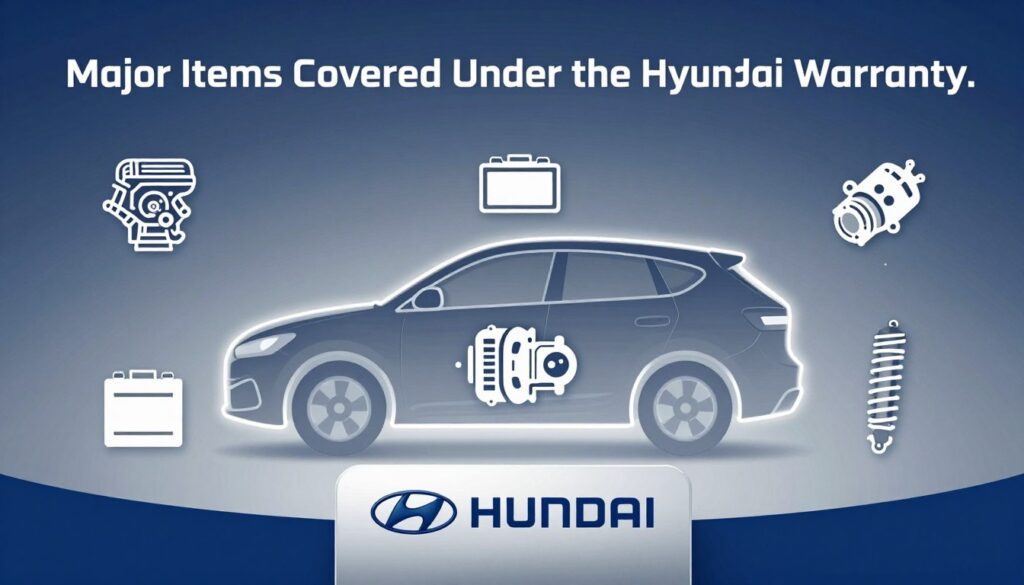
Major Items Covered Under the Warranty
Understanding the Hyundai warranty details is key for my peace of mind. It’s not just about the engine. My warranty also covers many mechanical systems that keep me safe on the road.
Electrical Systems and Components
My car’s electrical system is complex. It includes wiring and sensors. I’m glad to know these critical electrical systems are covered. This means I won’t face unexpected repair costs if something fails.
Steering and Suspension Systems
The steering and suspension parts are vital for my car’s handling. The Hyundai warranty inclusions cover key items like the steering rack and struts. This support keeps my driving experience smooth and responsive.
Brake Systems
Safety is my priority, and the brakes are key. My warranty covers important parts like the master cylinder. It also includes an anti-perforation warranty for 7 years, protecting against rust.
| System Category | Coverage Scope | Duration |
|---|---|---|
| Electrical Systems | Sensors and Wiring | 10 Years/100k Miles |
| Steering & Suspension | Rack, Struts, Bushings | 10 Years/100k Miles |
| Brake Hydraulics | Calipers, Master Cylinder | 10 Years/100k Miles |
| Body Protection | Anti-Perforation/Rust | 7 Years/Unlimited |
Items Not Covered in the Warranty
The manufacturer’s protection plan is great, but it’s not everything. It’s important to know what’s not covered. This helps me plan for the future costs of owning a car.
Common Misunderstandings
Many people think all repairs are covered. But, the warranty doesn’t cover things that wear out over time. These parts need to be replaced by me.
Here’s a list of things not covered by the warranty:
- Brake pads and linings
- Wiper blades and inserts
- Tires and wheels
- Clutch linings
- Light bulbs and fuses
Maintenance Responsibilities
As a car owner, I play a big role in keeping my car in good shape. If I don’t do regular maintenance, I might lose some warranty coverage. The official owner’s handbook has all the rules to follow.
Also, damage from accidents, misuse, or the environment isn’t covered. Neglect can cost a lot. By keeping up with maintenance, I protect my car and know what the warranty covers for me.
Importance of Regular Maintenance
Regular maintenance is key to keeping my protection plan active. By taking care of my vehicle, it stays reliable for years. Knowing the Hyundai warranty specifics helps avoid unexpected repair costs.
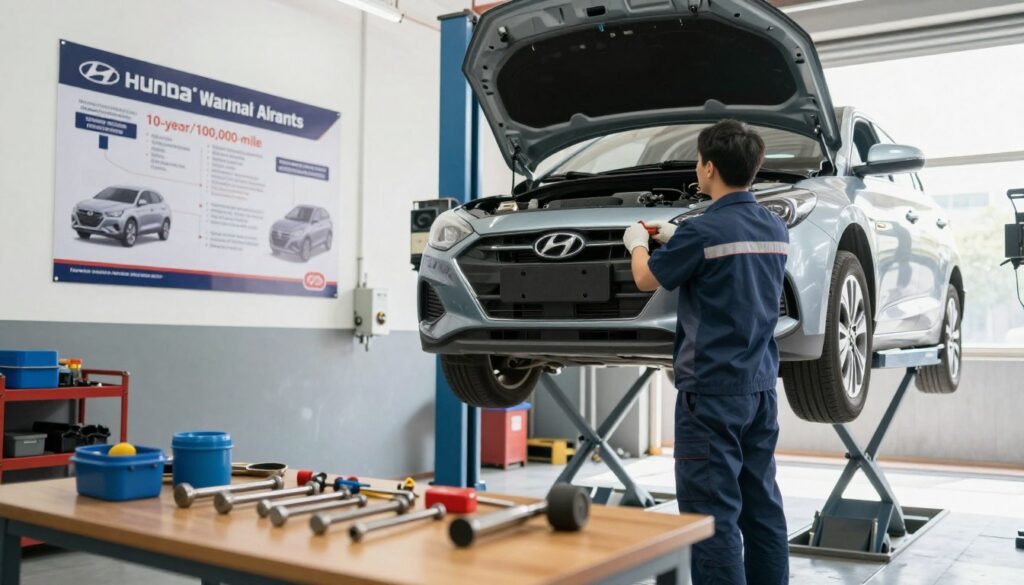
Visiting a Certified Hyundai dealership is the best way to maintain coverage. They use genuine parts and follow the manufacturer’s guidelines. This maximizes the value of my warranty.
Scheduled Maintenance Requirements
I follow the service intervals in my owner’s manual to keep my protection valid. This includes oil changes, fluid checks, and tire rotations. Consistency is the key to preventing issues.
“An ounce of prevention is worth a pound of cure.”
I keep detailed records of every service visit. These records prove I’ve met my responsibilities as an owner. They make filing a claim easier.
Consequences of Skipping Maintenance
Skipping routine service can harm my coverage. If a part fails due to neglect, the manufacturer might deny my claim. So, I never miss my scheduled appointments.
- Voided coverage on specific engine or transmission parts.
- Increased risk of premature wear and tear.
- Lower resale value due to incomplete service history.
Staying proactive is the smartest financial choice. By following the maintenance schedule, I protect my vehicle and warranty. I treat my car with care, ensuring dependable performance.
Warranty Transfer and Its Benefits
When I sell my car, I think about the warranty’s impact. Knowing the Hyundai warranty specifics is key for selling to a private party. The warranty changes a lot when it’s transferred.

How the Transfer Process Works
The powertrain coverage is a big plus, but it changes for the next owner. It reverts to a 5-year/60,000-mile term from the original date. This change happens when the title is transferred.
Being open about these Hyundai warranty specifics builds trust with buyers. Showing maintenance records proves the car was well-kept. This makes the new owner feel secure about the warranty.
Advantages for Future Owners
Even with the shorter term, the warranty is a competitive advantage. It offers a lot of protection against big mechanical issues. This makes the car more appealing than others with less coverage.
The warranty’s transferability adds tangible value to the sale. By explaining the Hyundai warranty specifics clearly, I can ask for a better price. It’s a win for both of us, showing the car’s reliability over time.
Hyundai’s Roadside Assistance Program
Being on the road feels safer with Hyundai’s Roadside Assistance. It’s a key part of the Hyundai warranty benefits. It makes sure I’m never stuck on the side of the road.
Coverage Details and Availability
This program is available 24/7, 365 days a year. It covers me anywhere in the United States. And the best part? It’s free for the first five years.
It’s also good for unlimited miles. Whether I’m driving to work or across the country, I’m covered. For more info, I check out what’s included in the 10-year/100,000-mile Hyundai warranty.
Additional Services Provided
The program offers more than just towing. If I get a flat tire, dead battery, or locked out, help arrives fast. It’s a huge relief to have these problems solved without extra cost.
This service shows Hyundai’s dedication to my driving experience. It makes me feel secure and confident on the road. It turns road emergencies into minor issues.
Conclusion: Is the Hyundai Warranty Right for You?
When buying a car, it’s not just about the price. The Hyundai warranty offers a level of security that’s hard to find elsewhere. You can check out everything about Hyundai warranty to see if it’s right for you.
Evaluating Your Driving Needs
For me, the key is predictable costs. If I’m keeping my car for a long time, the warranty is a big plus. It keeps me safe from surprise repair costs during the car’s most important years.
Future Implications of the Warranty
Thinking about the future, the warranty protects my investment. It lets me drive confidently, knowing major parts are covered. This makes my car a reliable partner for years to come.
Hyundai’s Roadside Assistance Program
Brief History of Hyundai’s Warranty
In 1999, Hyundai changed the game with its 10-year/100,000-mile warranty. This bold move showed the American market that Hyundai’s cars last long. It’s a key part of Hyundai’s history, showing a long-term commitment to quality.
Importance of a Complete Warranty
A good warranty is key for peace of mind. Hyundai’s warranty goes beyond what most car makers offer. It covers more, giving you financial security as your car ages.
Peace of Mind for New Owners
This warranty reduces stress about car troubles. It protects your investment, giving you confidence in your car’s quality for ten years.
Enhanced Resale Value
A warranty history boosts your car’s resale value. Even if the warranty term changes for new owners, it shows the car is well-maintained.
Competitive Advantage in the Market
This warranty makes Hyundai stand out. It offers better value than many competitors, making Hyundai a smart choice for budget-conscious buyers.
Engine and Transmission Coverage
The warranty covers the engine and transmission. It includes the engine block, cylinder heads, and more. This ensures your car’s heart and moving parts are protected.
Other Powertrain Components
The warranty also covers seals, gaskets, and drive shaft parts. Knowing what’s protected helps you appreciate Hyundai’s long-term security.
Components Covered Within the First Year
The New Vehicle Limited Warranty covers more than just the engine. It includes the radio, paint, and most parts for 5 years or 60,000 miles. This is often called “bumper-to-bumper” coverage.
Limitations and Exclusions
There are limits and exclusions in the first few years. The warranty covers manufacturing errors, not damage from accidents or poor driving.
Electrical Systems and Components
Electrical systems like the alternator and starter are covered. This is important for modern cars with expensive electronics.
Steering and Suspension Systems
Steering and suspension systems are also protected. This includes parts like the power steering pump and anti-perforation warranty for rust protection.
Brake Systems
Brake components like the master cylinder are covered. This helps keep your car in good condition without high repair costs.
Common Misunderstandings
Some things are not covered, like wear and tear items. Damage from accidents or misuse is also not included.
Maintenance Responsibilities
Ignoring maintenance can void your warranty. It’s important to follow the recommended service schedule to keep your warranty valid.
Scheduled Maintenance Requirements
Regular maintenance is key to keeping your warranty valid. Follow the recommended schedule for oil changes and inspections.
Consequences of Skipping Maintenance
Skipping maintenance can lead to warranty issues. Using authorized service centers ensures your car stays in top shape.
How the Transfer Process Works
When selling your car, the warranty can transfer. The New Vehicle Limited Warranty stays the same, but the powertrain warranty term changes.
Advantages for Future Owners
The warranty adds value for the next owner. It provides protection that many used cars don’t have, making your car more appealing.
Coverage Details and Availability
The 24/7 roadside assistance is a big plus. It’s free for the first five years, covering issues like flat tires and dead batteries.
Additional Services Provided
This service adds security to your driving. It includes towing to a Hyundai dealership if your car breaks down, ensuring you’re never stranded.

Hi! I’m Moheen Iftikhar, the founder of “CarSpherei.” I’m passionate about everything automotive — from the latest car trends and cutting-edge technology to driving tips and expert insights. Through CarSpherei, I share in-depth reviews, helpful guides, and practical advice to keep every car enthusiast informed, inspired, and connected to the world of driving.