

Hyundai Kona Electric Charging Speed at Tesla Superchargers
Did you know nearly 60% of American drivers worry about finding charging spots on long trips? This fear comes from the lack of reliable charging stations. But, things are getting better as more car makers use the same charging standards.
The North American Charging Standard (NACS) adapter is making a big difference. It lets non-proprietary vehicles use a huge network once only for one brand. This is a major milestone for daily use and long trips.
Knowing how fast the Hyundai Kona Electric charges at Tesla Superchargers is key for anyone wanting to get the most from their car. While comparing cars like the Hyundai Ioniq 6 vs Tesla Model is interesting, your car’s real performance matters most. I’ll explain how this works and what you can expect when charging.
Key Takeaways
- NACS adapters are bridging the gap between diverse vehicle architectures and established networks.
- Accessing new stations significantly reduces range anxiety for long-distance commuters.
- Performance metrics vary based on battery temperature and current station output.
- Proper planning remains vital to ensure optimal power delivery during your journey.
- Future software updates will likely streamline the authentication process for non-proprietary cars.
Understanding the Hyundai Kona Electric
When looking at the Hyundai electric car charging speed, start with the car’s specs. The Kona Electric is made for daily use and efficient power use. It’s a great choice for today’s drivers.
Key Features of the Kona Electric
The Kona’s battery pack is key to its charging speed. The 10 kW onboard AC charger is a big plus. It makes charging at home or public stations quick and easy.
- Battery Capacity: High-density lithium-ion cells for long life.
- AC Charging: Up to 10 kW for quick home charging.
- DC Fast Charging: Fast charging at public stations.
Benefits of Electric Vehicles
Switching to electric means more than just a quiet ride. You save on maintenance costs because there are fewer parts. Plus, the instant torque makes driving fun and responsive.
Electric cars also help the environment. They use electricity, which is cleaner, and reduce your carbon footprint. You also save on fuel costs.
Comparison with Other EVs
Compared to the Chevrolet Bolt or Kia Niro EV, the Hyundai electric car charging speed is competitive. The Kona might not have the fastest rate, but it’s consistent and safe. It prevents overheating during long charges.
| Feature | Hyundai Kona Electric | Industry Average |
|---|---|---|
| Onboard Charger | 10 kW | 7.2 – 11 kW |
| DC Fast Charge | Competitive | Variable |
| Efficiency | High | Moderate |
The Kona Electric is a good mix of tech and practical use. Knowing these basics helps owners get the most from public charging.
Tesla Superchargers Overview
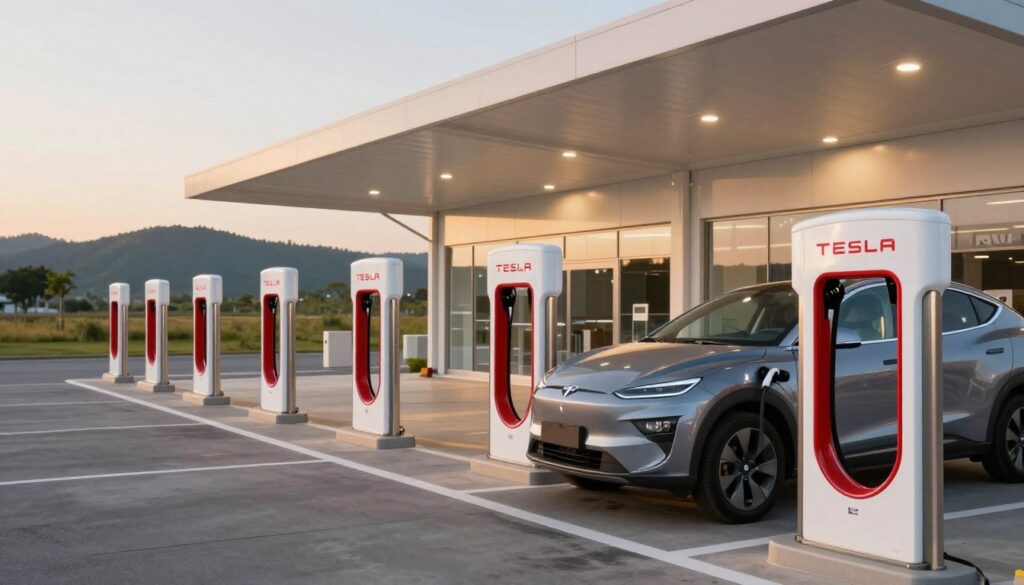
For long trips, the Tesla Supercharger network is often the best choice. It’s the main fast-charging option in the U.S. and is known for being fast and reliable. Now, more car makers are making their vehicles work with these chargers, thanks to Tesla Supercharger compatibility.
What Are Tesla Superchargers?
Tesla Superchargers are fast-charging stations that give cars a quick boost. They use direct current (DC) to charge cars faster than home chargers. If you want to charge your car at home, you can install a Tesla Wall Connector.
“The future of electric mobility depends on a seamless and accessible charging network that serves all drivers, regardless of their vehicle brand.”
Charging Speeds Explained
To understand the Hyundai electric car charging speed, we need to look at how charging systems work. Tesla’s high-voltage stations are made for their cars. When a Kona Electric uses these stations, it must talk to the charger to get the right amount of power. Efficiency is key to avoid overheating the battery.
Locations and Accessibility
The stations are placed along highways and in cities, making them easy to find. This is great for long trips. As more cars can use these chargers, the Hyundai electric car charging speed will matter more for long trips. Making sure all cars can use Tesla Supercharger compatibility helps everyone find a place to charge.
Charging Compatibility with the Kona Electric
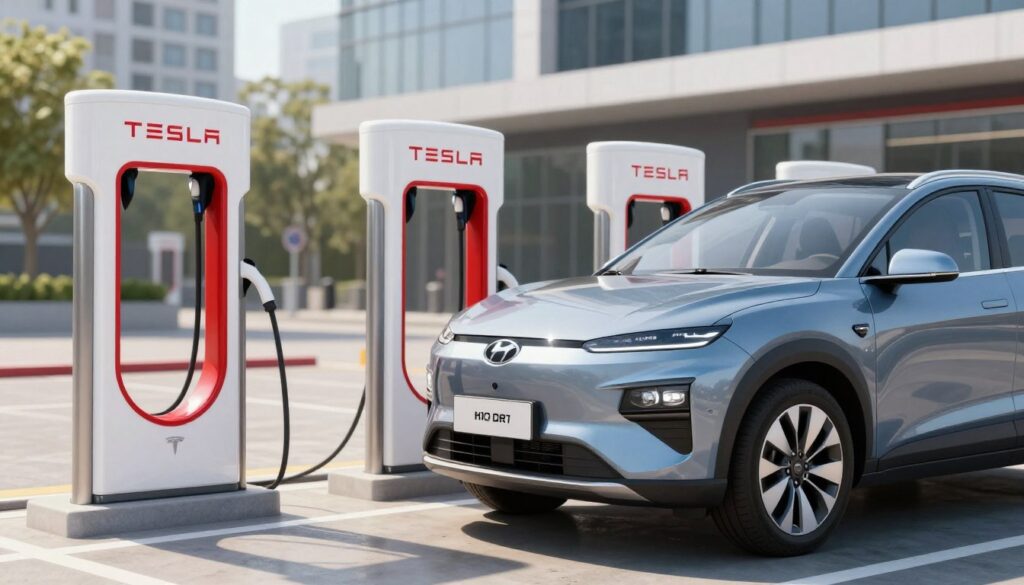
When I think about using a Tesla Supercharger for my Hyundai Kona Electric, the first thing I worry about is connecting it. The charging world is changing, but my car uses the Combined Charging System (CCS). To make it work, I need special hardware for Tesla Supercharger compatibility.
Adapters and Connections
To connect to a Tesla station, I need a North American Charging Standard (NACS) to CCS1 adapter. Without it, my car can’t connect to the Tesla charging cable. It’s crucial to get a high-quality, approved adapter for safety and efficiency.
For long trips, consider the best Tesla Model Y accessories for road trips. Make sure your adapter can handle the high voltage needed for fast charging for Hyundai Kona Electric.
Technological Limitations
Even with the right adapter, I need to know about my car’s electrical setup. The Kona Electric has a 400-volt system, unlike some newer cars with 800-volt systems. This can affect how much power I get at a Supercharger.
- Voltage Mismatch: The station might slow down to protect the battery.
- Charging Curves: My car’s power might slow down as the battery gets full.
- Communication Protocols: The car and charger must talk smoothly to start charging.
Availability of Charging Stations
Not all Tesla spots are open to non-Tesla cars. I always check the Tesla app or mapping tools to see which stations are Tesla Supercharger compatible for my car. This way, I avoid going to a station that can’t charge my car.
Before I leave, I check if the charging station is working. Planning ahead helps make sure fast charging for Hyundai Kona Electric is part of my travel plan. Checking for maintenance or traffic alerts helps me avoid delays.
Charging Speed Metrics at Tesla Superchargers
Many drivers find that the advertised charging rates don’t always match their daily experiences. When I look at the Hyundai Kona Electric charging speed at Tesla Superchargers, I focus on the real numbers, not just the peak rates. This helps me plan my stops more confidently.

Maximum Charging Speed for Kona Electric
The Kona Electric can charge up to 100 kW. But, this is the peak rate, not what you’ll see every time. Fast charging for Hyundai Kona Electric models usually doesn’t stay at this rate for long.
As the battery fills up, the car’s system slows down the charge to protect the battery. This is a common safety feature in electric cars. You’ll get the fastest charging when your battery is less than 50% full.
Factors Affecting Charging Speed
Several things affect how fast energy is added to your car. Here are the key factors I’ve noticed:
- Battery Temperature: Cold weather slows down charging.
- State of Charge: Charging gets slower as the battery gets fuller.
- Station Capacity: The charging station’s hardware can limit the power.
“Charging performance changes based on the battery’s health and temperature,” says a leading expert.
Real-world Charging Experiences
In my experience, fast charging for Hyundai Kona Electric takes patience, mainly during the last stages. The power often drops a lot after 80% charge. So, I stop more often for shorter times instead of waiting for a full charge.
The Hyundai Kona Electric charging speed at Tesla Superchargers is a good way to add range on long trips. By understanding these factors, I avoid getting frustrated with expecting a constant 100 kW flow. Instead, I see charging stops as a part of my travel routine.
Comparing Charging Times: Kona vs. Other EVs
Looking at the electric vehicle market, a charging speed comparison is key. Many cars boast about their peak power, but how long it takes to charge is what matters. I’ve studied the Hyundai Kona Electric to see if it’s a good choice for today’s drivers.
How Kona Electric Stacks Up Against Rivals
The Hyundai Kona Electric is known for its balance. It can charge to 80% in about 45 minutes under the best conditions. This shows it’s not the fastest, but it’s reliable and easy to use every day.
Many cars in the same price range charge at a similar rate. But the Kona’s steady charge without big drops in power makes it stand out. It keeps charging time short, which is great for those who use public charging a lot.
User Studies and Testimonials
Many users say the Kona Electric is consistent. They like how it meets their needs during quick stops. Efficiency is a big plus, as drivers don’t often face unexpected delays at charging spots.
“The Kona Electric offers a practical charging profile that fits perfectly into my weekly routine, making the transition to electric driving feel seamless and stress-free.”
Performance on Long Trips
Long trips need a car that handles charging well. The Kona Electric does great on long trips if you plan ahead. Its charging time is manageable, making long drives comfortable.
| Vehicle Model | 80% Charge Time | Efficiency Rating |
|---|---|---|
| Hyundai Kona Electric | 45 Minutes | High |
| Competitor A | 40 Minutes | Medium |
| Competitor B | 55 Minutes | High |
| Competitor C | 30 Minutes | Low |
The Kona Electric stands out by focusing on reliability over speed. This makes it a strong choice in the electric car market. For most people, this balance makes owning the Kona a great experience.
Charging Strategies for Hyundai Kona Owners
Using a smart charging plan makes owning a Kona Electric much better. It keeps the battery healthy and the car ready to go. Knowing how to compare charging speeds helps me choose the best option every time.

Best Practices for Charging
I mostly charge my Kona at home using Level 2. This is gentle on the battery and keeps it in top shape. For longer trips, I use DC fast chargers.
When fast charging, I charge to 80% instead of 100%. This strategy reduces battery heat and protects it from wear.
Planning Routes with Superchargers
For long trips, I plan my route with superchargers in mind. I use the Hyundai Tesla charger NACS adapter guide to check compatibility. This makes my journey smooth and efficient.
By planning my stops for high-speed charging, I keep my charging consistent. I check availability through my car’s system to avoid delays. This way, my stops are quick and effective.
Charging During Different Times
Charging at off-peak hours, like late at night or early morning, saves money. It also helps the power grid, which is responsible.
Here’s a table showing how different charging methods affect your daily routine and battery health:
| Charging Method | Primary Use Case | Battery Impact | Charging Speed Comparison |
|---|---|---|---|
| Level 1 (120V) | Emergency/Occasional | Minimal | Very Slow |
| Level 2 (240V) | Daily Home Charging | Low | Moderate |
| DC Fast Charging | Long Trips | Moderate (if used often) | High |
Cost Implications of Charging at Superchargers
Drivers often forget the long-term cost of their daily charging habits. Fast charging is convenient, but it’s key to see how it affects your wallet. Knowingelectric vehicle charging rateshelps you budget better.
Pricing Structure for Tesla Superchargers
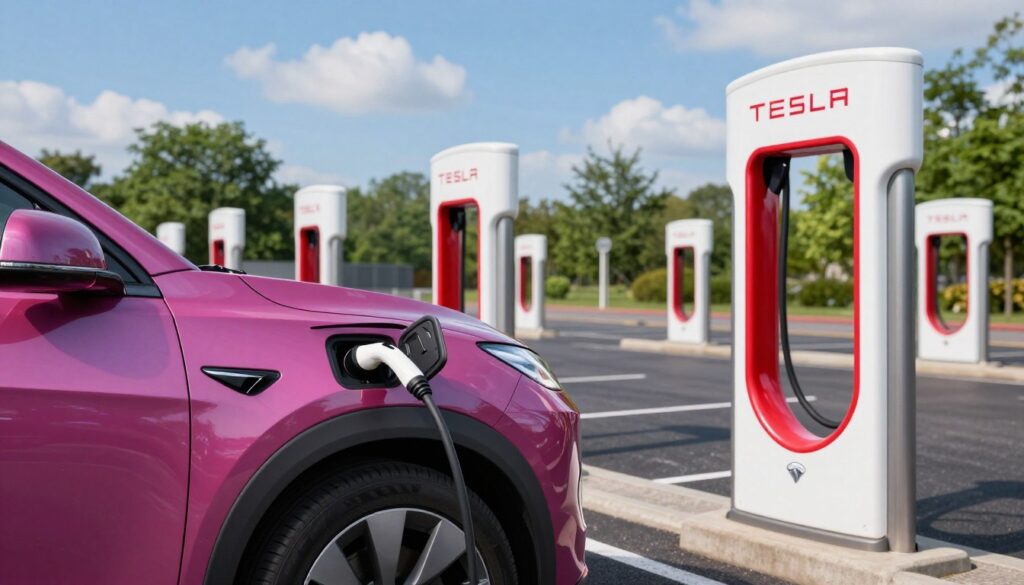
Tesla charges based on energy delivered to your battery, in kWh. Some areas have time-of-use pricing, with rates changing based on grid demand.
*Off-peak hours:Lower rates encourage charging when it’s less busy.
*Peak hours:Higher prices due to high demand.
*Idle fees:Applied if you leave your car plugged in after charging.
Cost-effectiveness Analysis
Public fast charging is usually pricier than home charging. Using a Level 2 charger at home is often cheaper.
| Charging Method | Relative Cost | Convenience |
|---|---|---|
| Home Level 2 | Low | High |
| Tesla Supercharger | Moderate to High | Very High |
Consistencyis key to low costs. Home charging is cheaper than fast-charging stations.
Incentives and Rebate Programs
States and local utilities offer help with home charging costs. These programs make electric cars more affordable.
I suggest checking with your utility provider for:
- Rebates for home chargers.
- Special electric vehicle charging rates for off-peak charging.
- Federal or state tax credits for EV investments.
Using these incentives can cut your costs. Keep track of your charging to choose the best options. This helps you stay within budget while enjoying your electric car.
Environmental Impact of Using Superchargers
Deciding where and how to charge my car affects the environment and future of green transport. The quick charge is convenient, but I think about the environmental cost. Knowing this helps me choose better as a driver.
Emissions Considerations
Looking at my car’s emissions, I consider the electricity source. Even with fast charging, emissions depend on the local grid. Reducing my impact means charging at off-peak times.
Choosing the right electric vehicle charging rates helps use cleaner energy. Charging during less busy times means more green power. This small change is big for eco-friendly drivers.
Sustainability and Renewable Energy Sources
The U.S. is moving toward a greener grid fast. More wind, solar, and hydroelectric power means cleaner electricity for me. This trend is great for electric cars.
I suggest checking out local green energy efforts. Look at this guide on sustainable energy practices. Supporting these efforts helps keep our charging infrastructure green. Being green is a team effort that starts with our daily choices.
Community Benefits of EV Charging
Expanding the Tesla charging network for Hyundai Kona Electric users helps our air. It reduces harmful emissions, improving public health. A strong, easy-to-use network is key to this change.
Using the Tesla charging network for Hyundai Kona Electric joins a big movement. It makes green tech common in public places. A solid network is vital for a future where green travel is the norm.
Future Trends in Charging Technology
The electric vehicle world is changing fast. Makers are working on faster charging and better connections. Soon, long trips will be easier for everyone.
Innovations in Fast Charging
Now, engineers are making ultra-fast charging stations. These will make waiting times much shorter for electric cars. New battery tech will also let cars charge faster, making stops quick.
Potential Updates for Kona Electric
Hyundai is improving its car software for better charging. I think the Kona Electric will soon have better chargers. These updates will keep your car ready for new charging tech.
The Evolving Landscape of EV Charging Networks
Big names are working on one charging standard. This will make charging easier for everyone. Soon, the Tesla network will be key for Hyundai Kona Electric owners. Keep up with network growth to enjoy more freedom on the road.
FAQ
Understanding the Hyundai Kona Electric
To see how the Kona Electric does on long trips, I look at its key specs.
Key Features of the Kona Electric
The Hyundai Kona Electric has a strong battery system, with a 64.8 kWh lithium-ion pack in the long-range model. Its onboard charger can handle up to 10.8 kW AC charging. This is key for charging at home overnight.
Benefits of Electric Vehicles
The Kona Electric also offers quick torque and lower running costs than gas cars. This makes switching to electric easier, thanks to its balance of range and efficiency.
Comparison with Other EVs
When I compare the Kona Electric with other EVs like the Chevrolet Bolt EUV or Kia Niro EV, it stands out. It offers a good mix of efficiency and practicality, making it a top choice for many.
Tesla Superchargers Overview
The Tesla Supercharger network is seen as the top fast-charging option in the U.S.
What Are Tesla Superchargers?
Tesla Superchargers are high-power stations that can give hundreds of miles of range quickly. Their reliability and wide coverage make them the go-to for long trips.
Charging Speeds Explained
Tesla stations have different power levels (V2, V3, and V4). While Tesla cars can charge up to 250 kW, the Kona Electric’s 400-volt system limits it to 100 kW. This is important for understanding charging at Tesla stations.
Locations and Accessibility
The Supercharger network’s wide reach makes planning trips easier. It covers major roads, reducing worries about running out of charge.
Charging Compatibility with the Kona Electric
Connecting a Hyundai to a Tesla stall requires more than just a plug. It’s about the tech talk between two systems.
Adapters and Connections
To charge at a Supercharger, I need a NACS to CCS1 adapter. This adapter lets the Kona Electric talk to Tesla’s system.
Technological Limitations
The Kona Electric’s 400-volt system means it can’t charge as fast as Tesla’s V3 Superchargers. This is a key tech limit to remember.
Availability of Charging Stations
Not all Tesla stations are open to non-Tesla cars. Always check the Tesla app or Hyundai’s system before heading out.
Charging Speed Metrics at Tesla Superchargers
How fast does the Kona Electric charge at Tesla Superchargers?
Maximum Charging Speed for Kona Electric
The Kona Electric can charge at up to 100 kW. Even at 250 kW Tesla stalls, it will only charge at its own limit.
Factors Affecting Charging Speed
Charging speed isn’t always the same. Battery temperature and state of charge (SoC) play big roles. If it’s too cold or nearly full, charging slows down.
Real-world Charging Experiences
In real life, charging the Kona Electric at Tesla Superchargers is reliable but not the fastest. Expect a steady charge that slows down as it gets to 80%.
Comparing Charging Times: Kona vs. Other EVs
Let’s look at how the Kona Electric compares to others.
How Kona Electric Stacks Up Against Rivals
The Kona Electric can charge from 10% to 80% in 43 to 47 minutes. This is fast compared to some rivals, but slower than the Hyundai IONIQ 6.
User Studies and Testimonials
Users say the Kona Electric is great for long trips. Its efficiency means it doesn’t need to charge as much as some other cars.
Performance on Long Trips
For long trips, I plan to stop every 150-200 miles. The Kona Electric’s charging speed is a bit slower than some luxury EVs, but it’s not a big difference.
Charging Strategies for Hyundai Kona Owners
For a smooth EV life, it’s all about planning.
Best Practices for Charging
I follow the “80% rule.” Charging the Kona Electric to 80% and then stopping is often faster than waiting for the last 20%.
Planning Routes with Superchargers
I use apps like A Better Routeplanner (ABRP) to find Tesla stations on my route. This makes sure I always have a working charger nearby.
Charging During Different Times
Charging rates can be lower at off-peak hours (late night or early morning) at some Tesla stations. This is a great way to save money.
Cost Implications of Charging at Superchargers
Public charging is more expensive.
Pricing Structure for Tesla Superchargers
Tesla charges non-Tesla owners more per kWh unless they have a monthly membership. For occasional users, pay-per-use is okay, but frequent travelers should consider a membership.
Cost-effectiveness Analysis
Using DC fast charging is more expensive than charging at home. I always suggest using Level 2 charging for most of your needs to save money.
Incentives and Rebate Programs
I keep an eye out for local incentives that offer rebates for home chargers or discounted rates for off-peak EV charging.
Environmental Impact of Using Superchargers
Choosing where to charge has an impact.
Emissions Considerations
I’m glad to see more renewable energy. As the grid gets cleaner, driving the Kona Electric gets cleaner too.
Sustainability and Renewable Energy Sources
Many Tesla Supercharger sites are adding solar arrays and Tesla Megapacks. This is key for the future of the Tesla network for the Kona Electric.
Community Benefits of EV Charging
Supporting these networks helps make sustainable transport available to all. It’s not just for those with garages.
Future Trends in Charging Technology
What’s next for the Kona and the EV world?
Innovations in Fast Charging
I’m watching for new tech like solid-state batteries and better thermal management. These could let even small cars like the Kona charge faster.
Potential Updates for Kona Electric
Future Kona models will likely come with the NACS port. This will make charging at Tesla stations easier and faster.
The Evolving Landscape of EV Charging Networks
The move toward standardization is a big plus. As more networks open up, driving a Hyundai electric car will get even easier.
How does the Hyundai Kona Electric charging speed at Tesla Superchargers compare to other public networks?
The Kona Electric charges at up to 100 kW, the same as other DC fast chargers. But Tesla’s network offers more available spots, making it more efficient.
Is there a specific adapter required for Tesla Supercharger compatibility?
Yes, you need a NACS to CCS1 adapter for Tesla Supercharger compatibility. Some newer “Magic Dock” stations don’t need an adapter.
What are the current electric vehicle charging rates for non-Tesla owners?
Charging rates at Superchargers vary by location and time. Non-Tesla owners pay a bit more per kWh, but a monthly Tesla membership can lower costs.
Can I achieve peak fast charging for Hyundai Kona Electric at any Tesla station?
Fast charging for the Kona Electric is best at Tesla V3 or V4 Superchargers. But its 400-volt system limits it to 100 kW. Older V2 stations may not work with non-Tesla cars.
Does the Hyundai electric car charging speed decrease in cold weather?
Yes, cold weather affects the Kona Electric’s charging speed. In cold climates, charging may slow down unless the battery is warmed up before charging.
Why is the Tesla charging network for Hyundai Kona Electric considered a major advantage?
The Tesla network offers unmatched reliability and coverage. It makes long trips easier by providing many charging spots.

Hi! I’m Moheen Iftikhar, the founder of “CarSpherei.” I’m passionate about everything automotive — from the latest car trends and cutting-edge technology to driving tips and expert insights. Through CarSpherei, I share in-depth reviews, helpful guides, and practical advice to keep every car enthusiast informed, inspired, and connected to the world of driving.